Choosing the right children’s dentist helps your child feel comfortable, confident, and supported from their very first dental visit. At Noosa Hinterland Dental, gentle kids’ dental care focuses on early prevention, positive experiences, and practical advice for parents across Pomona, Cooroy, Noosa, and the surrounding Hinterland.
Jump to section
- Key Takeaways
- When Should a Child First See the Dentist?
- Are Baby Teeth Really That Important, Even Though They Fall Out?
- How Can Parents Prepare a Child for Their First Dentist Appointment?
- What Happens During Your Child’s First Gentle Dental Visit at Noosa Hinterland Dental?
- Essential At-Home Oral Care for Kids: From Babies to Toddlers
- When to Be Concerned: Early Signs of Decay and Dental Emergencies
- Comprehensive Children’s Dental Care at Noosa Hinterland Dental
- Caring for Your Child’s Smile from the Start
- Frequently Asked Questions
Key Takeaways
-
Early Start is Key: A child’s first dental visit should be by their first birthday or when the first tooth appears. This initial appointment lays the groundwork for lifelong oral health.
-
Baby Teeth are Important: Primary teeth are essential for speech development, proper eating, and guiding the permanent adult teeth into their correct positions. They are not just disposable placeholders.
-
Gentle First Visit: The focus of a child’s first dental visit is on creating a positive, gentle experience through acclimatisation and preventative advice, not invasive treatment.
-
At-Home Habits Matter: Consistent, age-appropriate brushing techniques and a diet low in frequent sugars are the cornerstones of preventing dental problems in children.
-
Noosa Hinterland Dental: As your local family dentist Pomona, we are your partners in providing gentle, comprehensive, and compassionate paediatric dental care in Pomona, Cooroy, and the surrounding communities.
When Should a Child First See the Dentist?
The question of when a child should first see the dentist is one of the most common queries we hear from new parents in the Noosa Hinterland. The answer is much earlier than many people think, establishing a foundation for positive oral health habits that last a lifetime. This first dental visit child is less about finding problems and more about preventing them, offering a gentle introduction to dental care in a safe and welcoming environment.
Setting up this early relationship with a children’s dentist is about creating what we call a “dental home.” This is a familiar and trusted place where your child can receive consistent paediatric dental care from a team they know and feel comfortable with. By starting early, we can partner with you to guide your child’s dental development and give you the tools and advice needed to care for their smile from the very first tooth.
The “First Birthday or First Tooth” Rule for Infant Dental Visits
For parents wondering about the best age for a first dental visit, dental professionals have a clear and simple guideline. The Australian Dental Association recommends that a child’s first dental appointment should occur by their first birthday or within six months of their first baby tooth erupting, whichever comes first. This infant dentist visit is a crucial first step in your child’s oral health journey.
This appointment is not focused on complex procedures. Instead, it’s an opportunity for a gentle assessment, acclimatisation to the clinic environment, and for parents to receive personalised advice. At Noosa Hinterland Dental, we cherish these initial appointments. We welcome families from Pomona, Cooroy, and across the Sunshine Coast Hinterland to establish their dental home with us. This early and consistent care helps us monitor your child’s development and build a trusting relationship that makes every future children’s dental check-up a positive experience.
Why Does Early Dental Care for Kids Matter So Much?
Starting dental care for kids early has profound long-term benefits for their health and well-being. The primary goal is prevention. Early childhood caries (tooth decay) can begin as soon as the first tooth appears, and a paediatric dentist can identify the earliest warning signs, often when they are simple to manage.
These initial visits are also vital for monitoring your child’s overall dental development, including jaw growth and the proper eruption of teeth, consistent with AAPD developing dentition best practice guidelines. A children’s dentist can spot potential issues such as tongue-ties or lip-ties that might affect feeding or speech. Furthermore, acclimatising your child to the dental environment from a young age is one of the most effective ways to prevent dental anxiety later in life. It helps turn the dental clinic from a scary, unknown place into a familiar part of their healthcare routine.
Are Baby Teeth Really That Important, Even Though They Fall Out?
It’s a common misconception that baby teeth, or primary teeth, don’t matter much because they are temporary. However, these little teeth play a significant role in a child’s health and development long before the adult teeth are ready to emerge. Neglecting the health of baby teeth can lead to pain, infection, and more complex dental issues down the track.
Primary teeth are fundamental to a child’s ability to chew food properly, speak clearly, and maintain a healthy diet for growth. They also act as natural placeholders in the jaw, guiding the permanent teeth into their correct alignment. When a baby tooth is lost too early due to decay or injury, the consequences can affect the adult smile for years to come, making early paediatric dental care absolutely essential.
The Crucial Roles of Primary Teeth in Kids’ Oral Health
The importance of primary teeth extends far beyond simply being a first set of teeth. They serve several functions that are vital for a child’s development and have a direct impact on their future oral health. A professional children’s dentist helps protect these teeth because they are so valuable.
-
Chewing and Nutrition: Healthy baby teeth allow a child to chew a wide variety of foods, which is necessary for getting the proper nutrition their growing bodies need. Pain from cavities can lead to picky eating and poor nutrition.
-
Speech Development: The front teeth are especially important for a child learning to form words and sounds correctly. Missing or misaligned baby teeth can contribute to speech impediments.
-
Space Maintainers: This is one of their most important jobs. Each baby tooth holds a specific spot in the jaw for the permanent tooth that will replace it.
-
Foundation for Adult Teeth: If a baby tooth is lost prematurely, nearby teeth can drift into the empty space. This can block the adult tooth from erupting properly, leading to crowding and the potential need for orthodontic treatment later on.
Understanding Early Childhood Caries and Its Impact
Early Childhood Caries (ECC) is a specific form of severe tooth decay that can affect infants and toddlers, with severe early childhood caries sometimes requiring treatment under general anesthesia in the most complex cases. It was once commonly called “baby bottle tooth decay” because it is often linked to prolonged exposure to sugary liquids, like putting a baby to bed with a bottle of milk or juice. However, frequent snacking on sugary foods can also be a cause.
The enamel on baby teeth is thinner than on adult teeth, making them more susceptible to decay. ECC often starts as subtle white spots on the upper front teeth and can rapidly progress to brown spots and cavities. If left untreated, it can cause significant pain, infections, and abscesses that affect a child’s ability to eat, sleep, and concentrate. At Noosa Hinterland Dental, our focus as a dentist for toddlers is on prevention through early checks and providing parents with practical advice to avoid these problems.
How Can Parents Prepare a Child for Their First Dentist Appointment?
Preparing your child for their first dentist appointment is all about creating a positive and stress-free experience. The way you frame the visit can make a world of difference in how they perceive dental care for the rest of their lives. A little preparation at home can help your child feel relaxed, curious, and even excited about their child’s first dental visit.
The goal is to normalise the experience and build a sense of calm anticipation. This involves using positive language, familiarising them with the idea of a dental check-up, and making sure the logistics of the day are set up for success. Our team at Noosa Hinterland Dental builds on this positive foundation by providing a gentle, reassuring, and child-friendly environment from the moment you walk in.
Creating a Positive Anticipation for Your Child’s First Dental Visit
Building excitement for a child’s first dentist appointment starts with how you talk about it. It’s essential to use positive and simple language. Explain that the children’s dentist is a friendly helper who will “count their teeth” or “check their smile.” Avoid using negative or fear-inducing words like “needle,” “drill,” “pain,” or “hurt.” It’s also best to avoid phrases like “don’t be scared,” as this can introduce the idea of fear where none existed.
You can also make the experience feel more familiar by reading children’s books or watching fun TV shows about visiting the kids dentist. Playing “dentist” at home is another great strategy. You can take turns counting each other’s teeth with a toothbrush to help them get used to the idea of someone looking inside their mouth. Most importantly, if you have your own dental anxieties, try not to project them onto your child; let them form their own positive opinion.
Choosing the Right Time and What to Bring to Your Toddler’s Dentist Appointment
Practical planning plays a big role in the success of a toddler’s first dental visit. When you book the appointment, choose a time of day when your child is usually at their best. For most toddlers, this is in the morning after they have had a good sleep and a meal. A tired or hungry child is much less likely to be cooperative and relaxed.
On the day of the visit, you might consider bringing along a favourite toy, book, or blanket. This can provide a sense of security and comfort in a new environment. Also, come prepared with any questions you have about your child’s toddler dental health, teething, or brushing habits. A good children’s dentist in the Noosa Hinterland, like our team at Noosa Hinterland Dental, understands the needs of young children and will do everything possible to create a welcoming and reassuring atmosphere for your family.
What Happens During Your Child’s First Gentle Dental Visit at Noosa Hinterland Dental?
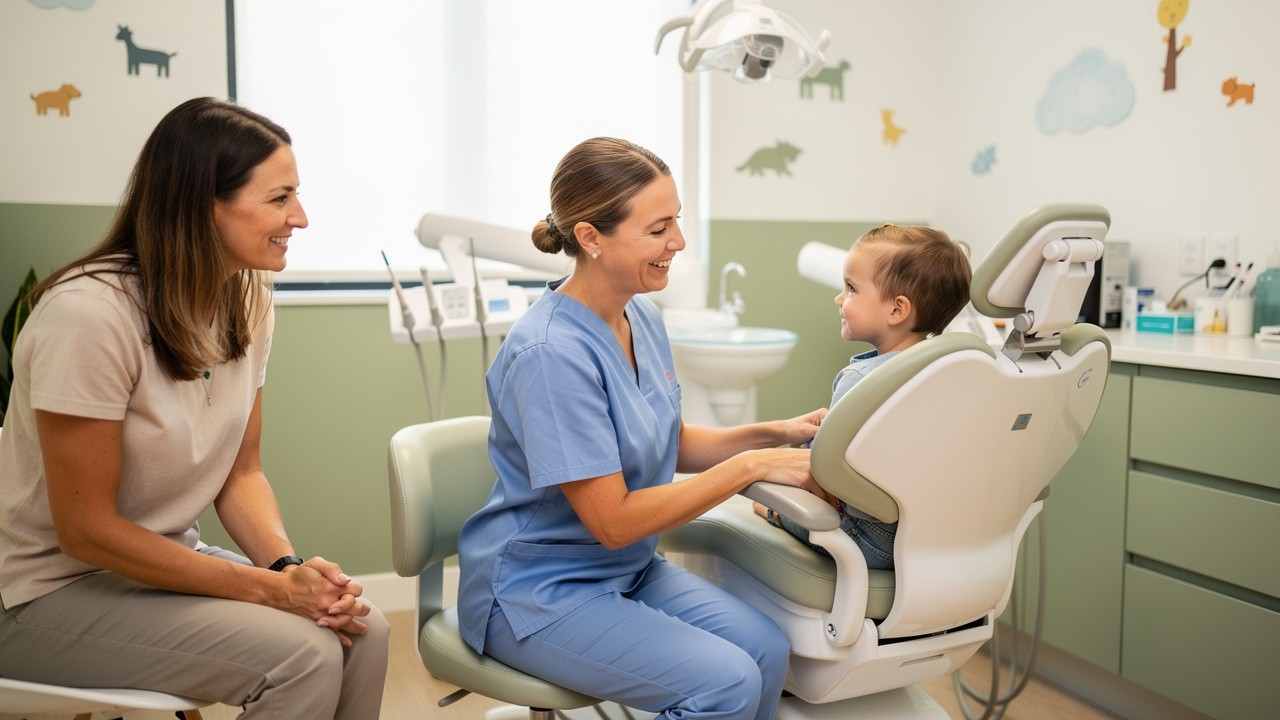
The thought of a first dental visit can be nerve-wracking for parents, but we are here to clarify the process and assure you that it is a positive and gentle experience. At Noosa Hinterland Dental, we call the first appointment a “happy visit” because our primary goal is to make your child feel safe, comfortable, and even have a little fun. We take a child-led approach, moving at their pace and never pushing them to do anything they are not ready for.
This first visit is an opportunity for us to get to know your child and for your family to get to know us. We focus on building trust and making the dental clinic a place they look forward to visiting. From the moment you arrive, our team is dedicated to providing compassionate paediatric dental care that sets the stage for a lifetime of healthy smiles.
A Step-by-Step Guide to Your Child’s First “Happy Visit”
We want you to know exactly what to expect during your child’s first dental check-up. Our process is designed to be calm, engaging, and reassuring for both you and your little one.
-
The Warm Welcome: Our friendly reception team in Pomona will greet your family and make you feel right at home. We aim to create a relaxed atmosphere from the very beginning.
-
Quick Health Chat: Your children’s dentist will have a brief chat with you to go over your child’s medical history and listen to any concerns you may have about their teeth or oral habits.
-
The Chair Ride: To help them get comfortable, your child can sit on your lap for the entire visit or take a fun “ride” in the dental chair. This simple step helps make the equipment seem less intimidating.
-
Counting and Checking: The kids dentist will use a small mirror to gently “count” your child’s teeth. We will perform a quick check of their gums, bite, and jaw, looking for any early signs of potential issues.
-
Chat with Mum and Dad: We will then discuss our findings with you and provide practical, personalised advice on at-home care, diet, and fluoride use, especially for families on tank water in the Noosa Hinterland.
-
A Reward for a Great Job! Every visit ends on a high note with plenty of praise and a small reward, like a sticker or a new toothbrush, to celebrate their great work.
How Often Should Children See a Paediatric Dentist?
After the initial infant dentist visit, regular check-ups are key to maintaining your child’s kids oral health. Just like adults, children benefit from seeing a paediatric dentist every six months. These consistent visits allow us to build a strong, trusting relationship with your child, making each subsequent appointment easier and more comfortable.
Regular six-monthly children’s dental check-up appointments serve several important purposes. They allow your dentist near Cooroy to monitor the growth and development of your child’s teeth and jaws, catching any potential problems when they are small and simple to address. These visits also include a professional clean to remove any plaque build-up and are a great opportunity to apply preventative treatments like topical fluoride. This proactive approach helps prevent the need for more complex treatments in the future.
Essential At-Home Oral Care for Kids: From Babies to Toddlers
While regular visits to a children’s dentist are vital, the foundation of great oral health is built at home with daily routines. Partnering with parents to establish effective at-home habits is a cornerstone of our approach at Noosa Hinterland Dental. The care you provide every day has the biggest impact on preventing tooth decay and helping ensure your child’s smile stays healthy.
Effective at-home care involves more than just brushing. It includes using the right techniques for your child’s age, understanding when and how to use toothpaste, and making smart dietary choices. With the right guidance, you can confidently manage your child’s dental care for kids between professional visits.
Age-Specific Brushing Habits and Toothpaste for Toddler Dental Health
Knowing how to brush your child’s teeth properly changes as they grow, and age-appropriate restorative and preventative approaches are outlined in the AAPD restorative dentistry guidelines for paediatric patients. Providing the right care at each stage is essential for toddler dental health and beyond. Here are some simple guidelines:
-
0-18 months: As soon as the first tooth appears, you should start cleaning it. Use a soft, damp cloth or a specialised infant toothbrush with a small head and soft bristles. At this age, brushing with plain water is sufficient.
-
18 months – 6 years: You can now introduce a tiny, pea-sized amount of low-fluoride children’s toothpaste. Parents should do the brushing, as children lack the dexterity to clean their teeth effectively until they are about eight years old. A great tip is to teach them to “spit, don’t rinse” to leave a protective layer of fluoride on their teeth.
-
6+ years: Children can switch to a pea-sized amount of standard-fluoride toothpaste. It’s still a good idea for parents to supervise brushing to ensure they are doing a thorough job.
Navigating Diet, Sugary Drinks, and Habits like Thumb Sucking
What your child eats and drinks plays a massive role in their dental health. It’s not just about the total amount of sugar they consume but the frequency of exposure. Each time they have a sugary snack or drink, the acid level in their mouth rises, attacking the tooth enamel. Limiting sugary and sticky snacks to mealtimes and encouraging water as the main drink are powerful preventative strategies.
Common childhood habits can also impact dental development. Prolonged thumb sucking or dummy use (beyond the age of three or four) can affect how the jaw grows and how the front teeth align. If you have concerns about these habits, your children’s dentist can provide gentle, supportive advice on how to encourage your child to stop. Personalised guidance on diet and habits is a key part of every check-up at our family dentist clinic in the Noosa Hinterland.
When to Be Concerned: Early Signs of Decay and Dental Emergencies
As a parent, knowing what to look for can help you identify potential dental issues before they become serious problems. While regular check-ups with your children’s dentist are the best form of prevention, being vigilant at home is also important. Early intervention is key to keeping treatments simple and minimally invasive.
It’s also wise to be prepared for common dental emergencies. Children are active, and accidents can happen on the playground or sports field. Knowing the correct first aid steps can make a huge difference in the outcome, potentially saving a tooth from permanent damage. Having a trusted local Noosa Hinterland dentist you can call for advice is essential.
Recognising Early Signs of Tooth Decay in Young Children
Tooth decay can be subtle in its early stages, but there are signs you can watch for. Catching decay early often means it can be treated with simple, non-invasive methods. Be on the lookout for the following signs:
-
White or Brown Spots: The very first sign of decay is often a chalky white spot on the tooth surface. If it progresses, it can turn into a light brown or dark spot.
-
Sensitivity or Pain: Your child might complain that a tooth hurts when they eat something hot, cold, or sweet. They may also avoid chewing on one side of their mouth.
-
Visible Cavities: In more advanced stages, you might be able to see a visible hole or pit in the tooth.
-
Bad Breath: While there are many causes of bad breath, persistent bad breath that doesn’t go away with brushing can sometimes signal an underlying cavity or gum issue.
If you notice any of these signs, it’s best to schedule an appointment with your family dentist in Pomona, Noosa Hinterland Dental.
Managing Common Paediatric Dental Emergencies
Accidents happen, and knowing how to respond can be critical. Here is how to handle some common paediatric dental emergencies before you see your children’s dentist.
-
Knocked-Out Permanent Tooth: This is a time-sensitive emergency. Find the tooth, hold it only by the crown (the white part), and gently rinse it with milk or saliva if it’s dirty. If you can, place it back in the socket and have your child bite on a clean cloth. If not, store it in milk and get to a dentist immediately.
-
Knocked-Out Baby Tooth: A knocked-out baby tooth should never be put back in the socket. Doing so can damage the developing adult tooth underneath. Control any bleeding with gentle pressure and call your kids dentist for advice.
-
Chipped or Fractured Tooth: Find any broken pieces and store them in milk. Contact your Noosa Hinterland dentist right away, as a broken tooth can be sensitive and prone to further damage.
-
Severe Toothache or Swelling: This can be a sign of an infection or abscess and requires urgent dental attention.
Comprehensive Children’s Dental Care at Noosa Hinterland Dental
Choosing the right dental provider for your family is a decision that impacts your child’s health and well-being for years to come. At Noosa Hinterland Dental, we are committed to being more than just a clinic; we are a partner in your family’s healthcare journey. We provide comprehensive, compassionate, and professional paediatric dental care tailored to the unique needs of children at every stage of development.
Our philosophy is built on a foundation of gentle care, patient education, and a strong community focus, informed by pediatric dental treatment research on the best clinical indications for treating children. We believe that every child deserves to have a positive relationship with their children’s dentist and to grow up with a healthy, confident smile. For families in Pomona, Cooroy, and the wider Noosa Hinterland, we offer a convenient, trusted, and welcoming dental home.
Why Choose Noosa Hinterland Dental as Your Children’s Dentist?
We understand that you have a choice when it comes to your family’s dental health. Our practice stands out by offering a truly integrated and supportive approach to kids oral health.
-
Gentle, Friendly Dental Care: Our entire team is experienced in working with children. We use child-friendly language and techniques like “Tell-Show-Do” to make every visit comfortable and anxiety-free.
-
Experienced Team: We focus on helping children feel confident in the dental chair while providing parents with trusted, evidence-based guidance to support their child’s oral health at home.
-
Local and Community-Focused: As a dedicated family dentist for Pomona, Cooroy, and the surrounding communities, we understand the specific needs of local families and provide accessible, convenient care.
-
Child Dental Benefits Schedule (CDBS): We support our community by participating in the CDBS, which provides eligible families with access to benefits for essential dental treatments. You can call our clinic to find out more and check your child’s eligibility.
More Than Just a Kids Dentist: Family Dental Care in the Noosa Hinterland
One of the greatest advantages of choosing Noosa Hinterland Dental is the convenience of having a single, trusted dental practice for your entire family. We are a comprehensive family dentist in Pomona, offering a full spectrum of dental services for patients of all ages, from toddlers to grandparents. This continuity of care is invaluable.
Having one dental home means we have a complete picture of your family’s oral health history. It also sets a powerful example for your children when they see you prioritising your own dental health in the same familiar environment. Our services extend beyond children’s dentistry to include preventative, restorative, and general dental care for adults. We are committed to making high-quality dental care convenient and stress-free for your whole family.
Caring for Your Child’s Smile from the Start
A child’s first dental visit is a milestone that lays the groundwork for a lifetime of healthy smiles. By understanding the importance of starting early, appreciating the role of baby teeth, and knowing how to prepare for the appointment, you can give your child a wonderfully positive start to their dental journey. Remember, early prevention and consistent at-home habits are the keys to a healthy mouth. While online advice is helpful, every child needs personalised care. If you are looking for a caring, professional children’s dentist in the Noosa Hinterland, our team at Noosa Hinterland Dental is here to welcome your family. Call us today to book your child’s first dental visit and start their journey to a lifetime of healthy smiles.
Book Your Child’s First Dental Visit
Give your child a gentle, positive start to their dental care journey with Noosa Hinterland Dental. Our friendly team provides calm, supportive children’s dentistry for families across Pomona, Cooroy, Noosa, and the surrounding Hinterland.
Book an appointment today to help your child feel confident, comfortable, and cared for from their very first visit.
Frequently Asked Questions
Question: At what age should I take my toddler to the dentist for the first time?
The Australian Dental Association recommends a child’s first dental visit should be by their first birthday, or within six months of their first tooth appearing. This allows our children’s dentist to conduct an early assessment and helps your child establish a positive “dental home” for future visits.
Question: What does a children’s dental check-up involve for a baby or toddler?
The child’s first dental visit is typically a gentle and positive “happy visit.” It often involves a simple examination of the teeth, gums, and jaw while the child sits comfortably on a parent’s lap. The main focus is on acclimatisation, prevention, and giving parents personalised advice on care.
Question: How often should my child visit the dentist?
Just like adults, children should ideally have a dental check-up every six months. This routine allows your paediatric dentist to monitor their developing oral health, address any small issues before they become larger problems, and reinforce positive habits for maintaining excellent kids oral health.
Question: Do I need to use toothpaste for my baby’s teeth?
For children under 18 months, cleaning their teeth with a soft brush and water is generally sufficient. From 18 months to 6 years, you can use a tiny, pea-sized amount of low-fluoride children’s toothpaste. Your children’s dentist at Noosa Hinterland Dental can show you the correct amount at your visit.
Question: Are there any government programs to help with the cost of children’s dentistry in Australia?
Yes, the Australian Government’s Child Dental Benefits Schedule (CDBS) provides eligible children aged 0-17 with benefits for a range of basic dental services. You can contact Services Australia to check your child’s eligibility, or our friendly team at Noosa Hinterland Dental can assist you.