Dental implants cost Australia estimates vary with the number of implants, scans, grafting, sedation, restoration type and treatment plan. Comparing only an advertised starting price can hide important components. This guide explains realistic cost factors, common treatment stages, finance considerations and the questions Pomona patients should ask before deciding whether implants suit them.
The tricky part is that no honest dentist can promise an exact implant fee without examining your mouth and taking proper scans. That can leave families unsure whether implants are realistic, or worried about surprise extras later on. At Noosa Hinterland Dental in Pomona, we see this concern almost every week.
In this guide, we explain how dental implants cost Australia wide typically sits for single teeth, bridges, overdentures and full arch treatment, and how the Noosa region usually compares. We walk through what is included in a full treatment, what can push the price up or down, how health funds and payment plans help, and when implants may be worth the extra spend compared with bridges or dentures. The aim is to give you clear, local, evidence‑informed information, so you can make calm decisions after a proper examination.
Ready to get a clearer picture of your own options and likely budget before you book an assessment? Keep reading, then bring your questions to your consultation so we can talk through your personal plan in detail.
Key takeaways
-
Across dental implants cost Australia guides, a complete single tooth implant usually ranges from about $3,000 to $7,000, while full arch options such as All‑on‑4 often sit between $18,000 and $40,000 per arch. Around Pomona and the wider Noosa Hinterland, prices are often slightly lower than inner‑city clinics once you compare the same materials and stages.
-
A complete implant price usually includes your consultation, 3D scans, any required extractions, the titanium implant, healing visits, and the final abutment and crown or bridge. Cheaper quotes sometimes only include the surgical screw and leave the crown, scans or grafting as extra costs.
-
Your quote changes with the number and position of missing teeth, bone and gum health, grafting needs, implant system and crown materials, plus the technology and experience of the clinical team. Full arch cases and complex bone rebuilding usually sit at the higher end of national ranges.
-
At this Pomona clinic, you receive an itemised written plan with best‑case and “worst‑likely” figures, staged payments, and options including DentiCare payment plans and support with early release of super where appropriate.
-
Dental implants usually cost more upfront than bridges or dentures, but they often last longer, protect neighbouring teeth and jawbone, and give more natural chewing and confidence, which can mean better value over 10–20 years.
How much do dental implants cost in Australia (and around the Noosa Hinterland)?
Typical dental implants cost Australia wide for a complete single tooth usually falls between about $3,000 and $7,000. Around the Noosa Hinterland, many treatment plans sit slightly below capital city fees, while still using modern scanners, high‑quality implant systems and Australian labs. The exact figure on your quote always depends on your own mouth and the style of treatment that best suits you.
Across the country, single tooth implants are the most common request from families, followed by several teeth on implants, or full arch treatment for people with long‑term denture troubles. Sunshine Coast dentist and regional Queensland clinics often have lower overheads than inner Sydney or Melbourne, which helps keep fees a little softer. At the same time, high‑volume budget chains sometimes quote lower headline figures, but may use cheaper components or split the quote into many stages.
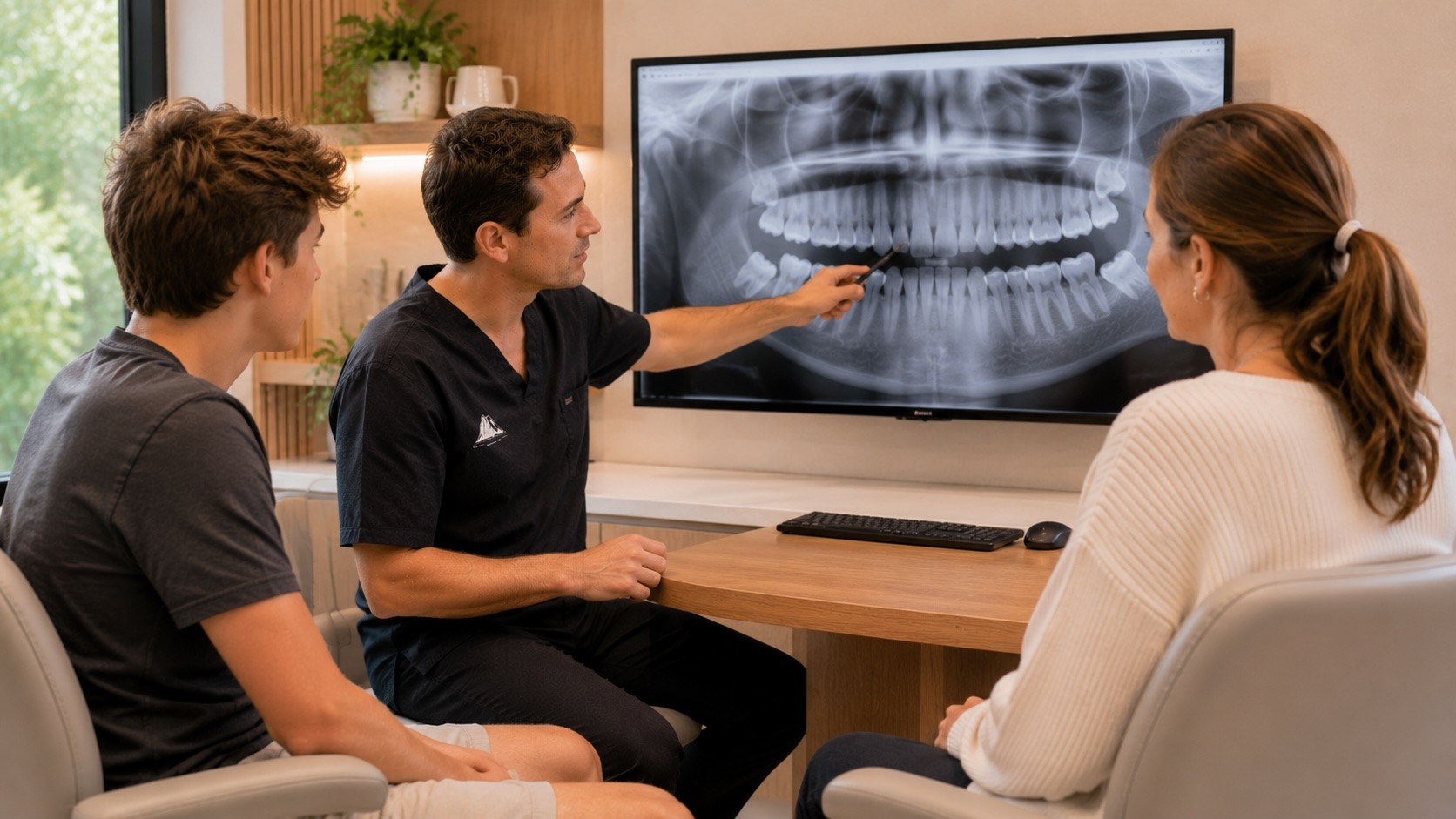
Only a face‑to‑face examination, including X‑rays and often a dental X‑rays and 3D scans, can show how much bone you have, how healthy your gums are, and which options are realistic. That is why every implant case at a local clinic starts with a proper assessment, not a guess over the phone.
Typical price ranges for common implant options
When people compare dental implants cost Australia wide, these are the broad ranges many clinics quote as a guide. They are not fixed prices, but they do give a realistic starting point for families around Pomona and Cooroy.
-
Single tooth implant including implant, abutment and crown usually sits around $3,000 to $7,000 per tooth across mainstream Australian practices. The lower end often uses simpler crowns and may have fewer inclusions, while the higher end can involve premium brands, extra planning steps and very lifelike ceramic work, especially for front teeth in the smile.
-
An implant‑supported bridge replacing 2 or 3 teeth on 2 implants often falls between about $6,000 and $15,000. The total depends on how many implants support the bridge, the span of missing teeth, and whether the visible part is made from porcelain‑fused‑to‑metal, ceramic or zirconia, which affects both strength and appearance.
-
An implant‑supported overdentures, sometimes called a clip‑on denture, for either the upper or lower jaw commonly ranges from about $8,000 to $20,000 per arch. This usually includes 2 to 4 implants, special attachment parts, and a custom denture that clips onto them for much better stability than a regular plate.
-
Full arch fixed options such as All‑on‑4 or All‑on‑X typically cost between about $18,000 and $40,000 per arch across Australia, with both arches often totalling $38,000 to $70,000 or more. The lower end often involves acrylic bridges and streamlined workflows, while the upper end usually reflects more implants, high‑strength zirconia bridges, extractions and bone grafting where needed.
In the Sunshine Coast and Noosa Hinterland area, most detailed quotes sit slightly lower than big city specialist centres, but still clearly within these Australian ranges. If a headline number looks far below these bands, it is important to ask exactly what it covers.
When a cheap dental implant quote may be incomplete
Some very low dental implants cost Australia ads sound appealing at first glance, especially if you have several missing teeth. The challenge is that many of these figures only cover part of the real treatment journey. That can leave families feeling disappointed once they see all the line items.
Common gaps in cheaper quotes include leaving out the crown or bridge and only charging for the surgical implant itself. Others might not include a 3D CBCT scan, which is vital for safe planning near nerves and sinuses, or they might exclude bone grafts, temporary teeth and review visits. Each of those items then appears later as a separate fee.
For example, a $2,800 implant might turn into a $5,500 plan once you add the CBCT scan, extraction, small graft, abutment and final crown. This is not wrong, but it is easy to misunderstand if you only see the first figure. Asking for a written, itemised treatment plan from any clinic in Pomona, Cooran, Cooroy or Brisbane helps you compare like with like and avoid unwanted surprises.
What is included in the cost of dental implants?
Given that untreated tooth decay and gum disease remain the most common oral health conditions affecting Queenslanders, a proper dental implants cost Australia quote usually covers far more than a single appointment to place a screw in the jaw. It reflects months of planning, visits, materials and follow‑up care to give you teeth that look good, feel natural and last as long as possible. Understanding each stage of treatment helps you see where your money goes.
Most general dental services an initial consultation, X‑rays, often a 3D scan, and careful planning time for your dentist or surgeon. Many people also need extractions, gum care or grafting before an implant will work well. After the implant is placed, there is a healing phase, then the final tooth, bridge or overdenture is designed and fitted.
Some clinics bundle many of these stages into one package fee, while others list them separately. Neither style is better, as long as you can clearly see which steps you are paying for and when they will happen.
Stages of implant treatment from consult to final tooth
From your first chat to the final tooth, implant care usually follows a clear series of steps. Each stage often appears on your plan as its own item, which is one reason dental implants cost Australia guides show a wide range.
Your first visit normally includes:
-
A full mouth examination and review of your medical history
-
A discussion about what you hope to achieve with treatment
-
Simple 2D X‑rays
-
In many cases, a 3D CBCT scan to show bone thickness, nerve position and sinus shape
Using these images, the dentist can explain options such as a single implant, a bridge, an overdenture or a full arch approach.
If a tooth is badly damaged or infected, it usually needs to be removed before an implant is placed. Some patients also need:
-
Treatment for gum disease
-
A bone graft where the jaw has shrunk
-
A sinus lift in the upper back jaw
These steps add healing time and cost, but they create a stable, healthy base that supports the long‑term success of your implant.
The actual implant surgery visit is often simpler than people expect and usually done under local anaesthetic in the chair, with happy gas or IV sedation available for anxious patients. A titanium implant fixture is gently placed into the bone, sometimes with a small graft around it, and stitches are placed. In some cases, a temporary tooth or denture is fitted at the same visit so you are not left with a visible gap.
Over the next few months, the implant fuses to the bone in a process called osseointegration. You return for checks so your dentist can monitor healing and manage any soreness or adjustments. Once the implant is solid, an impression or digital scan is taken so a custom abutment and crown, bridge or overdenture can be made in the lab.
At the final stage, the visible tooth or bridge is fitted, your bite is carefully checked and adjusted, and cleaning methods around the implant are explained. Review visits over the first year are especially important to keep the gums healthy and to protect your investment.
Why technology and lab work affect dental implant cost
Two quotes for a single implant can look very different because the technology and lab work behind them are not the same. These behind‑the‑scenes choices have a direct effect on accuracy, comfort, appearance and how long your new teeth are likely to last.
Modern implant care usually includes 3D CBCT imaging and digital planning software, which allow the dentist to place implants in a safe, precise position. In more complex cases, a computer‑made guide is used during surgery to follow the plan exactly. This equipment and software cost the practice money, but they help reduce risks and often shorten the appointment for you.
The visible teeth are made in a dental laboratory, either in Australia or overseas, using materials such as porcelain‑fused‑to‑metal, high‑strength ceramic, zirconia or PMMA acrylic. Australian labs often cost more but offer close communication, local quality controls and quicker adjustments if something needs refining. For that reason, when you look at dental implants cost Australia quotes, it is helpful to ask where your teeth will be made and from which materials.
Authoritative information on Australian dental materials and standards is available from the Australian Dental Association at
https://www.ada.org.au/
What factors change the cost of your dental implants?
Two neighbours in Kin Kin could both look up dental implants cost Australia and still receive very different quotes. The main reasons lie in their mouths, medical history and treatment goals. Once those are clear, your dentist can suggest options that balance health, comfort and budget.
The number of teeth missing, where the gaps are, and how long they have been missing all influence the complexity of treatment. Bone and gum health also play a large part in whether you need grafting, sinus lifts or gum disease treatment first. On top of that, your choice between single implants, bridges, overdentures or full arch fixed teeth, and the experience level of the clinical team, will change the final figure.
Understanding which factors you can control, such as timing, brand and material choices, and which ones you cannot, such as existing bone loss, can help you plan ahead and avoid stress.
Clinical factors: bone, gums, and number of teeth
The main clinical drivers of dental implants cost Australia wide are the number and position of missing teeth, and the condition of the supporting bone and gums. These are also the factors that most influence long‑term success.
Replacing a single back tooth with good nearby bone is usually more straightforward than replacing a front tooth in the smile, or several teeth side by side. Front teeth demand more precise gum shaping and colour matching, which often means extra visits and finer ceramic work. Several missing teeth in one area might be better served with an implant bridge, while scattered missing teeth can mean multiple separate implants.
When a tooth has been missing for years, the jawbone in that spot often shrinks away. Thin or soft bone may not hold an implant firmly without a graft, which adds both cost and healing time. Gum disease needs to be treated and stabilised before implants are placed, because active infection around teeth can also affect implants.
As an example, someone in Pomona who lost a molar recently and still has strong bone may only need an extraction and a straightforward single implant. Another person with long‑term missing front teeth, bone loss and gum recession could require staged bone grafting and gum work, then several implants or even a full arch option. Their quotes will look very different, even though both searched for the same national cost range.
Treatment choices, materials, and dentist experience
Beyond the clinical picture, your own choices and the practice’s style also change the quote. Dental implants cost Australia guides often list a wide band for this reason.
Placing one implant for every missing tooth is sometimes the best plan, but in other cases a bridge supported by fewer implants works well. For example, 2 implants can often support a 3‑tooth bridge, which reduces both surgical cost and the number of components. An overdenture on 2 to 4 implants is usually more affordable than a full fixed All‑on‑4 bridge, but both are more stable than a standard denture.
The material used for your crowns and bridges affects lab fees and appearance. Porcelain‑fused‑to‑metal is time tested and a bit cheaper, while high‑strength ceramic and zirconia offer very natural looks and strength at a higher cost. Implant brand and component quality also matter because well‑researched systems usually have more long‑term data and spare parts available for decades.
Finally, the training and experience of the dentist or surgeon influence both the fee and the value you receive. A clinician who regularly performs implant and full arch work may charge more than a general dentist placing implants occasionally, but they also bring refined planning skills and the ability to manage more complex cases safely.
How much do single tooth implants, full arch implants, and add-ons usually cost?
When families search dental implants cost Australia, they are usually thinking in three groups, a single missing tooth, several teeth in one area, or an entire arch that needs rebuilding. Each of these groups has its own rough price band, then extra fees for grafting, sinus lifts or sedation where needed. Knowing the ballpark for each style of treatment can help you budget and ask better questions at your consultation.
Most dental implants plans fall within the national $3,000 to $7,000 range, with the Sunshine Coast region often sitting in the middle. Full arch options sit much higher overall, but lower when you look at cost per tooth, because several teeth share each implant. Add‑ons like extractions, grafts and IV sedation can change the total by thousands of dollars, which is why a personalised plan is always needed.
At this Pomona surgery, for example, single implant packages including implant, custom abutment and ceramic or zirconia crown sit within the typical Australian range. Any additional needs, such as grafting or sinus lifts, are clearly listed so you can see how they affect your own budget. Exact fees are always confirmed only after a clinical examination and scans.
Single tooth implant cost vs full arch and overdenture options
Here is how the main dental implants versus dentures usually compare for Australian patients, keeping in mind that these are broad ranges, not fixed fees.
A complete single tooth implant, including implant, abutment and crown, commonly sits around $3,000 to $7,000 across the country. Front tooth implants often sit towards the higher end because they need more detailed planning for gum shape and colour, and usually use higher‑end ceramics or zirconia. Back tooth implants sometimes sit in the middle of the range unless extra bone work or a sinus lift is needed.
When 2 or 3 teeth beside each other are missing, an implant‑supported bridge can be more cost‑effective than several single implants. A typical 3‑tooth bridge on 2 implants often falls in the $6,000 to $15,000 range. Because several teeth share each implant and abutment, the cost per tooth tends to be lower than placing three individual implants.
For people missing most or all teeth in one jaw, an implant‑retained overdenture on 2 to 4 implants usually ranges from $8,000 to $20,000 per arch. Fixed full arch options like All‑on‑4 or All‑on‑X often cost between $18,000 and $40,000 per arch, or around $38,000 to $70,000 or more for both arches together. Using many individual implants across the mouth can cost more than All‑on‑4 style treatment, so full arch techniques are often chosen for value and comfort.
Bone graft cost, sinus lifts, and sedation
Extra items around the main implant fee are a big part of total dental implants cost Australia wide. Not every patient needs these, but when they are required, they add to the budget and also affect timing.
As a broad guide:
-
Simple tooth extraction before implant placement often costs around $250 to $500 per tooth, with complex surgical extractions higher.
-
Small bone grafts placed around a single implant may range from roughly $400 to $1,000, while larger grafts for bigger defects or several areas can reach $3,000 or more.
-
A sinus lift in the upper back jaw, used when the sinus floor lies close to the implant site, often sits between about $1,000 and $2,500 depending on extent.
Local anaesthetic is usually included in implant fees, but sedation carries extra costs. Happy gas adds a smaller fee, while IV sedation includes the services of an anaesthetist and may attract a Medicare rebate for the medical component. Hospital day surgery under general anaesthetic adds facility and specialist fees, which can be partly covered by private health insurance if your level of cover allows.
In Pomona, 3D CBCT scanning helps your dentist see whether bone grafting or sinus lifts are likely before treatment starts. That way, best‑case and “worst‑likely” figures can be discussed honestly, instead of surprising you partway through care.
Further information on anaesthesia safety is available from the Australian and New Zealand College of Anaesthetists at
https://www.anzca.edu.au/
How do health funds and payment plans help with dental implant costs?
Most households looking at dental implants cost Australia wide plan to use a mix of personal savings, health fund rebates and payment plans. Knowing what each of these can realistically cover helps you avoid disappointment and choose the right timing for treatment. For some larger plans, early release of superannuation can also play a role.
Private extras policies often contribute to parts of implant care under major dental, although benefits vary between funds and levels of cover. Medicare support for adult dental implants is very limited and usually linked to hospital medical care rather than routine treatment. Sensible use of payment plans then helps spread any remaining gap over manageable instalments.
Health insurance, Medicare, and using superannuation
Most major Australian health funds treat implants as major dental, so they usually contribute to some item numbers for the implant fixture, abutment and final crown or denture. Common annual limits sit around $1,000 to $2,500 per person, and there is often a 12‑month waiting period before major dental benefits apply. Your rebate also depends on how much of your yearly limit you have already used on other treatment.
The most reliable way to check your own benefit is to ask your dentist for an itemised plan, then contact your fund or use its app to see the rebate on each item. Many clinics can send a quote through HICAPS so you can see estimated rebates before you commit. Staging treatment across benefit years can also help spread the out‑of‑pocket cost.
For most adults, Medicare does not pay for private dental implants or crowns. Rare exceptions involve treatment in public hospitals for specific medical conditions or trauma, and even then the support tends to relate to anaesthesia or hospital fees rather than the implant itself. Some patients choose to apply for early release of superannuation on compassionate grounds where implant treatment is needed to relieve chronic pain or restore function, but this process requires accurate clinical documentation and careful thought about retirement savings.
General information about private health insurance and dental cover is available from the Australian Government’s Private Health Insurance Ombudsman at
https://www.privatehealth.gov.au/
Details on early release of superannuation can be found at the Australian Taxation Office website:
https://www.ato.gov.au/
Dental implant payment plans and how we structure quotes
Because full dental implants cost Australia quotes are usually higher than routine dental work, many practices now offer structured ways to spread the gap. The key is to understand exactly what you are agreeing to and how it lines up with your treatment stages.
At this Noosa Hinterland practice, we often use DentiCare interest‑free payment plans for suitable cases, which allow regular instalments over a set period once a deposit is paid. For smaller or urgent items, such as extractions or temporary teeth, some patients prefer services like Afterpay. Afterpay’s Pay in 4 offers interest‑free payments over 6 weeks with no annual fees when payments are on time, although late fees can apply, and there is an optional Afterpay Plus subscription at $9.99 per month that expands where you can tap to pay.
For larger full arch plans, payments are usually staged across:
-
The assessment and X‑rays or scans
-
The surgical placement phase
-
The final teeth several months later
This staged approach pairs well with payment plans, health fund limits and, where appropriate, early super access, so families can manage their budget more easily. Every case receives a written, itemised plan with best‑case and “worst‑likely” figures for extras such as grafting and sedation, helping you choose calmly rather than under pressure.
Are dental implants worth the cost compared with bridges or dentures?
When people weigh dental implants cost Australia against bridges or dentures, they are really asking how much function, comfort and confidence matter to them over many years. Implants almost always cost more upfront, yet they can also reduce future spending and inconvenience by lasting longer and protecting other teeth and jawbone. Bridges and dentures still have an important place, especially when implants are not suitable or the budget is very tight.
The right answer for you depends on how many teeth are missing, your general health, your willingness to care for implants, and how much loose dentures or gaps are affecting your daily life. Looking at both short‑term and long‑term differences can help you decide.
Long-term value, comfort, and who implants suit best
Comparing the three main replacement options side by side in everyday terms can give useful clarity.
Single implants and crowns generally:
-
Sit in the $3,000 to $7,000 range per tooth
-
Can last for decades when well cared for, with crowns often replaced after 10–20 years
-
Do not require cutting down nearby teeth
-
Help preserve jawbone around the missing tooth
-
Feel and function close to a natural tooth
Tooth‑supported bridges often:
-
Sit around $3,000 to $5,000 for a 3‑tooth span
-
Last about 7–15 years before replacement in many cases
-
Need neighbouring teeth shaped to hold the bridge
-
Do not prevent bone shrinkage under the missing tooth area
-
Feel fixed and comfortable but can be trickier to clean under
Partial dentures usually:
-
Fall roughly between $1,000 and $3,000 per arch
-
Need replacement plates or relines every 5–10 years
-
Leave other teeth mostly untouched, though clasps can stress them
-
Allow bone under the plate to keep shrinking with time
-
Can move, trap food and reduce chewing strength compared with fixed options
Over a 15 to 20‑year period, implants often compare well on total spend. A single implant and crown might need one crown replacement, while a bridge might need one or two full replacements, and a denture may need new plates and several relines. When you add the extra comfort, confidence and bone preservation that implants provide, many people feel they offer better value even though the first bill is higher.
Implants tend to suit people who are in reasonable general health, can brush and clean carefully around them, and can attend regular check‑ups. They are often ideal when a single tooth is missing and the neighbours are healthy, or when loose dentures are affecting eating, speech and self‑confidence. On the other hand, uncontrolled medical conditions, heavy smoking, poor gum health or limited ability to attend reviews may point towards a bridge, denture or staged treatment for now, with implants considered later if circumstances change.
To sum up
Dental implants cost Australia wide sits in broad but understandable ranges, from about $3,000 to $7,000 for a complete single tooth, through to $18,000 to $40,000 or more per arch for full fixed bridges. Around Pomona, Cooroy, Cooran, Kin Kin and the wider Noosa Hinterland, most detailed plans fall within these bands, often a little softer than inner‑city prices when you compare similar materials and steps.
A proper quote should cover more than just placing a screw, it needs to include consultation, scans, planning, any extractions or grafts, surgery, healing checks, and the final crown, bridge or overdenture. Written, itemised plans that show both best‑case and likely extra costs help you compare clinics and avoid confusion about cheap offers that only cover one stage.
Implants can be a sound long‑term investment when they improve chewing, protect remaining teeth and jawbone, and lift confidence in social and work settings. They are not the right choice for everyone, and they always require a thorough examination, clear explanation of options, and an honest chat about budget and expectations.
If you live in Pomona, Cooroy, Cooran, Kin Kin, Noosa Heads or nearby and would like a calm, pressure‑free discussion about your implant options, Noosa Hinterland Dental is happy to help. Booking an implant assessment gives you personalised advice, clear costs, and a chance to ask every question before you decide.
You can also read more about dental care and oral health at:
-
Australian Dental Association: https://www.ada.org.au/
-
Queensland Health oral health information: https://www.health.qld.gov.au/
Frequently asked questions
Question: How much does a single tooth dental implant usually cost in Australia?
A complete single tooth implant in Australia usually sits between about $3,000 and $7,000, including implant, abutment and crown. You are likely to sit towards the lower end with healthy bone and a back tooth, and towards the higher end for front teeth, complex bone or premium materials. Your exact cost is only confirmed after an examination, scans and a written treatment plan.
Question: Is it cheaper to get multiple dental implants at once?
Per tooth, it is often cheaper when several missing teeth share implants through a bridge or overdenture. Treating several areas in one plan can also reduce visits and planning time, which may trim overall costs. Many clinics, including those in the Noosa Hinterland, are happy to stage treatment so it fits your budget and health fund limits without rushing.
Question: Why do front tooth implants sometimes cost more than back tooth implants?
Front tooth implants often cost more because they need very careful planning of gum shape, colour and symmetry in the smile line. The lab work is more detailed, extra visits may be needed, and high‑end ceramics or zirconia are often chosen for the most natural look. Back teeth focus more on strength and biting forces, so they can sometimes be simpler to restore.
Question: How long do dental implants last, and will that affect cost over time?
With good placement, healthy gums and regular care, many studies show dental implants remaining successful for 10 years or longer in about 95% of cases. The titanium implant can often last decades, while the crown or bridge on top may need replacement after 10–20 years. Over that time, total spending often compares well, or even better, than repeatedly replacing bridges or dentures.
You can find plain‑language information on looking after dental implants and oral health from Healthdirect Australia at
https://www.healthdirect.gov.au/
Question: Can I use a payment plan for full arch or All-on-4 dental implants?
Yes, staged payments and payment plans are common for larger treatments such as full arch or All‑on‑4 care. At Noosa Hinterland Dental, options like DentiCare and sometimes Afterpay for smaller parts can help spread costs. The key is to have a clear per‑arch plan listing every stage and its fee before you sign any finance agreement, and to confirm that the total cost is still only an estimate until you have had a full clinical assessment.
Contact Us Now to book an appointment with Noosa Hinterland Dental.