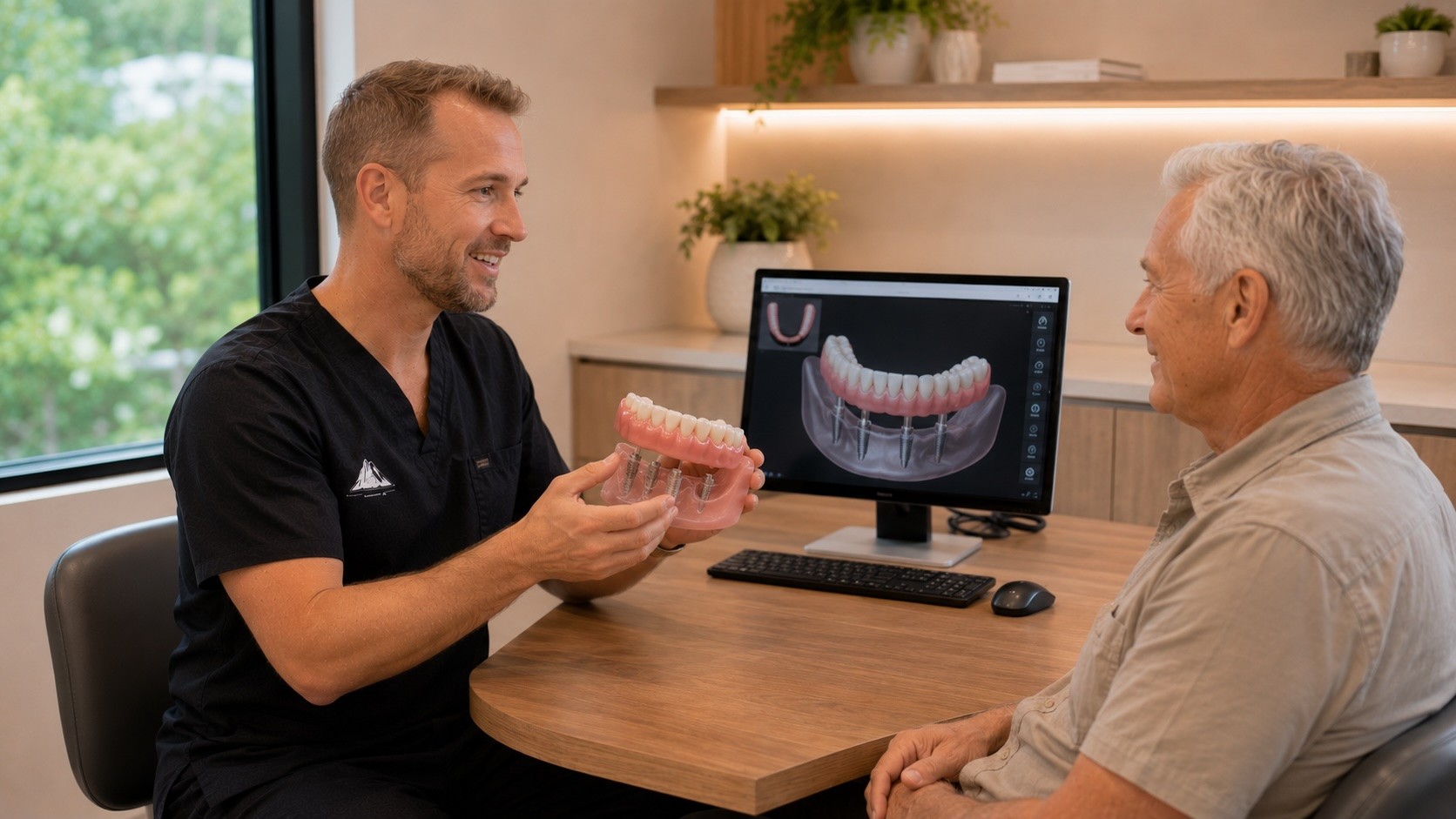
Dental implants replace missing roots with titanium posts that hold fixed teeth, while dentures are removable plates that sit on the gums. Dental implants vs dentures differ in chewing strength, comfort, jawbone support, cost, and treatment time. The best option depends on mouth health, medical history, anxiety levels, and budget, guided by a Noosa Hinterland dentist.
Introduction To Dental Implants Vs Dentures For Noosa Hinterland Patients
A missing tooth can feel like a small problem at first, yet it often affects far more than how a smile looks — research on Tooth Loss, Extractions, and dental implant demand highlights just how common and impactful this issue is across communities. Chewing can become awkward, speech can change slightly, and people may start to hide their teeth in photos or at family events. Over time, gaps can also affect jawbone health and the position of nearby teeth.
For many people in Pomona, Cooroy, and the wider Noosa Hinterland, the choice comes down to dental implants vs dentures. That includes options such as full dental implants vs dentures, dental implants vs partial dentures, and modern implant supported overdentures that “snap” onto implants for extra stability. Each option helps replace missing teeth, but they feel and behave quite differently in daily life.
This article walks through dental implants vs dentures in plain language, including comfort, function, appearance, cost, and long term impact on oral health. There is no one perfect answer for everyone, so the goal is to help people understand the pros and cons before they see a dentist. At Noosa Hinterland Dental in Pomona, a warm, community focused team offers dental implants, implant supported overdentures, full mouth rehabilitation and gentle care so families, adults, and seniors can choose the approach that suits them best.
“Every tooth matters, not just for your smile, but for how you eat, speak and feel each day.” – Dr. Peter Dawson
Key Takeaways
Choosing between dental implants and dentures can feel like a big decision, especially when time, cost, and worry about treatment all play a part. A quick overview can make the next steps much clearer and less stressful. The points below sum up the main messages of this comparison.
-
Dental implants usually suit people who want strong chewing, stable teeth and better jawbone support over the long term. They act more like natural roots, so they often feel more secure and can help keep facial shape more stable as the years pass.
-
Conventional dentures and partial dentures often suit people who want a lower upfront cost, want to avoid surgery, or need a fast option after sudden tooth loss. They can work very well when made and adjusted carefully, though they rarely match implants for bite strength or stability.
-
Implant supported overdentures, sometimes called snap in dentures, sit between permanent dentures vs dental implants. They still come out for cleaning, yet they clip onto implants for extra grip, which can greatly steady a loose lower denture.
-
Medical conditions, bone quality, smoking, dental anxiety, and lifestyle all matter just as much as teeth and gums. A person with limited bone or complex health issues may be better with dentures at first, then add implants later if things allow.
-
Noosa Hinterland Dental offers detailed assessments, 3D scans, sedation options and clear treatment plans, so people in Pomona and Cooroy can decide whether dental implants, dentures, or a mixed approach fits their mouth, health and budget.
How Dental Implants And Dentures Work
What Are Dental Implants?
Dental implants are small titanium posts that sit in the jaw like artificial roots. A connector piece, called an abutment, attaches to the post, and a custom crown, bridge, or full arch of teeth fixes on top. The jawbone grows tightly around the post, which gives a solid base for the new teeth.
At Noosa Hinterland Dental, people can choose:
-
Single tooth implants to fill one gap
-
Implant supported bridges to replace several missing teeth in a row
-
Full arch implant options similar to All‑on‑4 style treatments for people with no or failing teeth
These options often suit those who want dental implants instead of dentures or want to move beyond long term denture wear.
The process usually includes:
-
Comprehensive assessment – full check up, photos, and 3D CBCT scans to map the bone.
-
Implant planning – the dentist plans where to place each implant carefully to protect nerves and sinuses.
-
Implant placement – implants go in under local anaesthetic, with sedation options such as happy gas, oral medication, IV sedation, or twilight sleep for anxious people.
-
Healing phase – bone bonds to the implant while temporary teeth or modified dentures are used.
-
Final teeth – custom teeth are attached once the team has checked stability with Implant Stability Quotient (ISQ) testing.
“Implants don’t just replace teeth; they replace confidence in eating, smiling and socialising.” – Prof. Brånemark
What Are Dentures And Implant Supported Overdentures?
Dentures are removable plates that replace some or all teeth in a jaw.
-
Full dentures replace every tooth in the upper or lower arch.
-
Partial dentures fill in gaps and clip to remaining teeth.
They sit on the gums and stay in place through a mix of fit, suction and sometimes denture adhesive, although lower full dentures often move more than upper ones.
Implant supported overdentures change how a denture feels without turning it into a fixed bridge:
-
A few implants, often two to four in the lower jaw, are placed in the bone.
-
The denture then has small attachments that click onto these implants.
-
This gives far more grip than a standard plate, especially when speaking and chewing.
People can still remove the denture to clean it, yet they often feel much more secure when they talk and eat.
Day to day:
-
A traditional denture can feel bulkier because it covers more gum and, in the upper jaw, the palate.
-
An implant supported overdenture usually feels slimmer and steadier.
-
A fixed implant bridge feels most like natural teeth because people do not take it in and out.
Noosa Hinterland Dental offers overdentures for people who feel frustrated with a loose lower denture but are not ready for full fixed implants.
Dental Implants Vs Dentures Pros, Cons And Day To Day Comfort
Many people ask whether dental implants are better than dentures in every case. The honest answer is that dental implants vs dentures each have clear strengths and limits, and daily comfort can vary from person to person. Understanding how they compare for function, comfort and appearance can make the choice far easier.
Comparison Table For Dental Implants Vs Dentures
The summary below highlights key points in dental implants vs dentures for quick reference.
| Factor | Dental Implants | Dentures Including Partials |
|---|---|---|
| How They Work | Titanium posts hold fixed teeth in the jaw | Removable plate rests on gums and remaining teeth |
| Chewing Strength | Often close to natural teeth, wide food choice | Lower bite force, some foods harder to manage |
| Comfort And Stability | No slipping once healed, no adhesive | Can move, especially lower full dentures |
| Aesthetics And Facial Support | Natural gum line, help support lips and cheeks | Can look very natural, yet support may reduce as bone shrinks |
| Impact On Jawbone | Help limit bone loss where placed | Do not stop bone loss and may speed it in some areas |
| Treatment Time | Several visits and a healing phase | Fewer visits once gums settle after extractions |
| Upfront Cost And Long Term Value | Higher fees at the start, long term option | Lower initial fees, more relines and replacements |
| Maintenance | Brush like teeth plus careful cleaning between | Remove to clean, soak, and adjust as fit changes |
Pros And Cons Of Dental Implants
Dental implants give strong, stable teeth that usually feel more like natural ones than any denture. People often find they can eat steak, nuts and crunchy fruit with more confidence, and fixed teeth remove the fear of plates slipping while talking or laughing. Implants also send pressure into the bone, which can help keep facial shape more steady over time. Neighbouring teeth do not need to be drilled for a bridge, which can help protect them.
However, implants are not right for everyone:
-
They need minor surgery and a healing phase.
-
Very good cleaning at home is needed to avoid gum infection around the posts.
-
Some medical conditions, smoking, low bone levels or past radiation can reduce success rates, as evidenced by A 1.5-year randomized controlled trial comparing standard-sized implants and mini-implants across varying patient profiles.
-
Costs are higher than standard dentures, especially for full mouths.
At Noosa Hinterland Dental, 3D CBCT scans, careful planning and ISQ testing help support long term success, and sedation options are available for people who feel very anxious about dental work.
Pros And Cons Of Dentures Including Implant Supported Overdentures
Conventional dentures have several advantages:
-
No surgery is required.
-
Upfront price is usually lower, particularly when many teeth are missing.
-
They can often be made quite quickly, which is helpful when teeth need removal after pain or infection.
-
Dentures can be adjusted or remade as the mouth changes, so they offer a flexible way to manage tooth loss over time.
The trade offs include:
-
Lower bite strength and more movement.
-
The need to take them out to clean and often at night.
-
Possible rubbing, bulkiness, or slipping at awkward moments.
-
No protection against jawbone shrinking under the gums.
Implant supported overdentures offer a middle path in dental implants vs snap in dentures comparisons because they:
-
Give a major boost in grip, especially in the lower jaw.
-
Still cost less than a full arch of fixed implants.
-
Remain easy to remove and clean.
Cost, Longevity And Maintenance Thinking Long Term
Price often plays a big part when people weigh dental implants versus dentures. It helps to look beyond the first quote and think about how each choice affects the next five, ten or fifteen years, including repairs, comfort, and time in the chair.
Upfront Costs Vs Long Term Value
Dental implants usually cost more at the start because they involve surgery, 3D imaging, custom parts and several visits to fit the final teeth. That is true whether someone needs a single implant, several implants, or full dental implants vs dentures for a whole mouth. For many people, this level of investment only makes sense if they value:
-
Strong chewing
-
Long term stability
-
Fixed teeth that do not come out
Dentures, including partial dentures and immediate dentures after extractions, are usually more affordable at first. This can be helpful when many teeth fail at once or when health or income makes implants hard to consider right away. Over time, however, denture costs add up through:
-
Relines
-
Repairs
-
New sets as the shape of the mouth changes
At Noosa Hinterland Dental, people receive clear written plans, can discuss staged care such as dentures now and implants later, and may use DentiCare interest free plans or Superannuation Access where appropriate.
“Cheap dentistry at the start can be very expensive dentistry over the years.” – Anonymous prosthodontist
Maintenance And Lifespan And What To Expect Day To Day
Implants need the same level of care as very well kept natural teeth:
-
Brush twice a day with fluoride toothpaste.
-
Clean between implants and under bridges with floss, interdental brushes or water flossers.
-
See the dentist regularly for checks and professional cleans.
With good habits, implants can last many years or even decades, though crowns or bridges on top may need replacement if they chip or wear.
Dentures require:
-
Daily removal and gentle brushing of the dentures.
-
Rinsing and often soaking in a denture cleaner.
-
Brushing of gums, tongue and any remaining teeth.
Most dentists advise that people do not sleep in dentures every night, to reduce soreness and fungal infection. As bone shrinks, dentures feel looser and often need relines, and many sets last only several years before a full remake is wise.
When Cost, Health And Lifestyle Shift The Balance
Some people start with partial dentures or full plates because they:
-
Face a tight budget
-
Need to replace many teeth very fast
-
Have health issues that make surgery risky
Others choose implants or implant supported overdentures first because they want to:
-
Avoid long term plate movement
-
Maintain jawbone volume where possible
-
Reduce repeat major work in future
Noosa Hinterland Dental works with each person to map out options that fit their health, goals, and real life finances.
Which Option Suits Different Patients Best?
The answer to should I get dental implants or dentures is rarely the same for two people. Age, health, bone levels, hand skills for cleaning, and even work and family demands all influence what makes sense. The sections below outline common patterns for people in the Noosa Hinterland.
Younger And Middle Aged Adults
Adults who still work or raise families often value:
-
Long term stability
-
A natural look
-
Strong chewing so they can enjoy a full range of food
Dental implants and implant supported bridges usually suit this group well for both front and back teeth, as they help preserve bone and reduce the need for repeated major changes later. Many prefer fixed teeth because they do not have to think about plates in social or work settings.
Partial dentures can still have a place as a short term or lower cost option, for example:
-
After an accident
-
While saving for implants
-
While waiting for bone or gums to heal
Lifestyle points also matter, such as:
-
Contact sport that may need a mouthguard
-
Heavy tooth grinding that calls for a night guard
-
Busy schedules that favour fewer long appointments
Seniors And Long Term Denture Wearers
Many seniors in Pomona, Cooroy and nearby towns arrive with dentures that feel loose, sore, or worn. Their main wishes are often to:
-
Eat better without worry
-
Speak clearly and confidently
-
Feel more relaxed with family and friends
New, well fitted full dentures may give a big improvement, especially if the old plates were very outdated.
For those who feel fed up with lower dentures that slide around, implant supported overdentures can change comfort a great deal with only a few implants. In some cases, full arch implant bridges give fixed teeth again, as long as medical health, bone levels and cleaning ability are suitable. The team at Noosa Hinterland Dental talks through how each choice affects chewing, care routines, and visits, so seniors and their families can weigh the effort against the benefits.
Patients With Dental Anxiety Or Medical Considerations
People who feel scared of dental care often find both surgery and removable teeth hard to think about. At Noosa Hinterland Dental, the team spends time listening to past experiences and explaining each step in plain words, with comfort aids such as ceiling TVs, warm blankets and noise cancelling headphones. Sedation options like happy gas, oral sedatives and IV sedation help many anxious people manage implant visits or longer appointments more calmly.
In some cases, a carefully made denture or partial acts as a kind first step so trust can grow before implants are considered. Medical conditions such as uncontrolled diabetes, blood thinning, or heart issues may also influence whether dental implants vs dentures are safer at a given time. The dentists work with GPs and specialists to plan care that respects whole body health, not just teeth.
Emergencies And Complex Full Mouth Cases
Sudden tooth loss from accidents, infections or failed old work can feel very upsetting. Often, the first priority is to remove pain and replace teeth quickly with immediate partial or full dentures, so people are not left without a smile. After gums and bone settle, longer term options such as:
-
Full dental implants vs dentures
-
Implant supported overdentures
-
A mix of crowns, bridges and implants
can be mapped out.
Noosa Hinterland Dental can look after both the urgent phase and the later planning, which means local people do not have to bounce between clinics when they already feel stressed.
How Noosa Hinterland Dental Helps You Decide
A clear choice between dental implants vs dentures starts with a careful look at the whole mouth, not just one sore tooth. At Noosa Hinterland Dental, this begins with a long chat about:
-
Goals and expectations
-
Worries and past experiences
-
General health and medications
-
Budget and timing
-
Day to day habits and lifestyle
The dentist then examines teeth, gums and bite, and often takes 3D CBCT scans to measure bone levels and plan any implants with high accuracy and low radiation.
When implants are part of the plan, Implant Stability Quotient testing helps the team track how well each implant bonds with the bone before final teeth go on. This thorough approach supports strong, predictable results for both single implants and full mouth cases. People receive written treatment plans that set out each stage, fees and timing in clear steps, including options such as:
-
Dentures now and implants later
-
Implant supported overdentures instead of full fixed bridges
-
Mixed plans combining crowns, dentures and implants
For anxious children and adults, sedation dentistry options are discussed in detail so they can choose the level of support that feels right. The Pomona location is handy for people across the Noosa Hinterland and those who look for a dentist in Cooroy, with a friendly, community based team that aims to make each visit as relaxed as possible. A simple phone call or online enquiry can start a calm, informed discussion about dental implants vs dentures and which mix may suit best.
“Good dentistry is a partnership between the patient, the dentist and time.” – Dr. John Kois
Conclusion
Both dental implants and dentures can give back a smile, yet they do so in very different ways. Dental implants vs dentures vary in how they feel in the mouth, how well people can chew, how they affect jawbone over time, and how much they cost at the start and in later years. There is no single right answer for everyone in the Noosa Hinterland.
The best choice depends on age, bone health, general health, hand skills for cleaning, lifestyle, dental anxiety, and budget. Self diagnosis based on online reading can miss important details such as hidden decay, gum disease or low bone volume, so a personal assessment is always wise.
Noosa Hinterland Dental offers gentle, judgement free care, modern imaging, sedation options and clear explanations to help people compare dental implants vs dentures in a way that makes sense for their own life. Anyone in Pomona, Cooroy or nearby towns who is weighing denture implants vs dental implants, dental implants vs partials, or implant supported overdentures is welcome to contact the practice for a consultation or second opinion.
Not Sure Whether Dental Implants or Dentures Are Right for You?
Choosing between dental implants and dentures doesn’t have to feel overwhelming. The right option depends on your oral health, lifestyle, and what matters most to you—whether that’s long-term stability, comfort, or a more budget-friendly solution.
At Noosa Hinterland Dental in Pomona, we take the time to understand your situation and explain your options clearly, without pressure. Using advanced 3D imaging and a gentle, personalised approach, we’ll help you find the solution that fits your needs now—and into the future.
👉 Book your consultation today and take the next step towards a confident, comfortable smile.
FAQs
People often share similar questions when they first look into dental implants versus dentures. The answers below give a short guide, but they do not replace personal advice from a dentist who knows the mouth and medical history.
Question 1 Are Dental Implants Better Than Dentures For Everyone
Dental implants often provide stronger chewing, greater stability and better support for jawbone than dentures. That does not mean they suit every person or every mouth. Bone density, gum health, medical issues, smoking, dental anxiety and budget all influence the decision. A full check up at Noosa Hinterland Dental helps show whether implants, dentures, or a mix of both is more suitable.
Question 2 What Is The Cost Difference Between Dental Implants And Dentures
Dental implants usually involve higher upfront fees than dentures, especially when many teeth or full arches need replacement. Dentures tend to be more affordable at first but may need frequent relines, repairs and new sets as the mouth changes. At Noosa Hinterland Dental, people receive clear written plans, can discuss staged care, and may use flexible payment options such as DentiCare and Superannuation Access where appropriate.
Question 3 How Long Do Dental Implants And Dentures Last
With good home care and regular check ups, dental implants can last many years or even decades, though the crowns or bridges on top may need new layers if they chip or wear. Dentures usually need relines and then full replacement after several years because bone and gums change shape. Ongoing dental visits help pick up problems early for both implants and dentures.
Question 4 Can You Switch From Dentures To Dental Implants Later On
Many people start with dentures or partial dentures, then move to dental implants or implant supported overdentures later. Before that change, a dentist must check bone levels and gum health, because long term denture wear can reduce bone volume. Noosa Hinterland Dental can assess whether full dental implants vs dentures, implant supported bridges, or snap in overdentures are realistic next steps for each person.