Gum disease treatment in the Noosa Hinterland focuses on identifying and managing infections of the gums and supporting bone. It ranges from professional dental cleans for early stages like gingivitis to deep cleaning (scaling and root planing) for periodontitis. Early intervention is vital to prevent tooth loss and maintain overall oral health, often involving tailored home care and regular dental check-ups.
Introduction: Don’t Ignore The Signals: Gum Disease Treatment In The Noosa Hinterland
Have you ever noticed a hint of pink in the sink after brushing your teeth and thought nothing of it? It’s a common experience, but it’s also one of the earliest signals of gum disease, a condition that affects a large number of Australians. This condition, also known as periodontal disease, often begins silently, making its early gum disease symptoms easy to dismiss. However, what starts as minor gum inflammation can progress to a serious infection, leading to tooth loss and impacting your overall health.
For families and individuals in Pomona, Cooroy, and the wider Noosa Hinterland, understanding these signs is the first step toward protecting your smile. Left unaddressed, the need for gum inflammation treatment can become more serious, but the good news is that with early detection, gum disease is highly manageable. Modern gum disease treatment is more effective and comfortable than ever before, focusing on stopping the condition in its tracks and restoring your oral health.
At Noosa Hinterland Dental, we are dedicated to providing gentle, patient-focused care in a welcoming environment. We believe that knowledge is power, and this article will guide you through the early signs to watch for, the stages of gum disease, and the comprehensive treatment options available right here in our community. Whether you’re simply curious or have noticed a symptom that concerns you, you’ll learn how to take control of your gum health.
Key Takeaways
-
Gum disease progresses from its mild, reversible form, gingivitis, to the more severe periodontitis, which causes irreversible damage. The early signs of gum disease can be very subtle and are often overlooked.
-
Warning signs such as bleeding gums are important signals that you may need professional care. Timely bleeding gums treatment and addressing other early gum disease symptoms are necessary to prevent the condition from worsening.
-
The cornerstone of effective gum infection treatment for periodontitis is a professional dental deep cleaning procedure, also known as scaling and root planing.
-
Noosa Hinterland Dental provides advanced, patient-first periodontal disease treatment. We use state-of-the-art technology and provide comfort amenities to help create a positive experience.
-
A dedicated home care routine combined with ongoing professional maintenance is the best way to promote lasting gum health and prevent the recurrence of the disease.
Understanding Gum Disease: From Gingivitis To Periodontitis
Gum disease is an inflammatory condition that affects the soft and hard tissues that support your teeth. It all starts with plaque—a sticky film of bacteria that constantly forms on our teeth. If this plaque isn’t removed with daily brushing and flossing, it can harden into a substance called tartar, or calculus. The bacteria in plaque and tartar produce toxins that irritate the gums, triggering an inflammatory response from your body. This is where the different gum disease stages begin. Understanding the gum disease causes is the first step toward effective prevention and treatment.
This condition typically starts with gingivitis, the earliest and mildest stage of gum disease. At this point, the infection is limited to the gums, and the bone supporting your teeth is not yet affected. You might notice that your gums are red and puffy, and you may need a swollen gums remedy. They might also feel tender or require bleeding gums treatment, especially when you brush or floss. The most important thing to know about gingivitis is that it is completely reversible with a professional dental clean and a consistent oral hygiene routine at home.
If gingivitis is not addressed, it can advance to periodontitis, a much more serious form of the disease. With periodontitis, the inflammation spreads below the gum line. The gums begin to pull away from the teeth, creating small spaces called periodontal pockets. These pockets trap plaque and bacteria, making them impossible to clean at home. Your body’s immune system fights the bacteria as the infection spreads, but this process, combined with bacterial toxins, starts to break down the bone and connective tissue that hold your teeth in place. Periodontitis symptoms include receding gums, persistent bad breath, and, eventually, loose or shifting teeth. This damage is irreversible, which is why early detection and gum disease treatment are so important.
“Periodontal disease is a silent epidemic, affecting millions worldwide. Early detection and intervention are key to preserving not just your teeth, but your overall health.” – American Academy of Periodontology
Don’t Ignore The Signals: Early Signs Of Gum Disease You Shouldn’t Overlook
One of the most challenging aspects of gum disease is that it often progresses without any pain in its early stages. This “silent” nature means many people don’t realise there’s a problem until significant damage has occurred. Being vigilant and knowing what to look for is your best defence. Recognising the early gum disease symptoms can mean the difference between simple, reversible gingivitis treatment and managing a lifelong condition.
Here are the key early warning signs you should never overlook:
-
Bleeding Gums: This is the most frequent and most commonly ignored sign. If your gums bleed when you brush or floss, it’s not because you’re being too rough; it’s a classic indicator that they are inflamed and require attention. Prompt bleeding gums treatment starts with a professional assessment.
-
Red, Swollen, or Tender Gums: Healthy gums should be firm, resilient, and pale pink. If they appear bright red, purplish, or puffy, it’s a sign of inflammation.
-
Persistent Bad Breath (Halitosis): While bad breath can have many causes, a persistent foul taste or smell that isn’t resolved by brushing or mouthwash can be a sign of the bacteria accumulating below the gum line.
-
Receding Gums: If your teeth start to look longer than they used to, it may be because your gums are receding. This is a sign of tissue loss and may expose the sensitive root surfaces of your teeth, making receding gums treatment necessary.
-
Pus Between Teeth and Gums: The appearance of pus, a yellowish fluid, when you press on your gums is a definite sign of an infection that needs immediate gum infection treatment.
-
Changes in Your Bite: If you notice that your teeth don’t seem to fit together the way they used to, or if a partial denture suddenly feels different, it could be a sign that your teeth are shifting due to bone loss.
-
Loose or Shifting Teeth: This is a more advanced sign, indicating that the supporting bone and fibres have been compromised.
Noticing any of these signs of gum disease is not a reason to panic, but it is a reason to act. At Noosa Hinterland Dental, we provide a supportive and judgement-free environment where you can have your gums assessed and get the clear answers you need.
Comprehensive Gum Disease Treatment Options At Noosa Hinterland Dental
When you visit Noosa Hinterland Dental, our first step is to create a personalised treatment plan suited to your specific needs and the stage of your gum disease. We combine advanced technology with a gentle, patient-focused approach to provide treatment that is comfortable and effective.
Our range of gum disease treatment options includes:
-
Professional Cleaning (Scale and Polish): This is the primary gingivitis treatment and a cornerstone of preventative care. We remove the build-up of plaque and tartar from above and slightly below the gum line. For an exceptionally comfortable and effective clean, we use state-of-the-art EMS Airflow technology, which is perfect for sensitive gums. Our EMS Spa system offers a superior advanced gum treatment, turning a routine clean into a relaxing, spa-like experience.
-
Scaling and Root Planing (Dental Deep Cleaning): For more advanced periodontitis symptoms, a deep cleaning is the gold standard for non-surgical periodontal disease treatment. This procedure involves carefully cleaning away plaque, tartar, and bacterial toxins from deep within the periodontal pockets. We then smooth the root surfaces to prevent bacteria from re-adhering and to help the gums reattach to the teeth. We always use a local anaesthetic to help you remain comfortable during this process.
-
Managing Dental Anxiety During Treatment: We recognize that dental visits can be daunting. We prioritise your comfort with a range of sedation dentistry options, including Happy Gas, oral sedatives, and IV sedation. Our practice also features noise-cancelling headphones, ceiling-mounted TVs, and warm blankets to create a calm atmosphere, making even painful gums treatment a stress-free experience.
-
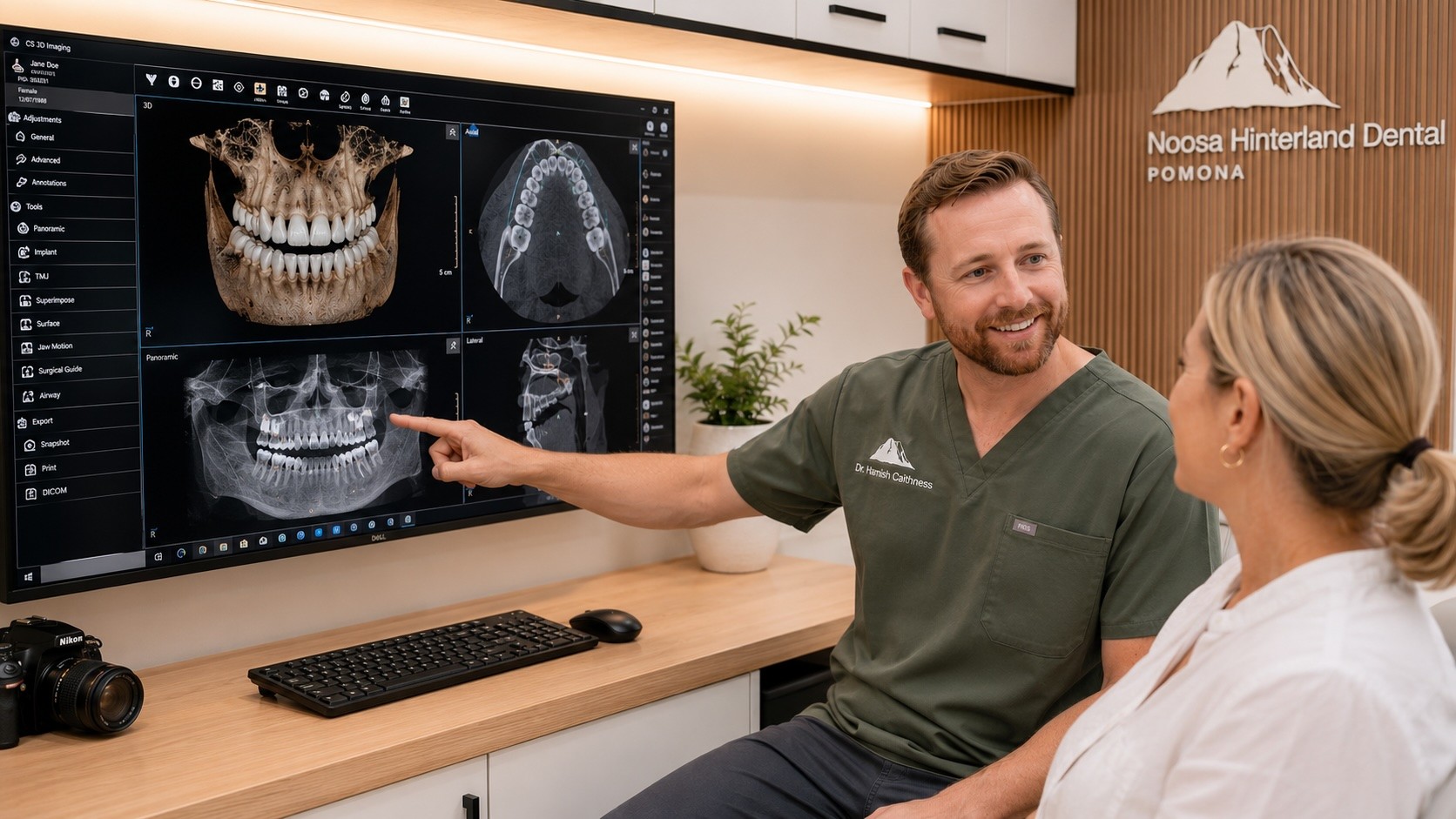
Advanced Diagnostic Tools: Accurate diagnosis is key. We use Low Dose Digital Radiography and 3D CBCT scans to get a clear and detailed picture of your gum and bone health, allowing for precise treatment planning.
-
Restorative and Tooth Replacement Options: If advanced gum disease has led to tooth loss, a healthy gum foundation must be re-established first. Afterwards, we can discuss restorative options like dental implants or even a full mouth rehabilitation to restore your smile’s function and appearance.
Our holistic approach focuses not just on treating the immediate problem but on securing your long-term oral health.
Proactive Steps: Preventing Gum Disease And Maintaining Long-Term Health
The most effective gum disease treatment is prevention. A partnership between your efforts at home and our professional care is the key to maintaining healthy gums for life. Empowering yourself with the right knowledge and habits can stop gum disease before it starts or prevent it from returning after treatment.
Here Are The Proactive Steps You Can Take For Gum Disease Prevention:
-
The Foundation of Prevention: Home Oral Hygiene: Your daily routine is your first line of defence.
-
Brushing: Brush thoroughly at least twice a day for two minutes each time. Use a soft-bristled toothbrush and fluoride toothpaste, angling the brush towards the gum line to clean effectively without causing damage.
-
Flossing or Interdental Cleaning: A toothbrush can’t reach everywhere. Cleaning between your teeth daily with floss or interdental brushes is important for removing plaque and food debris from these hard-to-reach areas. This is a key part of learning how to treat gum disease at home.
-
Antimicrobial Mouthwash: In some cases, your gum disease dentist may recommend a specific mouthwash to help control bacteria.
-
-
Regular Dental Check-ups and Professional Cleans: No matter how well you clean your teeth at home, hardened tartar can only be removed by a dental professional. Regular six-monthly visits allow us to remove this build-up and detect any early signs of gum disease.
-
Lifestyle Factors for Optimal Gum Health:
-
Avoid Tobacco Products: Smoking is one of the biggest risk factors for developing severe gum disease and can hinder the healing process after treatment.
-
Eat a Balanced Diet: A nutritious diet supports your immune system. Limiting sugary foods and drinks helps reduce plaque formation.
-
Manage Systemic Health Conditions: There is a strong link between gum disease and conditions like diabetes. Managing your overall health positively impacts your oral health.
-
-
Ongoing Maintenance (Supportive Periodontal Therapy): After active treatment, it’s important to have a personalised schedule of follow-up appointments, often every 3-4 months. These visits allow us to closely monitor your gum health and perform maintenance cleans to prevent the disease from recurring.
At Noosa Hinterland Dental, we are committed to being your partner in lifelong gum disease prevention and supporting the health of your entire family.
Frequently Asked Questions About Gum Disease
-
What happens if gum disease is left untreated?
Untreated gum disease can lead to worsening infection, destruction of the supporting bone and tissue, chronic bad breath, and eventually, the loss of your teeth. -
Can gum disease be cured?
Gingivitis, the early stage, is reversible with professional care and good oral hygiene. Periodontitis, the advanced stage, cannot be cured, but its progression can be stopped and managed effectively. -
How often should I see a gum disease dentist if I have gingivitis?
For gingivitis, a professional clean every six months is often sufficient. However, if active signs are present, your dentist may recommend more frequent visits to get it under control. -
Is bleeding gums treatment always a sign of gum disease?
Yes, bleeding gums are almost always a sign of gum inflammation (gingivitis). Healthy gums do not bleed, so this symptom should never be ignored and warrants a professional assessment. -
What is the best treatment for gum disease?
The best gum disease treatment depends on the stage of the condition. Early gum disease (gingivitis) is usually treated with a professional clean and improved home care. More advanced cases may require scaling and root planing (deep cleaning) to remove infection below the gumline, followed by regular maintenance visits to keep the condition stable. Your dentist will recommend a personalised treatment plan based on your gum health, bone levels, and risk factors.
Concerned About Bleeding Gums or Gum Disease?
If you’ve noticed bleeding, swelling, or changes in your gums, the best step is to have it checked early. Gum disease treatment is far simpler and more effective when caught in its early stages.
At Noosa Hinterland Dental, we offer gentle, personalised care in a calm, supportive environment—so you feel comfortable every step of the way.
👉 Book your gum health assessment today and take the first step towards healthier gums and a confident smile.
Conclusion: Your Partner For Lasting Gum Health In The Noosa Hinterland
Recognising the early gum disease symptoms, like bleeding gums, is the most important step you can take towards protecting your smile. As we’ve seen, gum disease is a common but serious condition that is highly manageable, especially with timely intervention. You don’t have to navigate this alone. Modern gum disease treatment is gentle, effective, and focused on preserving your natural teeth for a lifetime of health.
At Noosa Hinterland Dental, we are dedicated to serving the Pomona, Cooroy, and greater Noosa Hinterland community with compassionate and technologically advanced care. We are here to provide clear answers, comfortable treatment, and the ongoing support you need to maintain healthy gums. Don’t let uncertainty or anxiety hold you back. Prioritise your oral health by booking a no-obligation gum health assessment with our friendly team. Don’t delay—your healthy smile starts today.