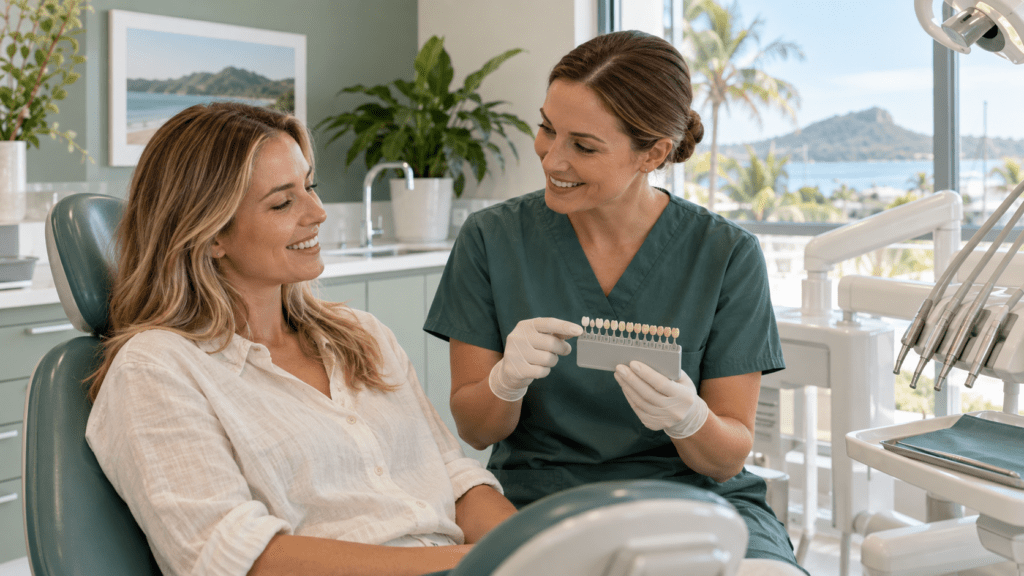
If you are due for an oral cancer screening, your dentist will check the soft tissues of your mouth, lips, tongue, throat and neck for unusual changes. The screening is quick, gentle and usually completed as part of a routine dental check-up.
Your dentist looks for signs such as persistent ulcers, red or white patches, lumps, thickened areas, unexplained bleeding or changes that have not healed.
At Noosa Hinterland Dental in Pomona, we include oral cancer screening as part of our whole-mouth approach, helping patients detect potential concerns early and feel confident that their check-up is about more than just teeth.
Jump to section
- What Happens During An Oral Cancer Screening?
- What Is Oral Cancer Screening And Why Do Dentists Do It?
- What Are The Early Signs And Symptoms Of Oral Cancer To Watch For?
- Which Risk Factors Affect Your Oral Cancer Risk – And What Can You Control?
- How Does Early Detection And Screening At Noosa Hinterland Dental Help Protect Your Health?
- Because Your Check-Up Is About More Than Just Your Teeth
- Frequently Asked Questions
What Happens During An Oral Cancer Screening?
Many people feel puzzled when a check-up includes oral cancer screening, not just a look at teeth. Quiet worry about cancer can make that extra check feel confronting, and for some it becomes another reason to postpone a visit.
During an oral cancer screening, your dentist reviews your health history, then carefully inspects and gently feels your lips, cheeks, tongue, gums, palate, throat and neck for unusual patches, ulcers or lumps. This focused mouth cancer screening usually takes only a few minutes within a normal dental appointment and does not use injections or drills. At Noosa Hinterland Dental in Pomona, we include it in routine, cosmetic and emergency visits for people from Cooroy, Cooran, Kin Kin, Noosa and across the Noosa Hinterland.
This article explains what happens during a dental cancer check, which early warning signs matter, and how lifestyle factors influence risk without telling the whole story. You will also see how our prevention-first, whole-mouth approach supports anxious patients and families. Read on to understand why your next check-up protects far more than your smile.
Key Takeaways
Key points about oral cancer screening help explain why your dentist looks beyond your teeth. The summary below gives a quick snapshot before we explore details. You can return to these points whenever you want a refresher.
-
Oral Cancer Screening Is Part Of Your Routine Check-Up
Oral cancer screening sits quietly inside a standard examination. We include it whether you visit for a clean, filling or Invisalign review. Because it is quick and gentle, most people barely notice it is happening. -
Early Detection Starts In The Dental Chair
Many mouth cancers start as small, painless changes. Regular screening during your dental check-up gives us repeated chances to spot trouble early. That early start often means simpler treatment and better long-term function. -
Know The Common Warning Signs At Home
Persistent mouth ulcers, colour changes, lumps, numb patches and trouble swallowing all deserve attention. Anything that lasts longer than two weeks should be checked. Home awareness plus professional checks gives the safest combination. -
Lifestyle Factors Influence, But Do Not Fully Predict, Risk
Smoking, heavy alcohol use, HPV, sun exposure and age all matter. People without these risks can still develop oral cancer. That is why we recommend screening for almost every adult, not just high-risk groups. -
Noosa Hinterland Dental Takes A Whole-Mouth, Gentle Approach
Our team looks after lips, tongue, cheeks, gums and throat as well as teeth. We use clear explanations, modern imaging and, when needed, sedation options to support nervous patients. Families across the Sunshine Coast hinterland receive calm, thorough care under one roof.
“Think of oral cancer screening as a safety check for your mouth. It’s quick, painless and designed to protect your health, not to scare you.” – Dr C. W., Principal Dentist, Noosa Hinterland Dental
What Is Oral Cancer Screening And Why Do Dentists Do It?
Oral cancer screening at the dentist is a short, focused check of the soft tissues of your mouth, lips and throat. Your dentist uses bright light, mirrors and gentle touch to look for patches, ulcers, lumps or texture changes that might need closer review. Screening is preventive, so we perform it even when you feel completely well.
According to the International Agency for Research on Cancer, more than 370,000 new cases of cancer of the lip and oral cavity were recorded worldwide in 2020. Many of these start without pain, which means a regular head and neck cancer screening during dental visits can detect trouble before it affects speech, swallowing or appearance. For adults in Pomona, Cooroy, Noosaville and nearby towns, the dental chair is often the easiest place for this kind of check.
At Noosa Hinterland Dental, we weave oral health screening into every comprehensive appointment, from six-monthly cleans to implant or veneer planning. We:
-
record anything unusual
-
monitor changes over time
-
explain findings in clear, straightforward language
-
involve your GP, Cancer Council resources or local specialists when needed
This steady watch supports oral cancer early detection without adding extra appointments or uncomfortable procedures.
What Happens During Mouth Cancer Screening At Your Dental Check-Up?
Mouth cancer screening during a check-up follows a calm, predictable pattern that most patients find reassuring. Your dentist at Noosa Hinterland Dental starts with a short chat about your medical and lifestyle history, including:
-
smoking, vaping or other tobacco use
-
alcohol intake
-
sun exposure to the lips and face
-
HPV vaccination
-
past cancers
-
family history of head and neck cancer
We also ask whether you have noticed persistent ulcers, lumps, difficulty swallowing, hoarseness or unexplained weight loss.
Next we examine the outside of your mouth, face and neck. We:
-
look at the lips and skin around your mouth for colour changes, cracking or sores
-
gently feel along your jawline, under your chin and down your neck for enlarged or tender lymph nodes
This extra-oral step helps us pick up lumps that you might not see or feel yourself.
We then move inside your mouth using a small mirror and bright light. We carefully check:
-
lips and cheeks
-
gums and palate
-
tongue and floor of the mouth
-
the back of the mouth and visible throat
We are looking for:
-
ulcers that do not heal
-
white, red or mixed-colour patches
-
bleeding spots or thickened areas
-
lumps, rough patches or areas that feel firmer than the surrounding tissue
The tongue and floor of the mouth receive special attention, as tongue cancer symptoms and oral cavity cancer often begin as small rough patches or firm areas on the sides or underside of the tongue. We also try to view the back of the mouth and tonsil region for persistent redness, swelling or one tonsil that looks very different from the other.
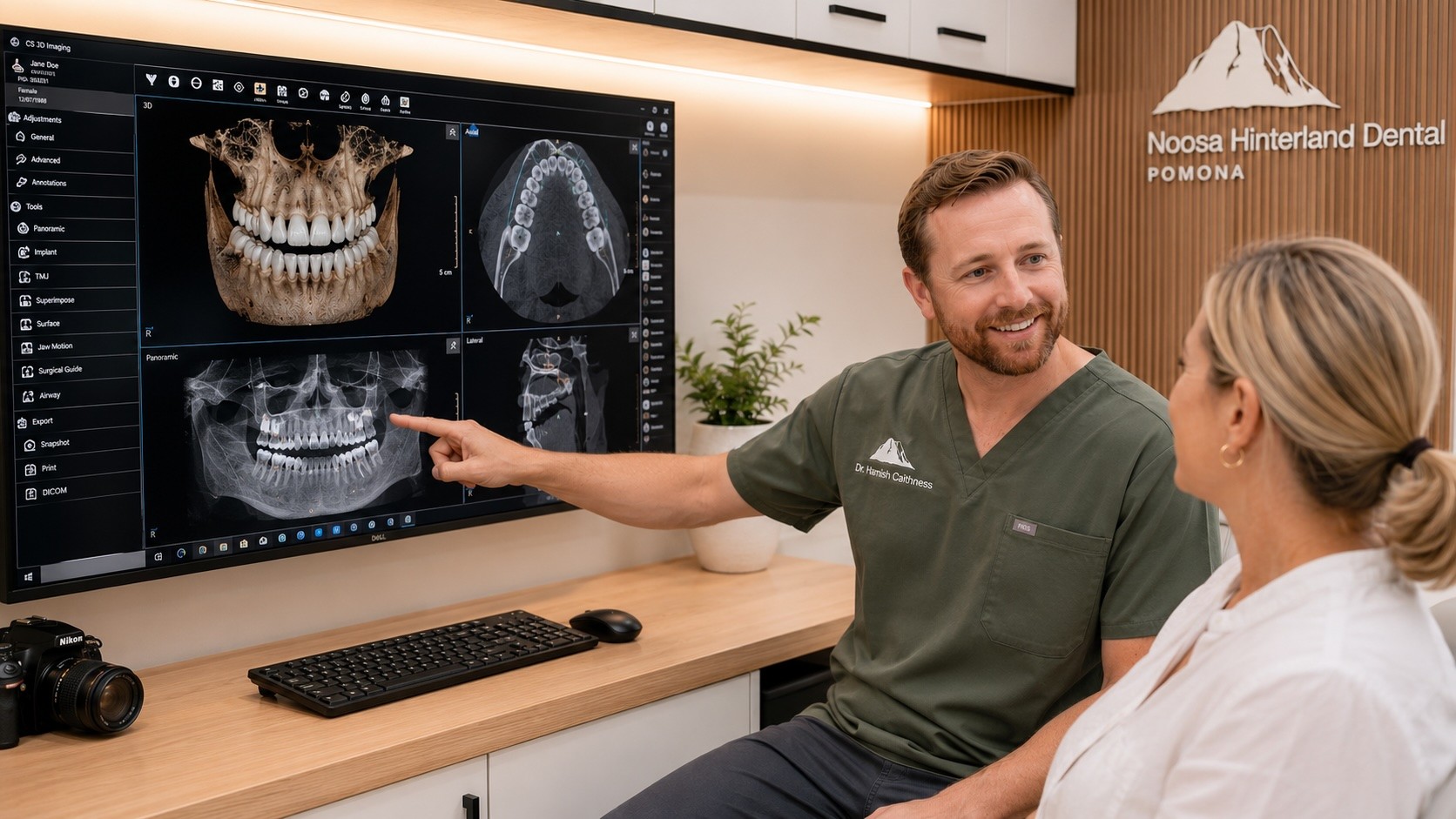
In some cases we may pair this clinical exam with low-dose digital X‑rays or 3D CBCT imaging to look at deeper structures, especially when planning implants or checking unusual findings. According to Cancer Council Australia, most mouth cancers are first suspected from careful visual and tactile examinations, so the simple clinical check remains the heart of the process.
For anxious patients in the Noosa Hinterland, we:
-
explain each step in plain language
-
offer breaks whenever you need them
-
can use oral or IV sedation for more complex dental work so screening still feels manageable
What Are The Early Signs And Symptoms Of Oral Cancer To Watch For?
Early signs and symptoms of oral cancer often appear as small, stubborn changes that simply do not settle. These can occur on the lips, cheeks, tongue, gums, floor of the mouth, palate or throat. Many are painless at first, which is why they are easy to overlook.
Typical warning signs include:
-
mouth ulcers that do not heal
-
patches that look white, red or mixed colours
-
lumps, bumps or rough areas that feel different on one side compared with the other
-
areas of numbness on the lips, tongue or inside cheeks
Some people notice possible throat cancer signs such as ongoing hoarseness, a feeling that something is stuck, or pain when swallowing. Any change that lasts longer than two weeks, or keeps returning to the same place, should be checked by a dentist or GP.
Research summarised by Cancer Australia shows that earlier diagnosis of head and neck cancers is linked with better long-term outcomes. That is why we encourage residents around Pomona, Cooran, Kin Kin and coastal suburbs to seek advice promptly, even if symptoms seem minor. A quick review often brings simple reassurance, and when something serious is developing, time really matters.
“If something in your mouth doesn’t look or feel right for more than two weeks, get it checked. It’s always better to be safe and reassured than to keep wondering.” – Noosa Hinterland Dental Team
Common Oral Cancer Symptoms And When To See Your Dentist
Common oral cancer symptoms include:
-
ulcers that do not heal within two weeks
-
patches that are white, red or mixed colours
-
new lumps or thickened areas anywhere in the mouth
-
numbness of the lips, tongue or other areas
-
unexplained bleeding from the mouth
-
loose teeth without obvious gum disease
-
changes in how dentures fit or feel
Persistent bad breath, long-lasting sore throat, or a change in speech, such as new hoarseness, can also be warning signs.
If a sore appears after biting your cheek, you can usually watch it for up to two weeks while keeping the area clean. If it has not improved, or if any patch, lump or ulcer seems to be enlarging, it is time to arrange a dental or medical appointment. According to the American Cancer Society, people diagnosed with mouth cancer at an early local stage have about twice the five‑year survival of those diagnosed after the disease has spread to distant sites, which underlines the value of acting early.
When we at Noosa Hinterland Dental find something unusual during a dental cancer check, we:
-
describe and photograph the area
-
explain what we can see in everyday language
-
decide whether a short review or immediate referral is best
Many lesions turn out to be related to irritation, infection or allergy and improve with simple treatment and follow-up. If a lesion remains suspicious, we work with trusted oral medicine specialists, oral surgeons or ear, nose and throat doctors on the Sunshine Coast, who can arrange a biopsy, the gold standard test for diagnosis.
Which Risk Factors Affect Your Oral Cancer Risk – And What Can You Control?
Oral cancer risk arises from a blend of lifestyle factors, medical history and chance. Tobacco, alcohol, HPV infection, sun exposure to the lips, age and diet all influence likelihood, yet some people with few obvious risks still develop the disease. This mix explains why regular oral cancer screening is helpful for almost every adult, not just those who smoke or drink heavily.
Tobacco in any form irritates the mouth and throat, and risk rises further when combined with frequent heavy alcohol use, as outlined in the Japanese clinical practice guidelines for oral cancer, which detail the synergistic effects of these modifiable risk factors. The World Health Organization reports that tobacco use causes millions of deaths worldwide each year, many through cancers that could be reduced by quitting. Excess sun on the lower lip, limited intake of fruits and vegetables, long-term irritation from sharp teeth or ill-fitting dentures, and weakened immunity also contribute.
Non‑modifiable factors include:
-
getting older, with most mouth cancers occurring in middle age or later
-
a personal or family history of oral cancer or pre‑cancerous lesions
-
being male, as men have historically been affected more often than women
Whatever your background, knowing your risk factors helps guide recall intervals and the focus of your oral health screening.
Oral Cancer Risk Factors And Prevention Tips For Sunshine Coast Adults
For adults around Pomona, Cooroy, Cooran and Noosaville, life often includes outdoor work, beach time and relaxed social drinking. These activities are part of what makes the Sunshine Coast special, but they can interact with oral cancer risk in subtle ways. Our goal is to support realistic choices, not remove the things you enjoy.
Simple changes, combined with regular dental check-ups, can lower risk and support early detection. The ideas below work alongside advice from your GP and other health professionals. Choose one or two to start, then build at a pace that feels comfortable.
-
Quit Or Reduce Tobacco Where Possible
Smoking, chewing tobacco and some vaping products hold irritants against mouth tissues for long periods. Support from your GP, Quitline and structured programs makes change far more achievable. Even long-term smokers gain health and cancer risk benefits when they stop. -
Keep Alcohol Within Current Australian Guidelines
Planning alcohol‑free days, choosing lower strength options and alternating with water all help. Heavy regular drinking, especially together with smoking, increases mouth cancer risk and affects general health. Small, steady shifts often succeed better than strict short‑term rules. -
Protect Your Lips And Face From The Queensland Sun
The Cancer Council Queensland notes that Queenslanders experience some of the highest ultraviolet levels in the world, which increases the risk of lip and skin cancers. A broad‑brimmed hat, SPF lip balm and shade during peak UV hours all reduce exposure. These habits are especially important for outdoor workers, surfers and children. -
Support Overall Health And Mouth Comfort
Eat plenty of fruits and vegetables, brush twice daily with fluoride toothpaste and have sharp teeth or loose dentures adjusted. Ask your GP about HPV vaccination for eligible family members, as this can lower some throat cancer risks. Get to know your own mouth in good light, and arrange a check if any change persists.
Tip from Noosa Hinterland Dental: “Keep a small mirror in the bathroom and glance over your tongue, cheeks and lips once a month. You’re not diagnosing anything – just learning what’s normal for you, so you can spot changes sooner.”
How Does Early Detection And Screening At Noosa Hinterland Dental Help Protect Your Health?
Early detection through regular screening at Noosa Hinterland Dental helps identify problems while they are still small and easier to manage. When mouth cancer or pre‑cancer is found early, treatment is more likely to preserve comfortable speech, chewing and appearance. This protects not only physical health, but also confidence at work, at home and in social situations.
According to the American Cancer Society, people diagnosed with mouth cancer at an early local stage have roughly double the five‑year survival of those diagnosed after the disease has spread widely. Smaller lesions often need less extensive surgery and can sometimes avoid intensive radiotherapy or chemotherapy. For patients planning implants, veneers, Invisalign or full mouth rehabilitation, stable soft tissues mean fewer interruptions to cosmetic or restorative treatment plans.
Because we are a family‑focused practice, we often see patients over many years, which helps us notice subtle changes over time. Our use of low‑dose digital radiography and CBCT imaging for selected cases supports accurate diagnosis when deeper structures need review. Combined with same‑day emergency appointments and gentle care for anxious patients, this whole‑mouth approach at Noosa Hinterland Dental supports long‑term wellbeing, not just isolated teeth.
The Role Of Your Local Dentist In Head And Neck Cancer Screening
Your local dentist plays a central role in head and neck cancer screening because dental visits offer repeated chances to examine areas you cannot easily see. Many adults see a dentist more often than they see other health professionals once routine childhood checks are finished. This pattern makes the dental clinic a natural checkpoint for oral cancer awareness.
At Noosa Hinterland Dental, every comprehensive examination, professional clean or cosmetic consultation includes a soft tissue check of the lips, tongue, cheeks, gums, palate and visible throat. We take the same care when children attend for check-ups or fissure sealants and when adults come in for whitening, veneers or Invisalign planning. This habit means that, even when you visit for cosmetic reasons, your wider health still receives careful attention.
When we spot a concern that needs further investigation, we coordinate with local GPs, oral medicine specialists and surgeons across the Sunshine Coast. With your consent, we share records such as photographs and radiographs so you do not need to repeat your story. If it has been a while since your last visit, booking a check-up now is a simple step that supports early detection, calm monitoring and peace of mind.
Because Your Check-Up Is About More Than Just Your Teeth
Because your check-up is about more than just your teeth, each visit becomes an investment in your overall health. Oral cancer screening, gum assessments and tongue checks all take place quietly alongside cleaning, fillings or orthodontic reviews. Many early changes cause little or no pain, so this extra look can make a genuine difference over time.
Risk factors such as smoking, heavy alcohol use and long hours in the sun certainly matter, yet mouth cancer can still appear in people with few obvious risks. Combining awareness of oral cancer symptoms at home with regular professional screening offers the safest path. Families who bring children for gentle routine visits help set lifelong habits of prevention instead of crisis care, whether they live in Pomona, Cooroy, Cooran, Kin Kin or coastal suburbs like Noosaville and Tewantin.
Noosa Hinterland Dental brings together a compassionate team, modern technology and same‑day emergency support in one convenient Pomona location. We welcome nervous patients, long‑overdue visitors and regular attenders with the same warm, non‑judgemental approach.
If you are due for a dental check-up in the Noosa Hinterland or surrounding Sunshine Coast communities, we invite you to:
-
book a comprehensive appointment that includes full oral cancer screening and oral health screening
-
discuss any mouth changes, risk factors or concerns you may have
-
leave with a cleaner smile and greater confidence in your long‑term wellbeing
Frequently Asked Questions
Question: Is Oral Cancer Screening Painful Or Uncomfortable?
Oral cancer screening at the dentist is usually not painful. The dentist mainly looks carefully and gently feels the soft tissues. No injections, drilling or sharp instruments are involved. Even people with dental anxiety usually find the process quick and very manageable.
Question: How Often Should I Have An Oral Cancer Screening At The Dentist?
Most adults benefit from oral cancer screening at every routine dental check-up, usually every six to twelve months. People who smoke, drink heavily or have other risks may be reviewed more often. Your dentist will suggest a recall schedule that matches your needs and risk factors.
Question: Does Oral Cancer Only Affect Smokers And Heavy Drinkers?
Oral cancer does not only affect smokers and heavy drinkers. Tobacco and alcohol raise risk, but other factors such as HPV infection, sun exposure, age and genetics also play roles. Because anyone can be affected, regular screening is useful for all adults.
Question: What Should I Do If I Notice A Mouth Ulcer That Is Not Healing?
If you notice a mouth ulcer, watch it for about two weeks while keeping the area clean. If it has not improved, or becomes larger or more painful, book a visit with your dentist or GP. Early review often brings simple reassurance or straightforward treatment.
Question: Can My Dentist Tell Straight Away If A Spot Is Mouth Cancer?
Your dentist can often judge whether a spot looks worrying, but cannot confirm cancer just by looking. A definite diagnosis usually needs a biopsy arranged with a specialist. If there is any concern, your dentist will explain this clearly and help organise further tests.
Question: Do Children And Teenagers Need Oral Cancer Screening Too?
Children and teenagers also benefit from soft tissue checks during routine dental visits, even though oral cancer is rare at these ages. Screening helps record healthy baselines and pick up problems such as viral ulcers or trauma. It also supports sun safety and anti‑smoking or anti‑vaping education in a gentle, age‑appropriate way.