Wondering what happens during a check-up and clean and feeling a little nervous about booking one? That is very common, especially if it has been a while since your last visit or you have had a past bad experience. Knowing what happens during a check-up and clean ahead of time can make the whole appointment feel much easier and more comfortable.
Introduction – What Happens During A Check-Up And Clean At Noosa Hinterland Dental?
Wondering what happens during a check-up and clean and feeling a little nervous about booking one? That is very common, especially if it has been a while since the last visit or there has been a past bad experience. Knowing the steps ahead of time can make the whole dentist visit procedure feel much easier.
A standard check-up and clean is usually done every six to twelve months. It combines a full oral health check-up with a professional teeth cleaning so plaque and tartar that brushing misses can be removed. In simple terms, the visit has two main parts: a routine dental exam and a professional clean with polish and fluoride.
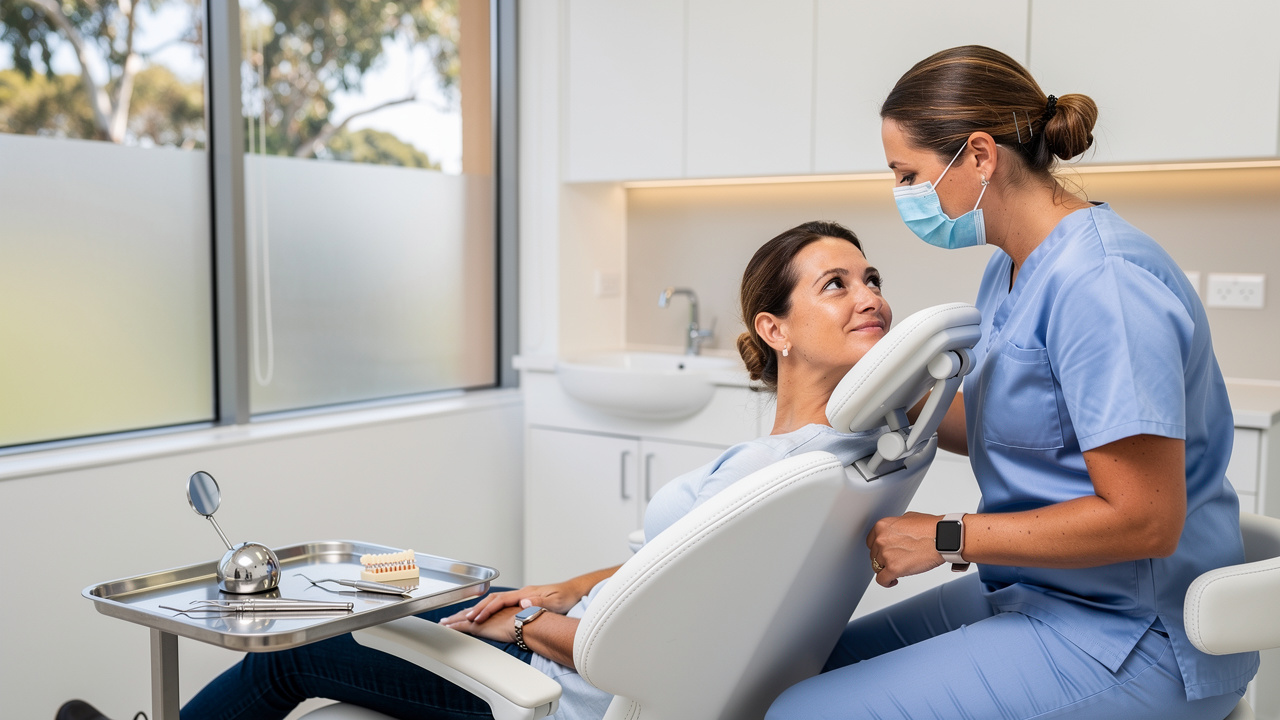
At Noosa Hinterland Dental in Pomona, near Cooroy and the wider Noosa Hinterland, this visit is calm, gentle and very family-friendly. The team explains what to expect at a dentist appointment in clear language, checks in often, and never judges if it has been years since the last dental check-up for adults.
By reading on, patients will see a clear step-by-step guide to the dental checkup procedure, how long a check-up and teeth cleaning at the dentist usually take, what it feels like, why regular visits matter, and simple tips for after the appointment.
Key Takeaways
This quick summary gives the main points before going into more detail.
-
A routine check-up and clean includes a friendly chat about medical history, a full oral health checkup, dental X-rays during the checkup if needed, and a professional teeth cleaning process with polish and often fluoride. The aim is to keep teeth, gums and mouth healthy, not just “look for holes”.
-
Most adult appointments at Noosa Hinterland Dental take around forty five to sixty minutes. Many patients feel only light pressure or vibration during dental cleaning steps, and the visit can be adjusted if someone has sensitive teeth or dental anxiety.
-
Regular preventive dental care helps stop small issues turning into painful emergencies or costly treatment. Early dental plaque removal and tartar removal in dental cleaning lower the risk of decay, gum disease and bad breath.
-
Every visit is personalised for age, health and comfort. children’s dentistry, seniors, and anxious adults all have the routine dental exam steps shaped around their needs, including gentle explanations, slower pace and extra breaks if needed.
-
Noosa Hinterland Dental supports families and anxious patients with EMS Airflow cleaning, Low Dose Digital Radiography, ceiling TVs, headphones, warm blankets and sedation dentistry options such as Happy Gas, oral sedatives and IV sedation when required.
“The best dental visit is one where nothing hurts, nothing surprises you, and you walk out feeling more confident about your mouth than when you walked in.” – Dr. Howard Farran, dentist and author
Step-By-Step – What To Expect During Your Dental Check-Up And Clean
Knowing what happens during a check-up and clean from start to finish takes much of the worry away. While every mouth is different, the core dentist visit procedure follows a familiar pattern. The team at Noosa Hinterland Dental then adjusts the timing, tools and explanations so the visit feels as relaxed as possible.
1. Welcome, Medical History And A Friendly Chat
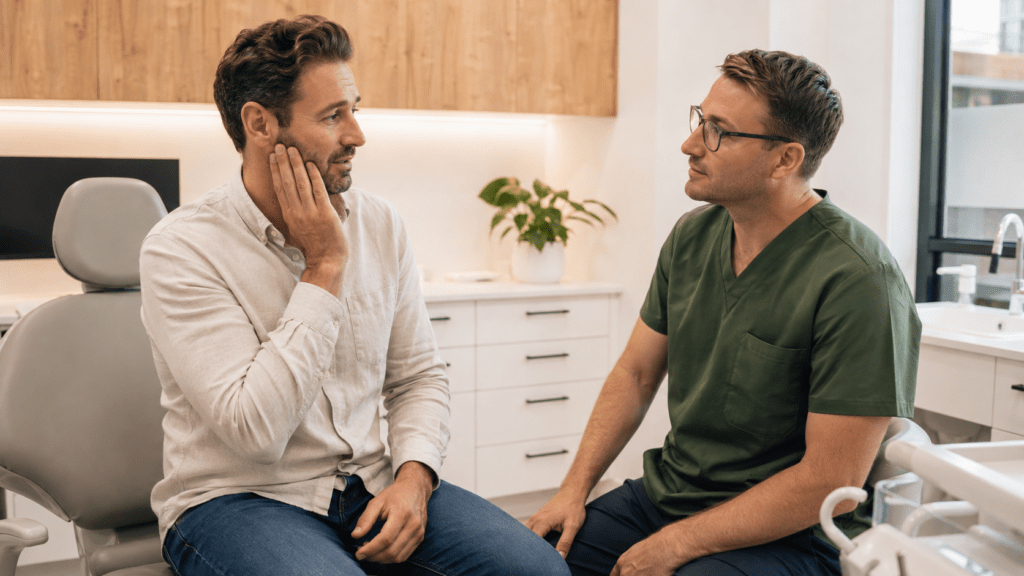
The appointment begins in the chair with a simple conversation, not with instruments. The dental team:
-
Updates medical and dental history
-
Asks about medications, pregnancy, conditions such as diabetes or heart issues
-
Checks for any recent pain, sensitivity, broken teeth or bleeding gums
-
Asks how long it has been since the last visit
-
Talks about any stressful dental experiences in the past
This is the time to mention:
-
Gag reflex worries
-
Concerns about needles
-
Goals such as keeping children cavity free, improving the look of a smile, fixing a chipped tooth, or just getting back on track with routine care
Putting everything on the table early helps the dentist shape the appointment so it feels more comfortable and predictable.
2. Understanding And Supporting Dental Anxiety
Many people in the Noosa Hinterland feel nervous about what to expect at a dentist appointment, even if it is “just a clean”. At Noosa Hinterland Dental, patients are invited to talk about what makes them uncomfortable, such as:
-
The sound of tools
-
Lying back in the chair
-
Fear of pain
-
Worries about being judged
The team sets up calming strategies, including:
-
A slower pace
-
Clear “tell–show–do” explanations
-
A simple hand signal to pause at any time
For stronger anxiety, sedation dentistry can be discussed, including Happy Gas, oral medicines or IV sedation with twilight sleep dentistry for bigger treatment. The aim is to help each person feel safe and in control, even during a simple check-up and clean.
“Patients rarely remember the details of their treatment, but they always remember how they felt in the chair.” – Dr. Paul Homoly, dental educator
3. The Professional Clean For Plaque And Tartar Removal
Next comes the professional teeth cleaning. The clinician first looks around the mouth to see:
-
Where plaque has built up
-
Where gums look red, puffy or bleed easily
Plaque is a soft, sticky film of bacteria, while tartar is the hard build-up that brushing cannot remove. Both increase the risk of decay and gum disease, so dental plaque removal and tartar removal in dental cleaning are very important.
At Noosa Hinterland Dental, the dental hygienist cleaning process often uses EMS Airflow. This modern system combines warm water, air and a fine powder to gently clean tooth surfaces and around the gums. Many people find Airflow more comfortable than heavy scraping because it feels more like a controlled spray than a sharp tool.
Traditional instruments are still used where needed, especially for thicker deposits, but the focus is on comfort. Throughout the teeth cleaning process:
-
A small suction tube removes water and debris
-
Breathing feels easy and there is no need to swallow plaque
-
Mild tenderness is normal if gums were already inflamed
Numbing gel or local anaesthetic can be used for sensitive areas when required, especially around lower front teeth and deep gum pockets.
4. Polishing And Fluoride Protection
After most of the plaque and tartar are gone, the teeth are polished. A small rubber cup or brush, together with a mildly gritty paste, is used to:
-
Smooth the enamel
-
Lift surface stains from food, drinks and smoking
-
Make teeth feel cleaner and slicker
Many patients notice their teeth feel much smoother straight away, and fresh plaque has a harder time sticking to the polished surface.
Depending on decay risk, a fluoride treatment may then be applied as a gel, foam or varnish. This quick step:
-
Strengthens enamel
-
Lowers the risk of new cavities
-
Is especially helpful for children, adults who often get decay, and people with exposed roots
Both polishing and fluoride treatments are painless, and any unusual taste fades quickly.
5. Final Floss And Freshen Up
To finish the clean, the clinician flosses between each tooth, including behind the back molars. This:
-
Clears away any last bits of paste or plaque
-
Shows how gums respond to flossing
-
Highlights areas that bleed easily or trap food
Patients can ask questions about:
-
Tricky spots
-
Braces or orthodontic wires
-
Implants or bridges
-
Crowded teeth
The team can suggest floss, interdental brushes or water flossers that suit each mouth. A final rinse leaves the mouth feeling fresh and ready for the examination.
The Dental Examination For Checking Teeth, Gums, Bite And X-Rays
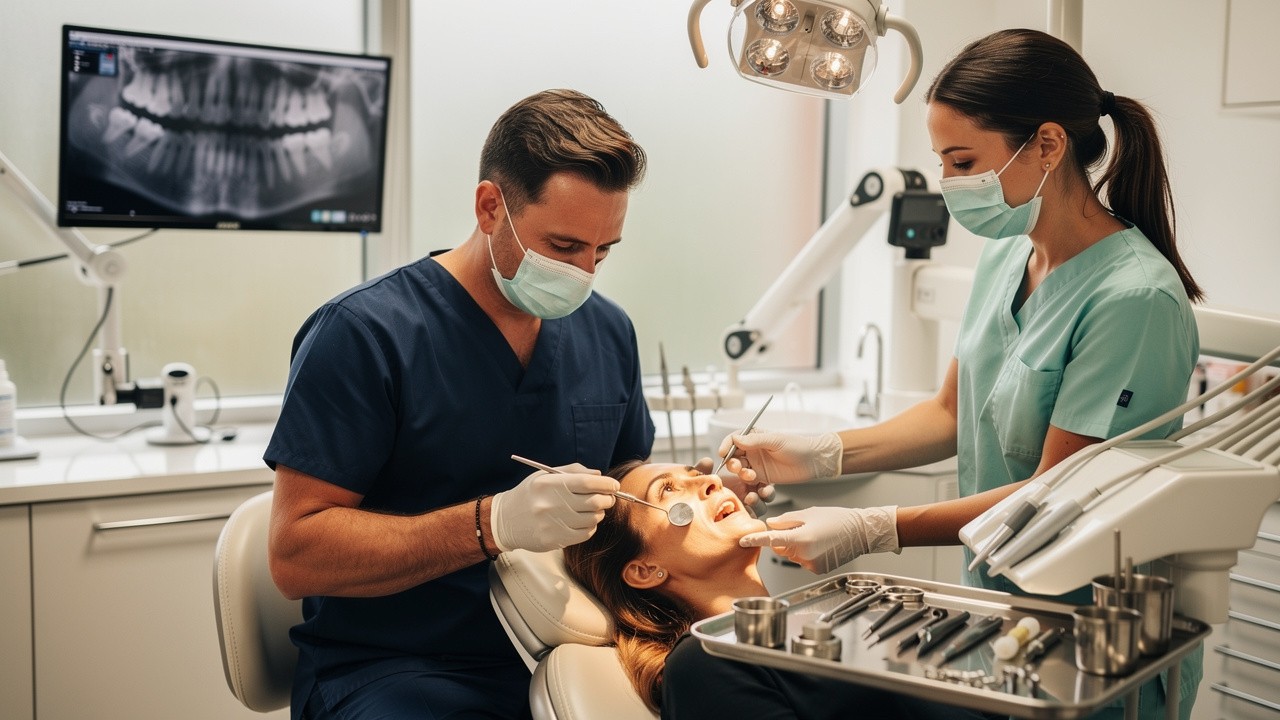
With the teeth clean, it is much easier for the dentist to see early changes. The examination part of a check-up goes far beyond “looking for cavities”. It is a full oral health checkup that reviews teeth, gums, jaw joints and soft tissues, and may include dental X-rays during the checkup when needed.
1. Visual Check Of Teeth And Existing Dental Work
Using a small mirror and fine instruments, the dentist carefully checks every tooth surface. They look for:
-
Early decay
-
Cracks and chips
-
Worn edges from grinding or clenching
-
Signs of acid wear from fizzy drinks, citrus or reflux
Existing fillings, crowns, veneers and implants are checked for:
-
Gaps
-
Looseness
-
Staining around the edges that might mean a problem underneath
For children, the dentist also looks at:
-
How baby and adult teeth are coming through
-
Whether there is enough spacing
-
Whether fissure sealants could help protect deep grooves
Finding issues early usually means simple treatment, such as a small filling or minor adjustment, rather than a larger, more expensive procedure later.
2. Gum Health And Soft Tissue Screening
Next, gum health is assessed. The dentist checks for:
-
Redness and swelling
-
Bleeding
-
Gum recession
-
Tartar below the gum line
If there is a history of gum disease, they may gently measure the pockets between teeth and gums to see how stable things are.
The soft tissues are also examined, including:
-
Cheeks
-
Tongue
-
Palate
-
The back of the throat
The dentist looks for patches, ulcers, lumps or changes in colour or texture. This screening is a standard part of a routine dental exam and helps pick up early signs of gum disease and, less often, oral cancer, long before pain appears.
3. Bite And Jaw Assessment
The way the teeth meet affects comfort, wear and long-term stability. The dentist:
-
Watches how upper and lower teeth come together
-
Checks how teeth move when biting and sliding side to side
-
Looks for signs of grinding or clenching, such as flat edges, notches near the gumline, or tender jaw muscles
This is especially important for adults and seniors who have crowns, bridges or dental implants, since an uneven bite can lead to broken teeth or damaged work over time. In some cases, a night guard is recommended to protect teeth while sleeping.
4. X-Rays And Advanced Imaging (When Needed)
Dental X-rays are not taken at every visit, but they are an important part of diagnosis when used at the right time. The dentist may suggest them to check for:
-
Decay between teeth
-
Infections at the roots
-
Hidden problems under old fillings or crowns
-
Changes in the bone around teeth and implants
At Noosa Hinterland Dental, Low Dose Digital Radiography is used to keep radiation as low as reasonably possible while still gaining clear images.
For more complex care, such as planning dental implants or investigating jaw problems, 3D CBCT scans may be recommended. These advanced images give a detailed view so treatment can be planned accurately and safely.
Comfort, Timing And Results – How Long It Takes, Does It Hurt, And What Happens Next?
Many people delay dental care because they worry about time, discomfort or cost. Understanding how long a check-up and clean takes, what it usually feels like, and what happens after the visit can make booking that appointment in Pomona or Cooroy feel less daunting.
How Long Does A Check-Up And Clean Take?
For most adults, a routine dental check-up for adults with a professional clean at Noosa Hinterland Dental takes around forty five to sixty minutes. Young children who are still building confidence often have slightly shorter visits, with more time spent on gentle explanations and praise.
First-time patients or those with more complex mouths may need extra time for:
-
Photos
-
X-rays
-
Detailed discussion of options
It is wise to allow a little buffer around the appointment so there is no rush getting in or out.
Does A Dental Check-Up And Clean Hurt?
Many people are pleasantly surprised to find that a check-up and clean feels more like firm brushing than sharp pain. Patients may notice:
-
Pressure, vibration or a light scraping feeling during dental cleaning steps
-
Some gum tenderness if there was a lot of tartar or existing inflammation
The team at Noosa Hinterland Dental works gently, checks in often, and can:
-
Slow down
-
Change instruments
-
Numb certain spots when needed
Comfort measures such as noise-cancelling headphones, ceiling TVs and warm blankets are available, and EMS Airflow is especially kind to sensitive teeth. For those with strong dental anxiety, sedation options such as Happy Gas, oral sedatives or IV sedation can be arranged for more involved care.
Deep Cleaning Vs A Regular Clean
A regular clean is the standard teeth cleaning at the dentist where plaque and tartar are removed from above and just under the gumline. This suits people with generally healthy gums.
A deep cleaning, also called scaling and root planing, is a more thorough gum treatment for active gum disease. It:
-
Reaches further under the gums
-
Smooths root surfaces
-
Removes infected build-up
Deep cleaning may be done in longer or multiple visits and can feel different from a standard clean, so the dentist always explains:
-
Why it is recommended
-
What it will involve
-
How appointments and fees may vary
Review Of Findings And Personalised Recommendations
At the end of the visit, the dentist sits the patient upright and goes through the findings in clear language. They explain:
-
Which areas are healthy
-
Where there are concerns, such as early decay, gum inflammation, cracks or worn teeth
The dentist sets out:
-
What needs treatment soon
-
What can be watched
-
Which items are more cosmetic or optional
Preventive advice is included, such as:
-
Brushing and flossing tips
-
Diet guidance
-
Night guards for grinding
-
Sports mouthguards for active kids and adults
If treatment is needed, such as fillings, crowns, implants or cosmetic work, a simple step-by-step plan is outlined, and the front desk team then provides itemised estimates so costs are clear.
After Your Appointment – Caring For Your Smile Between Check-Ups
What happens during a check-up and clean is only part of the story. The way teeth and gums are cared for at home makes a big difference to how easy the next visit will be. Good daily habits, together with sensible timing for future appointments, help prevent dental emergencies and keep smiles strong.
What To Expect After A Clean
After a professional teeth cleaning, it is common for teeth to feel unusually smooth and for the mouth to feel very fresh. If gums were inflamed before the visit, they may:
-
Feel a little tender
-
Look slightly red for a day or two
Some people notice mild sensitivity to hot, cold or brushing, which usually settles quickly. Helpful tips include:
-
Gentle brushing with a soft brush
-
Using lukewarm water instead of very hot or cold
-
Avoiding very hard, crunchy or sticky foods for a short time
If pain, swelling or bleeding seem heavy or do not improve after a couple of days, it is important to contact Noosa Hinterland Dental for advice.
Daily Habits That Make Your Next Visit Easier
Daily care is the partner to professional cleaning. To keep plaque under control between visits:
-
Brush twice a day with fluoride toothpaste, including carefully along the gumline
-
Clean between teeth once a day with floss or interdental brushes
-
Limit frequent sugary or acidic snacks and drinks
-
Drink water regularly, especially after coffee, tea or soft drinks
For anyone who grinds their teeth, wearing a night guard protects enamel and dental work, while sports mouthguards help protect against injuries. Parents can guide and check children’s brushing until they have the hand skills to clean well by themselves.
“You don’t have to brush all your teeth, only the ones you want to keep.” – Common dental saying
How Often Should You Have A Check-Up And Clean?
A common guideline for how often someone should get a dental cleaning is every six months. This suits many adults and children with average risk. Some people need more frequent visits, around every three to four months, especially if they have:
-
A history of gum disease
-
Diabetes
-
Heavy restorations or multiple crowns
-
High decay risk
-
Smoking habits or dry mouth
A few low-risk patients with excellent home care may be safe with nine to twelve months between visits. At Noosa Hinterland Dental, recall timing is set after looking at the whole picture, including medical history, mouth conditions and how quickly plaque and tartar return.
FAQs
Before booking, many people still have a few quick questions about routine dental exam steps and professional cleaning.
How long does a dental check-up and clean take?
For most adults, a standard check-up and clean takes about forty five to sixty minutes. First visits or more complex cases can run a little longer because of X-rays, photos or extra discussion. Children’s visits are often shorter and more play-based, especially for younger kids.
Is a professional teeth cleaning really necessary if I brush well at home?
Even excellent brushing and flossing cannot remove every bit of tartar, especially in hard-to-reach spots. Professional teeth cleaning reduces the risk of decay, gum disease and bad breath. It also allows the dentist to spot hidden issues during the routine dental exam steps before they cause pain.
How much does a dental check-up and clean cost?
The cost of a check-up and clean depends on what is needed, such as whether X-rays are taken or if a deep cleaning rather than a regular clean is required. At Noosa Hinterland Dental, patients receive clear, itemised estimates before treatment. The practice accepts major health funds and offers HICAPS for on-the-spot claiming.
Is it safe to have dental X-rays during a check-up?
Modern digital X-rays use very low levels of radiation, much less than older systems. At Noosa Hinterland Dental, Low Dose Digital Radiography is used to keep exposure as small as reasonably possible while still gaining important diagnostic information. X-rays are only taken when there is a clear clinical reason.
I am really anxious about the dentist – can I still have a check-up and clean?
Yes. Many patients feel anxious, and the team at Noosa Hinterland Dental has a lot of experience helping them. Gentle communication, headphones, TVs, warm blankets, Airflow cleaning and, when needed, Happy Gas, oral sedatives or IV sedation can all be used. It can help to start with a simple, low-pressure visit focused on talking and a very gentle exam.
Ready to Book a Check-Up and Clean?
If you’ve been putting off your visit or just want peace of mind, a gentle check-up and clean is the best place to start. Knowing what happens during a check-up and clean can make the whole experience feel much easier—and often more comfortable than expected.
At Noosa Hinterland Dental in Pomona, we take a calm, friendly approach with every patient, whether it’s your first visit in years or just a routine check.
👉 Book your check-up and clean today and take a simple step towards a healthier, more confident smile.
Conclusion
A check-up and clean at Noosa Hinterland Dental brings together a friendly chat, careful examination of teeth, gums and bite, dental X-rays when required, and a professional clean with polish and fluoride. The visit finishes with clear advice about any treatment needs and simple tips to keep the mouth healthy at home.
Regular check-ups help prevent bigger problems, support fresher breath, maintain gum health and give confidence in the look and comfort of the smile. Each appointment is shaped to the person in the chair, whether that is a child at their first visit, an anxious adult, or a senior with implants or dentures.
For families and individuals in Pomona, Cooroy and across the Noosa Hinterland, booking a routine check-up and clean is one of the easiest steps towards long-term oral health. To arrange a gentle, non-judgemental appointment, contact Noosa Hinterland Dental and let the caring local team guide the next visit at a comfortable pace.