Dental therapist hygienist dentist comparisons can feel confusing. In Australia, dentists diagnose and manage complex treatment for all ages, dental therapists commonly care for children and teenagers within their scope, and dental hygienists focus on gum health, cleaning and prevention. This guide explains who does what and helps Pomona families book the right clinician.
In Pomona and the wider Noosa Hinterland, these three roles often work together in one dental team. At Noosa Hinterland Dental in Pomona, your appointment is matched to your needs on the day, and any personal advice about treatment always follows a proper examination and X‑rays when needed. That way, you see the right person, at the right time, for the right kind of care.
This guide walks through what each role does, who usually cleans teeth at the dentist, when you should book with a dentist first, and how team care works for families. Read on to see how this applies to adults and children across Pomona, Cooroy, Cooran, Kin Kin and the Noosa Hinterland.
Key takeaways
-
For most routine cleans and gum checks, you will usually see a dental hygienist or an oral health therapist. They focus on removing plaque and tartar, checking your gums and helping you improve brushing and flossing at home. A dentist may still review your mouth and X‑rays at set intervals, especially if any concern shows up.
-
You will see a dentist rather than a hygienist or therapist when you have pain, swelling, broken teeth, wisdom tooth problems or more complex treatment planned. The dentist is trained to diagnose the full picture, discuss options, and carry out root canals, crowns, extractions, implants and other advanced care. Hygienists and therapists pass serious findings on to the dentist quickly.
-
Many Australian practices now have oral health therapists, who combine the skills of a hygienist and a children’s dental therapist. This helps families because the same clinician can often look after kids’ cleans and their small fillings, while dentists focus on the heavy lifting. When you book, it is always fine to ask who you will see and what that person’s role is.
What is the difference between a dentist, dental therapist and dental hygienist?
The key difference between a dentist, dental therapist and dental hygienist is the scope of practice each has in Australia. Scope of practice means the types of patients and procedures that a person is trained and allowed to manage. All three are registered oral health professionals, but their usual day‑to‑day work is not the same.
Dentists have the broadest scope. They diagnose disease, plan treatment, and carry out everything from fillings and extractions to root canal therapy, crowns, bridges, dentures and implants. Dental therapists focus mainly on children and teenagers, treating decay in baby and adult teeth, doing simple extractions and providing prevention. Dental hygienists look after gum health and prevention for all ages, with a special focus on cleaning, early disease detection and home‑care coaching.
How each role helps your oral health
In Australia, a dentist is the primary oral health practitioner who carries overall responsibility for your dental diagnosis and treatment plan. A dental hygienist is the prevention and gum specialist within the dental team, usually for patients of all ages. A dental therapist is a clinician who provides most everyday dental treatment for children and often teenagers, within clear age and treatment limits.
Each role has a defined scope of practice. This means they only perform procedures that match their university training, current skills and registration with bodies such as the Dental Board of Australia and the Australian Health Practitioner Regulation Agency. Many clinicians now register as oral health therapists, which combines dental therapy and dental hygiene scopes, especially helpful for children and teenagers.
Here is a simple example of who you might see for common needs, described in words rather than a chart:
For a routine clean, you will usually see a hygienist or oral health therapist, who checks your gums, removes plaque and tartar, polishes your teeth, applies fluoride and talks with you about brushing and diet.
If a child has a small cavity, this is often managed by a dental therapist or oral health therapist, who completes a check‑up, arranges X‑rays when needed, places a filling and gives prevention advice to the child and parents.
When gum disease needs active treatment, a hygienist or oral health therapist does deep cleaning under the gums, usually with a dentist overseeing the diagnosis and plan.
For a toothache or broken tooth, you will see a dentist, who carries out a full diagnosis with X‑rays and discusses options such as a filling, root canal or extraction.
Are dental therapists and hygienists “real” dental professionals?
Dental therapists and dental hygienists are fully qualified oral health professionals, not dental assistants. They complete accredited diploma or bachelor degrees, have their own AHPRA registration and must meet strict national standards for clinical care, privacy and ongoing education. Their work is backed by the same infection control rules and ethical code that apply to dentists.
Their role is different from a dental assistant. Dental assistants help with setting up the room, passing instruments, cleaning equipment and supporting patients, but they do not diagnose or independently treat teeth or gums. Therapists and hygienists have legal responsibility for the procedures within their scope of practice and must keep detailed clinical records, just like dentists.
Some people worry that seeing a hygienist or therapist means second‑best care. In reality, this team approach is now standard across Australia and other countries, because it lets each clinician focus on what they are best trained to do. Dentists stay free to deal with complex problems, while therapists and hygienists put more time into prevention and child‑friendly care.
What training and qualifications do dentists, therapists and hygienists have in Australia?
Training for dentists, dental therapists and dental hygienists in Australia is regulated and accredited at a national level. All three roles require tertiary study, clinical placements and registration with the Dental Board of Australia before they can treat patients. They must also keep up with continuing professional development to keep registration current.
Dentists generally complete 5 to 7 years of university study in dentistry. Dental therapists and hygienists usually complete 2 to 3 year diploma or bachelor degrees, often now combined in a 3 year Bachelor of Oral Health that can lead to registration as an oral health therapist. No matter the title, everyone must work within the Dental Board’s scope of practice guidelines.
Dentist qualifications and ongoing training
Dentists in Australia complete an accredited dental degree such as a Bachelor of Dental Surgery, Bachelor of Dental Science or Doctor of Dental Medicine. These courses cover general science, anatomy, physiology, pathology, pharmacology, radiology and all main areas of clinical dentistry. Students practise under supervision in university clinics and hospitals before graduation.
After finishing university, dentists register with AHPRA and the Dental Board of Australia. They must hold professional indemnity insurance and follow national standards for infection control, safe X‑ray use and record keeping. The Dental Board’s registration standards for dental practitioners, available at dentalboard.gov.au, set out these obligations.
Dentists also complete continuing professional development every year. This might include training in new materials, updated safety guidelines, medical emergency management, or further skills such as implant dentistry or complex rehabilitation. In many practices, the dentist carries overall clinical governance for the team, which means they guide treatment planning and support therapists and hygienists with diagnosis and referrals.
Dental therapist, oral health therapist and hygienist pathways
Dental hygienists usually complete a 2 to 3 year diploma or bachelor program focused on gum health and prevention, with their subsequent employment classifications and pay levels set out in Queensland’s dental stream wage rates. Their subjects include oral pathology, periodontology, radiography, local anaesthetic techniques within scope, oral health promotion and behaviour change. Graduates are well prepared to manage the dental hygienist role, which centres on cleaning, gum treatment and patient education.
Dental therapists have traditionally studied 2 or 3 year programs focused on children’s dentistry. Their learning covers child growth and development, behaviour management, decay detection, fillings in baby and adult teeth, simple extractions, fluoride use and preventive programs. Many now hold a Bachelor of Oral Health and register as oral health therapists.
Oral health therapists combine the skills of both a dental therapist and a hygienist. In Australia, this usually means they can provide hygiene services for all ages, and children’s dental care such as fillings and simple extractions up to a set age, which depends on their specific qualification and registration. Like dentists, they must complete CPD, follow infection control standards and stay within their personal scope, so your practice can advise exactly what each clinician can do.
Who will I see for my check‑up, clean and everyday dental care?
For everyday care, most families see a mix of dentist, hygienist and therapist over time. The clinician you see depends on whether you are having a routine check‑up and clean, gum treatment, children’s fillings or urgent care for pain. A well organised dental team in Pomona or Cooroy will match appointments to your needs rather than taking a one size fits all approach.
Adults often have their initial comprehensive assessment with a dentist, then most ongoing cleans with a hygienist or oral health therapist. Children may have their first visit with a dentist or oral health therapist, then see a children’s dental therapist or oral health therapist for regular check‑ups, sealants and most small fillings. The dentist usually steps in when cases are more complex or a broader plan is needed.
Who usually cleans teeth at the dentist?
For routine check‑ups, the person who usually cleans teeth at the dentist is a dental hygienist or an oral health therapist. Their appointments focus on preventing problems, checking your gums and keeping your mouth feeling fresh. They are trained to spot early warning signs and call the dentist in if something more serious appears.
A typical clean includes a visual check of your gums, measurement of any pockets around the teeth and careful scaling to remove plaque and tartar from above and below the gum line. This is often followed by a polish to remove surface stain, and a fluoride treatment to strengthen enamel. The hygienist or therapist will also talk through brushing, flossing and diet tips that fit your daily habits.
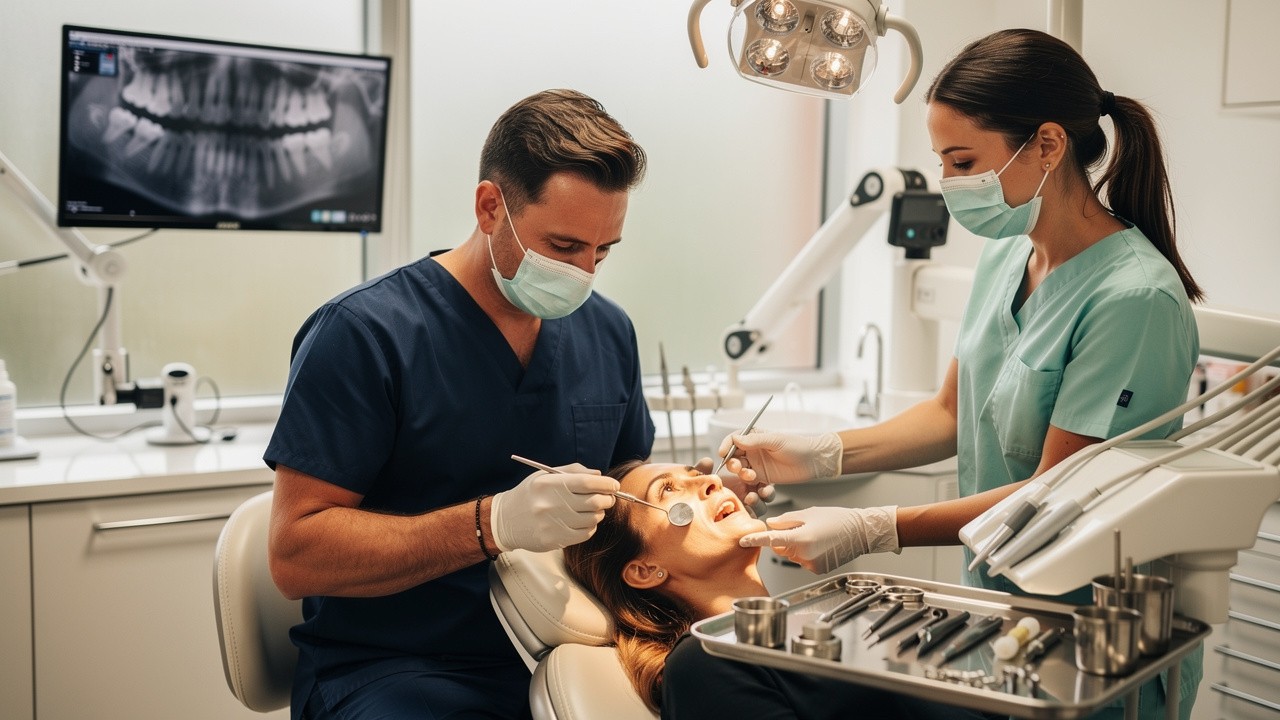
Dentists sometimes carry out the clean themselves, especially for new patients, people with more advanced gum disease, or when a clean is combined with other treatment. At this Pomona clinic, comprehensive check‑ups include digital X‑rays when required, gum assessments and professional cleans using gentle equipment such as the EMS Airflow spa cleaning system, all under a dentist led plan.
Typical care pathways for adults and children in Pomona and the Noosa Hinterland
For a new adult patient in Pomona, the first visit often starts with a full check‑up and X‑rays with a dentist. This includes a review of your medical history, a careful examination of teeth, gums and jaw joints, and screening for oral cancer. After this, you are usually booked with a hygienist or oral health therapist for regular cleans and gum maintenance based on your personal risk.
If an adult has bleeding gums or signs of gum disease, the dentist will diagnose the condition and explain the stages of treatment. A hygienist or oral health therapist then performs deep cleaning under the gums over one or more visits, followed by ongoing maintenance at set intervals. This shared approach helps stabilise gum health and reduces the chance of needing more invasive treatment later.
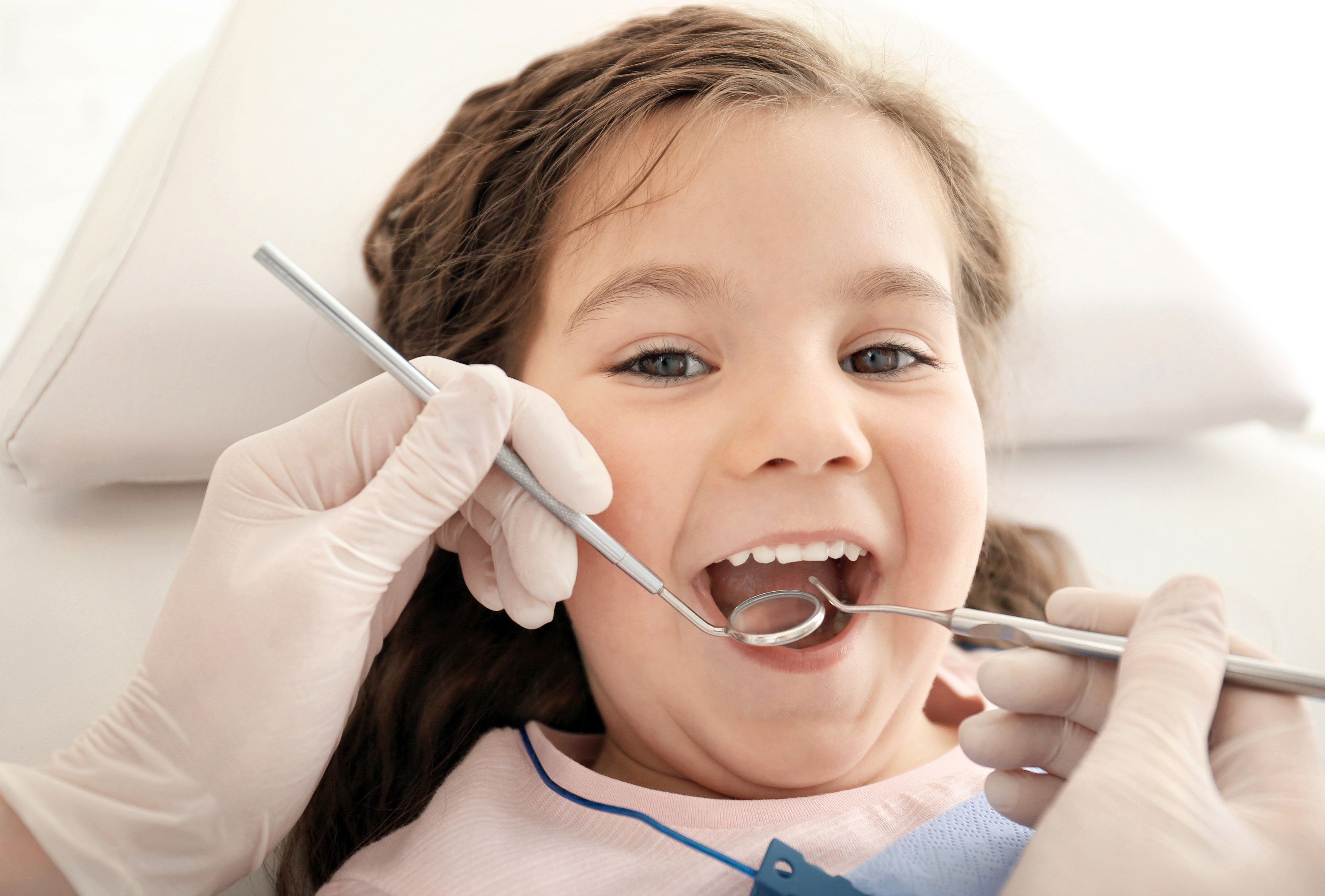
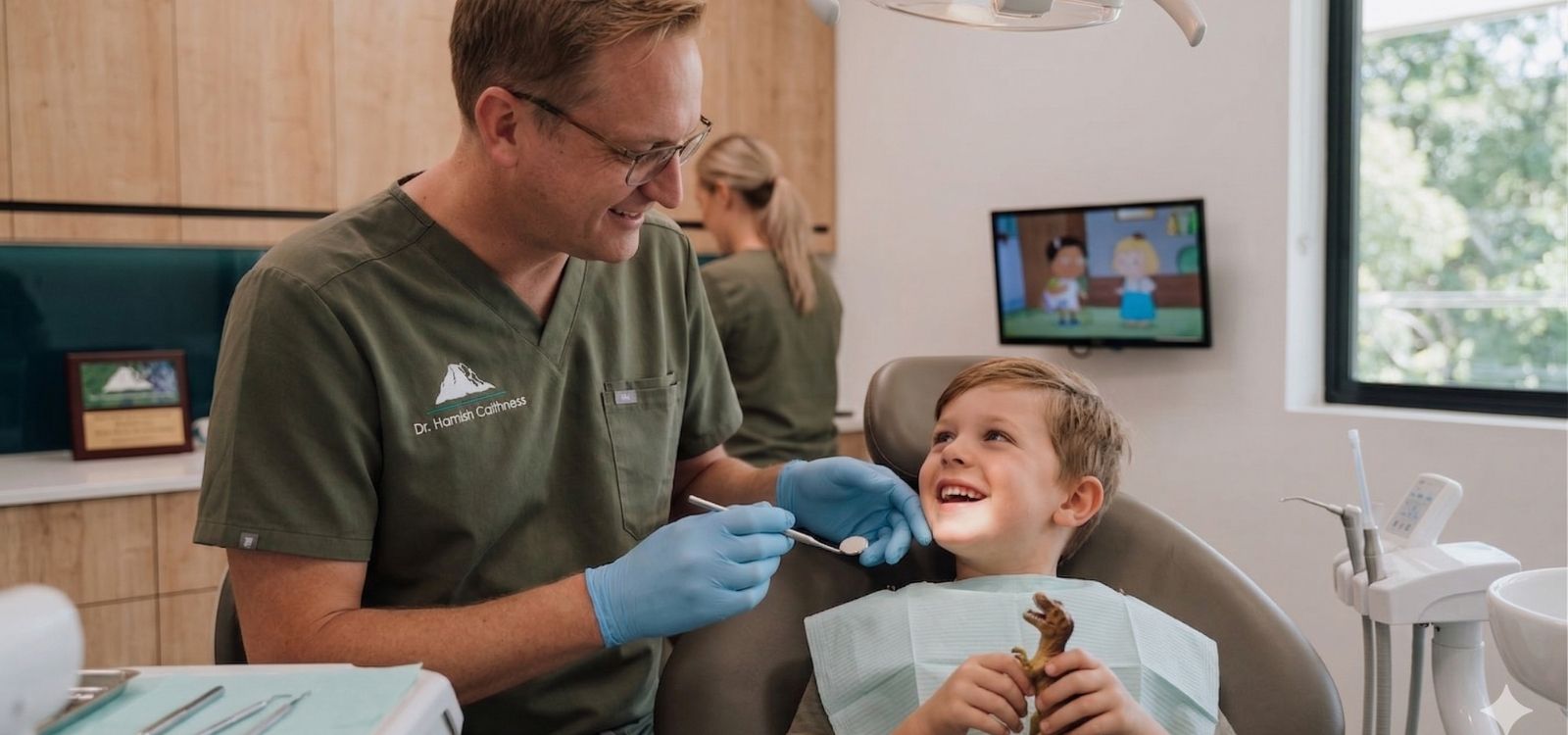
For a child’s first visit, families in Cooroy, Cooran or Kin Kin might see a dentist or an oral health therapist, depending on the child’s age and needs. The focus is on a gentle introduction, counting teeth, showing the chair and tools, and giving parents advice on brushing, diet and fluoride. Ongoing children’s care is often provided by a dental therapist or oral health therapist, who looks after check‑ups, fissure sealants, fluoride applications and simple fillings within their scope, with the dentist reviewing more complex cases as needed.
When should I see a dentist instead of a hygienist or therapist?
You should see a dentist rather than a hygienist or therapist when there are signs of pain, infection, trauma or more complex treatment needs. A dentist’s broader training means they can diagnose the cause, order and interpret X‑rays, and manage advanced procedures. Hygienists and therapists help by picking up early signs, but they refer quickly to a dentist when problems sit outside their scope.
For routine prevention and gum maintenance, a hygienist or oral health therapist is often the right first appointment. When there is a new symptom, large breakage or long term concern, booking with a dentist usually saves time and leads to a clearer plan.
Common situations where a dentist is the right first appointment
-
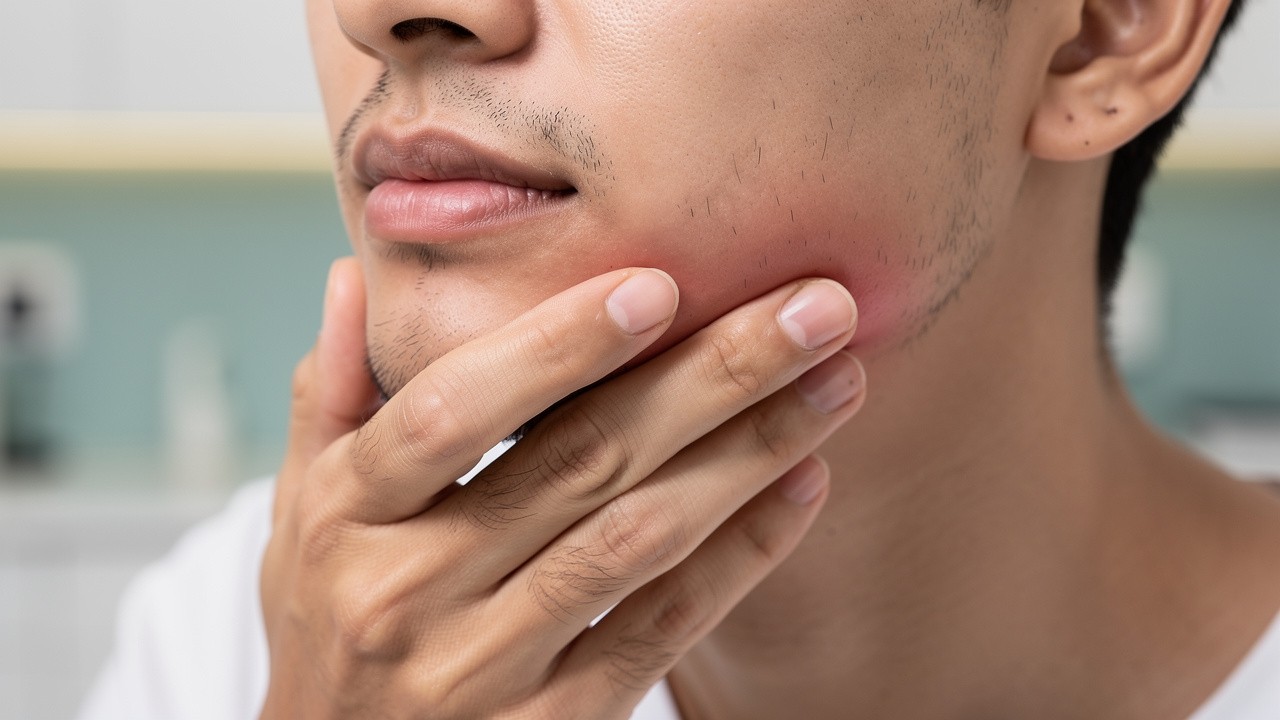
Sudden toothache, facial swelling or an abscess need a dentist’s prompt assessment. The dentist can diagnose the source, prescribe medicines when required and start treatment such as drainage, root canal or extraction. Hygienists and therapists are not authorised to manage these more serious infections on their own.
-
Broken, cracked or heavily worn teeth usually require a dentist’s skills. The dentist can judge whether a filling, crown, onlay or other option will give the best longer term result. This often involves X‑rays and careful testing of your bite and nerve response. Smaller chips may still be managed at a hygiene visit if they are shallow and symptom free.
-
Problems with wisdom teeth or suspected root canal issues belong with the dentist from the start. These conditions can affect nearby nerves, bone and sinus spaces and may need 3D imaging or referral to a specialist. A dentist can explain the findings, outline choices and arrange any surgical care if needed. Hygienists and therapists help by monitoring the area during routine visits.
-
Concerns about your overall smile, multiple missing teeth or the fit of dentures should also start with the dentist. Planning veneers, implants, dentures or full mouth rehabilitation requires a full overview of your bite, jaw joints and gum health. Once a plan is in place, hygienists and therapists support it with ongoing cleaning and maintenance.
When a hygienist or therapist appointment is ideal
A hygienist or oral health therapist is the ideal first appointment when your main goal is prevention and maintenance. This includes six or twelve monthly cleans, gum checks and advice about brushing, flossing and diet. These visits help catch small issues before they turn into pain or more involved work.
Ongoing gum disease maintenance after initial deep cleaning is also usually led by a hygienist or oral health therapist. They measure your gums, remove plaque and tartar and adjust the recall schedule to your response. Adults and teenagers with braces, implants or bridges often benefit from regular hygiene visits, as cleaning around these areas can be harder at home.
Children needing regular check‑ups, fissure sealants or simple fillings within a clear children’s scope are often booked with a dental therapist or oral health therapist. These clinicians are skilled at talking with kids in a calm, age‑appropriate way and can make visits less daunting. If anything more complex appears, they arrange a dentist review, often on the same day or soon after.
How does team‑based dental care benefit Pomona and Noosa Hinterland families?
A team that includes dentists, dental therapists and dental hygienists offers real advantages for families in Pomona and the Noosa Hinterland. Different clinicians can see you sooner, which can shorten waiting times for check‑ups and cleans. At the same time, care stays joined up because everyone shares the one record and treatment plan.
Team based care also makes prevention easier. Hygienists and therapists put more time into cleaning, risk checks and education, while dentists focus on diagnosis and more advanced treatment. For regional communities, this model can reduce the need to travel for every issue, especially when the practice has modern imaging, same day crown technology and implant facilities on site, an approach echoed in wider efforts around delivering dental services closer to home, such as recent research into a deadly dental service at home model.
How the dental team works together day to day
Behind the scenes, all members of the dental team read and update the same digital record for each person. This record includes medical history, X‑rays, photos, charting of teeth and gums, and notes about what matters to you. When you move between dentist, hygienist and therapist, each clinician can see what has already been done and what the next steps are.
In daily work, hygienists and oral health therapists usually focus on prevention and early detection. They run recall appointments, perform cleans, take X‑rays within their scope and flag any concerns. Dentists then plan and carry out complex fillings, root canal therapy, extractions, crowns, implants and other advanced work.
At Noosa Hinterland Dental, this means dentist led planning supported by in house imaging such as digital X‑rays and CBCT 3D scans, as well as same day CEREC crowns for suitable cases. Complex treatment can often be completed in Pomona rather than sending patients down the coast, while routine cleans and children’s care continue alongside.
Why a team model supports prevention and comfort
A team model supports prevention because it creates more appointment options for check‑ups and cleans. It is easier to keep six or twelve monthly visits when there are several clinicians available. Regular reviews also mean that small problems can be managed early, which often reduces the need for bigger procedures later.
Therapists and hygienists usually have longer appointment times for education and gentle, step by step care. This helps adults and children who feel nervous in the chair or who have had a gap since their last visit. Child‑focused clinicians pay close attention to building trust, which can reduce fear of dental care across the lifespan.
For anxious patients, practices in the Noosa Hinterland may offer options such as oral sedatives, Happy Gas and numbing gel. At this Pomona practice, these comfort measures are matched to each person’s needs and medical history so that treatment is as calm as possible. The overall goal is steady, prevention based care that fits each family’s situation.
In summary
Dentists, dental therapists and dental hygienists all play important roles in keeping mouths healthy across Australia. Dentists have the widest training and manage diagnosis and complex treatment for all ages. Hygienists and oral health therapists focus on gum health, cleaning and education, while dental therapists and oral health therapists provide most everyday care for children and many teenagers.
For families in Pomona, Cooroy, Cooran, Kin Kin and surrounds, it is normal to see more than one type of clinician over time. You might meet a dentist for your first full assessment, a hygienist for regular cleans, and an oral health therapist or children’s dental therapist for your child’s fillings and sealants. At Noosa Hinterland Dental, appointments are matched to your needs and risk level, and the first step is a proper check‑up so that the team can recommend who you should see next.
If you are unsure who to book with, start by asking for a check‑up and explaining your main concern, whether that is pain, overdue preventive care or support for your child. The reception team can let you know which clinician the appointment is with and whether a dentist review is included. From there, a clear, written plan can outline your options.
To arrange an assessment, contact the practice in Pomona and request a comprehensive check‑up. Personal advice about treatment can only be given after an examination, and X‑rays where needed, so that any plan is based on your mouth, not assumptions.
Frequently asked questions
Families often have practical questions about who does what in the dental team. These answers give general guidance for Australian settings and do not replace personal advice, which always depends on a clinical examination.
Question: Who cleans teeth at the dentist – the dentist, hygienist or therapist?
Most routine cleans are done by a dental hygienist or an oral health therapist. They remove plaque and tartar, check gum health and provide home‑care coaching. Dentists may perform the clean for new patients, people with more complex gum disease, or when a clean is combined with other treatment. All follow the same strict infection control rules and work together to protect your gums and teeth.
Question: Is it safe for my child to see a dental therapist instead of a dentist?
Yes, it is safe for your child to see a dental therapist for routine children’s care. Dental therapists and oral health therapists are specially trained and registered to treat kids within clear age and treatment limits. They work as part of a dentist led plan and refer more complex or medically involved cases to a dentist or paediatric dentist. Their child friendly style often makes visits more relaxed.
Question: Will a hygienist or therapist miss something that a dentist would notice?
Hygienists and therapists are trained to spot early signs of decay, gum disease and other issues. They record their findings and call in the dentist whenever they see anything suspicious or outside their scope. Many practices schedule regular dentist reviews alongside ongoing hygiene care to support safe, joined‑up treatment.
Question: Can a hygienist or therapist numb my teeth if I’m nervous about a clean or filling?
Many hygienists and therapists in Australia are trained and authorised to give local anaesthetic within their scope. This is common for deep cleaning under the gums or children’s fillings. Stronger sedation or complex pain control is organised and supervised by a dentist or another appropriately qualified practitioner. Always mention any anxiety so the team can plan comfort options with you.
Question: How do I know who I’ll be seeing at my Noosa Hinterland Dental appointment?
You can always ask reception which type of clinician your appointment is with and what it will cover. A standard check‑up and clean usually includes a mouth examination, any needed X‑rays, gum assessment and professional clean, sometimes shared between dentist and hygienist. If your needs change, the team can often arrange a dentist review during the same visit or at a nearby time.
Question: How often should I book a clean or check‑up for my family?
Most people benefit from a clean and check‑up every six to twelve months, adjusted to their risk of decay and gum disease. Some need more frequent visits, such as people with gum disease, diabetes, braces or a history of heavy tartar build‑up. At this Pomona clinic, recall times are set after an individual assessment so that your family has a schedule that fits your mouths, not a generic timetable.
Contact Us Now to book an appointment with Noosa Hinterland Dental.