If you are looking for worn teeth treatment, the right option depends on what has caused the wear, how much enamel has been lost and whether the teeth are chipped, sensitive, short or weakened.
Teeth can become worn from grinding, clenching, acid erosion, reflux, hard brushing, old fillings, accidents or an uneven bite. Over time, this can make teeth look shorter, feel rough, become sensitive or chip more easily.
At Noosa Hinterland Dental in Pomona, we assess the cause of tooth wear before recommending treatment, which may include protective splints, bonding, veneers, crowns, enamel care or full mouth rehabilitation for more advanced cases.
Jump to section
- How Can Worn Teeth Be Repaired?
- What Causes Teeth To Become Worn, Short Or Chipped?
- Is Tooth Wear A Normal Part Of Ageing?
- How Do Dentists Assess Worn, Short Or Chipped Teeth?
- What Treatment Options Help With Worn, Chipped Or Short Teeth?
- How Can You Prevent Further Tooth Wear And Protect Your Enamel?
- Ready To Do Something About Worn Or Chipped Teeth?
- Frequently Asked Questions
How Can Worn Teeth Be Repaired?
Teeth usually become short, worn or chipped when their protective enamel thins from repeated mechanical, chemical or friction forces. Common triggers include night-time grinding or clenching, acid from drinks or reflux, and over-enthusiastic brushing. Old fillings, past accidents and an uneven bite can also concentrate pressure on certain teeth, so edges crack and chip more easily. Effective worn teeth treatment at Noosa Hinterland Dental starts by finding which of these causes apply in your mouth, then repairing and protecting the damaged teeth.
When teeth change shape, everyday life feels harder. Food can catch on rough edges, cold drinks sting, and the smile in photos may not look familiar any more. Worry about cost or anxiety about the chair can make it easy to delay a visit.
Modern dentistry offers gentle, stepwise care to restore comfort, function and appearance while dealing with the underlying tooth wear causes. In Pomona, Noosa Hinterland Dental supports adults and families from Cooroy, Cooran, Kin Kin, Imbil and the wider Sunshine Coast Hinterland with personalised plans, from small bonding right through to full mouth rehabilitation. The sections below explain why teeth wear, how dentists assess them, and which treatments and home habits can help.
“Tooth wear is not just a cosmetic issue – it can affect chewing, comfort and long‑term oral health. Early advice makes a real difference.” – Noosa Hinterland Dental clinical team
Ready to understand what is happening and what can help your teeth feel stronger again? Keep reading for clear, calm guidance.
Key Takeaways
-
Main Causes Of Worn And Chipped Teeth
Teeth often wear from a mix of grinding, acid erosion and harsh brushing habits. Old fillings, accidents and crooked bites add more stress. Understanding this mix is the first step toward safe, lasting repair. -
Why Early Tooth Wear Shouldn’t Be Ignored
Early wear may seem minor, yet it can progress faster than expected. Shorter teeth often lead to sensitivity, cracks and jaw tiredness. Seeing a dentist sooner usually means simpler, more affordable care. -
Modern Options To Repair Worn Teeth
Treatment ranges from night splints and small composite bonding through to veneers, crowns and full mouth rehabilitation. Noosa Hinterland Dental plans treatment around your comfort, budget and goals. -
Preventing Further Tooth Wear At Home
Gentle brushing, smart food and drink choices, and jaw relaxation habits slow ongoing damage. A protective splint or mouthguard often supports these changes. Small daily steps protect both natural teeth and new restorations. -
When To See Noosa Hinterland Dental
Book a visit if you notice shorter teeth, regular sensitivity, chips, cracks or a changing bite. The Pomona team offers judgement‑free advice and worn teeth treatment for residents across the Noosa Hinterland.
What Causes Teeth To Become Worn, Short Or Chipped?
Teeth become worn, short or chipped when the enamel and underlying dentine are gradually lost faster than they can cope. Most adults have more than one cause, such as grinding, acid exposure and brushing habits working together. Understanding these patterns helps guide worn teeth treatment that actually lasts.
Research in the Journal of Oral Rehabilitation reports that sleep bruxism affects a sizeable group of adults, which helps explain why flattened and chipped edges are so common, with studies such as A 10-Year Follow-Up of extreme erosive cases illustrating just how significantly untreated wear can progress. Dietary acids, highlighted by the Australian Dental Association, also soften enamel, making it much easier to wear away. Add an old metal filling or a bite that does not meet evenly, and certain teeth end up taking most of the load.
At Noosa Hinterland Dental, the team looks at lifestyle, medical history and existing dental work rather than blaming a single habit. Someone in Pomona might sip soft drink across the day, clench during stressful commutes, and brush hard with a whitening paste. Another person in Cooroy might have reflux, worn old fillings and a deep overbite. Each pattern needs a different mix of prevention and repair.
Main Types Of Tooth Wear And Everyday Triggers
Main types of tooth wear include attrition, erosion, abrasion and damage linked with older dental work or accidents. Each shows up in slightly different ways, yet they often overlap in the same mouth. Knowing which signs match your teeth makes the causes easier to recognise.
-
Attrition
Attrition means tooth‑to‑tooth wear from clenching or grinding, also called bruxism teeth damage. Night grinding flattens back teeth and squares off front edges, while daytime clenching adds cracks and tiny fractures. According to Mayo Clinic, many people do not realise they grind until a partner or dentist mentions it. Stress, some medications and misaligned bites all increase the risk. -
Acid Erosion
Acid erosion comes from chemical wear where acid dissolves tooth surfaces. Soft drinks, energy drinks, sports drinks, fruit juice and vinegar‑based “health” drinks are frequent triggers, as are reflux and frequent vomiting. Teeth can look glassy or thin at the edges, with yellow tones showing through from dentine, and often need dental erosion treatment or worn enamel repair. -
Abrasion And Abfraction
Abrasion and abfraction relate to friction and flexing. Scrubbing with a hard brush or abrasive whitening paste can create notches at the gumline. Heavy biting forces bend the tooth slightly, which can lead to wedge‑shaped defects. Using teeth to open packets or hold pins also leads to localised chips that then wear faster. -
Trauma And Ageing Dental Work
Trauma and ageing dental work are another piece of the puzzle. A knock to the mouth in sport can start a crack that later needs cracked tooth repair or a chipped tooth fix. Old amalgam fillings in back teeth may expand and contract over time, raising the chance of fractures. Many adults across Cooran, Kin Kin and Imbil show a combination of these patterns rather than a single cause.
Is Tooth Wear A Normal Part Of Ageing?
Some gentle smoothing of tooth edges over decades is expected, yet rapid, uneven or painful changes are not simply ageing. When teeth shorten quickly, become very sensitive or start to chip, that suggests active wear that needs short teeth treatment or enamel wear treatment.
A review in the Journal of Dentistry notes that mild wear is almost universal in older adults, yet only a portion develop severe loss of height and function, and research on Treatment decisions of patients with severe tooth wear highlights how important early clinical decisions are in preventing irreversible damage. The difference often comes from added risks such as grinding, high acid intake or long‑term bite problems. Normal wear tends to be slow and fairly even, while excessive wear appears faster and more patchy.
In many Pomona and Cooroy patients, the first sign is a change in how the bite feels. The back teeth may not meet like they used to, or it takes extra effort to find a comfortable position. Others notice that their smile looks “shorter” in photos, with less tooth showing and tiny cracks around the edges. These are not changes that need to be shrugged off.
Early discussion with Noosa Hinterland Dental lets the team decide whether simple monitoring and prevention is enough, or whether active worn teeth treatment is needed. The goal is to keep as much healthy tooth as possible, while avoiding the more complex crown or full mouth work that severe wear can require later.
Normal Versus Excessive Tooth Wear Comparison Table
Understanding the gap between normal and excessive wear helps adults decide when to seek help. The table below highlights key differences.
| Aspect | Normal Tooth Wear | Excessive Tooth Wear |
|---|---|---|
| Speed Of Change | Gradual change, barely noticeable over many years | Visible changes over months or a few years |
| Appearance Of Teeth | Slight flattening and tiny chips, overall shape still good | Very worn down teeth, short or uneven fronts, translucent or yellow patches, visible cracks |
| Symptoms | Usually no symptoms or only mild, occasional twinges | Regular sensitivity, pain on biting, food catching, jaw tiredness or headaches |
| Effect On Bite And Face | Bite feels stable, no real change in facial support | Bite feels different, hard to find a comfortable position, lower face can look collapsed or aged |
| Impact On Daily Life | Can eat most foods comfortably without adapting | Avoidance of harder foods, worry about appearance or speaking, possible changes to chewing side |
When signs fall into the excessive column, enamel wear treatment, protective splints and restorative care at Noosa Hinterland Dental usually help prevent further loss.
How Do Dentists Assess Worn, Short Or Chipped Teeth?
Assessment of worn, short or chipped teeth involves more than a quick glance. Dentists look closely at tooth structure, bite, lifestyle and medical background to plan tooth attrition treatment and dental erosion treatment that address the root causes.
According to the Australian Dental Association, about one in six Australian adults reports high dental fear, so gentle, well‑explained assessment matters. At Noosa Hinterland Dental, visits are paced carefully, with time for questions and breaks. The aim is clear understanding rather than rushed decisions.
The dentist starts with a detailed conversation about symptoms, from sensitivity and sharp edges to jaw tension or headaches. They ask about reflux, medications that dry the mouth, diet, grinding clues and any past injuries. Next comes a clinical examination of each tooth surface, looking for wear patterns, chips, cracks and old fillings that may be failing. Gums, jaw joints and muscles are also checked for signs of teeth clenching damage.
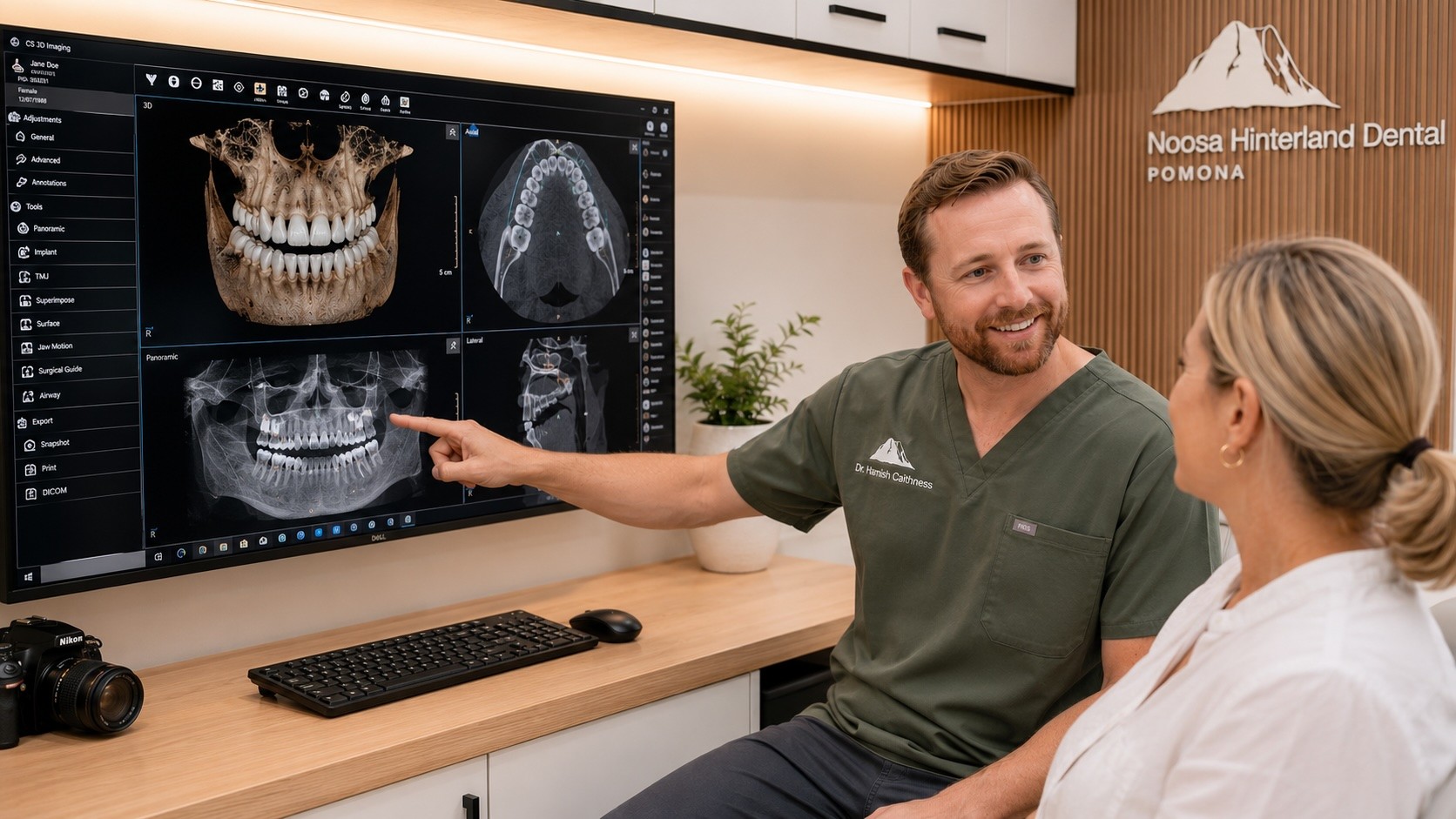
Bite analysis follows. The team observes how upper and lower teeth meet, slide and separate when you move the jaw side to side or forwards. Uneven contacts or “high spots” that accelerate wear are noted. Photos, digital scans and X‑rays help record the starting point and reveal hidden issues such as deep cracks or thin remaining dentine. All of this information feeds into a personalised worn teeth treatment plan.
What Happens At A Tooth Wear Consultation At Noosa Hinterland Dental?
A tooth wear consultation at Noosa Hinterland Dental is designed to be calm, clear and comfortable. The visit helps patients from Pomona, Cooran, Cooroy and nearby towns understand what is happening and which tooth restoration options might help.
The appointment usually begins with a warm welcome and a friendly chat. You can describe sensitivity, chipped teeth, worries about appearance or changes in how your teeth meet. Medical and dental history, including reflux, medications, stress, accidents and older fillings, is covered so nothing important is missed.
A gentle examination follows, using mirrors and small instruments while explaining each step. The dentist checks for worn down teeth, short front teeth, chipped or cracked corners and ageing amalgam fillings that increase fracture risk. Jaw joints and chewing muscles are also examined for tenderness linked with bruxism teeth damage.
Digital photos, scans and X‑rays may be taken to plan chipped teeth repair or cracked tooth repair. Afterwards, the dentist sits down with you to explain findings in plain language. Options might range from monitoring and a custom splint through to teeth bonding treatment, dental veneers for worn teeth, or crowns and full mouth rehabilitation. Comfort measures such as noise‑cancelling headphones, blankets, Tell‑Show‑Do and sedation choices are discussed so treatment feels manageable.
What Treatment Options Help With Worn, Chipped Or Short Teeth?
Treatment for worn, chipped or short teeth usually includes two parts. One focuses on reducing the causes, while the other rebuilds tooth shape, height and strength. Good worn teeth treatment blends both, so repairs last well.
The World Health Organization notes that oral conditions affect billions of people worldwide, which shows how common tooth damage is across communities. Fortunately, modern restorative and cosmetic dentistry for worn teeth offers many paths to regain comfort and confidence. Noosa Hinterland Dental can often complete smaller repairs in a single visit, while more extensive full mouth rehabilitation is carefully staged.
Conservative steps such as night splints, diet changes and gentle brushing protect remaining enamel, and approaches like the Management of localized anterior tooth wear using minimally invasive techniques demonstrate how modern dentistry prioritises preserving natural tooth structure. Minimally invasive bonding strengthens chipped edges and covers exposed dentine. For heavier wear, porcelain veneers reshape short front teeth, and ceramic or zirconia crowns rebuild heavily cracked or filled back teeth. Dental implants, clear aligners such as Invisalign and bridges may also form part of a wider plan when teeth are missing or the bite needs correction.
From Protective Splints To Full Mouth Rehabilitation
Treatment choices range from simple protective appliances through to comprehensive smile and bite rebuilding. Each step is planned around your needs, budget and timeline.
-
Conservative And Preventive Care
Custom night guards or occlusal splints protect against teeth grinding damage and teeth clenching damage, spreading forces more safely. Sports mouthguards help prevent injuries that would later need a chipped tooth fix or cracked tooth repair. Diet advice and remineralising pastes support dental erosion treatment for acid erosion teeth, making enamel more resistant to future wear, with emerging research on Fish bone and chitosan nanogels showing promising new directions in biomimetic remineralisation. -
Minimally Invasive Repairs
Composite fillings and teeth bonding treatment add tooth‑coloured material to repair small chips and worn biting surfaces. These repairs can often be done in one visit and preserve most natural enamel. They are a helpful early step in worn teeth treatment, especially for anxious patients who prefer shorter, simpler appointments. -
Cosmetic And Functional Restorations
Dental veneers for worn teeth lengthen short front teeth and improve colour and shape as part of cosmetic dentistry worn teeth care. A dental crown for worn tooth or heavily cracked teeth covers and strengthens what remains, using tooth‑coloured porcelain or zirconia. Onlays and overlays for back teeth repair significant wear while keeping more healthy tooth than a full crown. -
Comprehensive Bite And Smile Rehabilitation
When wear affects many teeth, full mouth rehabilitation combines crowns, veneers, bridges and sometimes dental implants. Temporary restorations allow you to “trial” the new bite before final work is completed. Protective splints and regular reviews then help maintain the result for the long term. Noosa Hinterland Dental offers flexible finance options and clear staging so larger plans feel achievable.
How Can You Prevent Further Tooth Wear And Protect Your Enamel?
Preventing further tooth wear relies on everyday choices as much as dental treatment. Small habits around diet, brushing and jaw relaxation can greatly reduce future enamel loss and the need for more complex care. Regular check‑ups in Pomona also help catch early changes while they are still simple to manage.
The Australian Institute of Health and Welfare highlights that preventive dental care reduces later treatment needs and costs. That applies strongly to tooth wear, where stopping damage early often avoids crowns or full mouth rehabilitation. Noosa Hinterland Dental works with patients from Kin Kin, Imbil and the wider Noosa Hinterland to build practical routines that fit real life.
Key prevention goals are to reduce acid exposure, treat reflux where present, brush gently with suitable products and keep the jaw relaxed when not eating. For people who grind or clench, consistent splint use protects both natural teeth and any new restorations. Support for stress, sleep and general health also plays an important role.
Everyday Tips To Protect Your Teeth Between Visits
Daily actions can make a big difference to worn and at‑risk teeth. These tips help protect enamel and any new fillings, veneers or crowns.
-
Diet And Acid Control
-
Keep soft drinks, sports or energy drinks and fruit juices to mealtimes rather than frequent sipping.
-
Rinse with water after acidic foods or reflux, and wait at least half an hour before brushing.
-
Choose tooth‑friendly snacks such as cheese, nuts, crunchy vegetables and plain yoghurt so saliva has time to protect your teeth.
-
-
Gentle But Effective Oral Hygiene
-
Use a soft‑bristled toothbrush with a low‑abrasion fluoride toothpaste instead of harsh whitening pastes.
-
Brush with small, gentle circles rather than hard scrubbing along the gums.
-
If dentine is exposed, your dentist may suggest a desensitising paste that you gently smear over sensitive areas at night.
-
-
Jaw And Grinding Awareness
-
Aim for a “lips together, teeth apart” habit when you are not eating, so the jaw stays relaxed.
-
Notice moments of stress at work, during driving or screen time, and practise slow breathing or gentle stretching.
-
If you have a custom night guard, wear it every night and bring it to check‑ups so the team can review the fit and condition.
-
-
Protecting Against Chips And Fractures
-
Avoid using your teeth to open packets, cut tape or hold pens or nails.
-
For contact sports or high‑impact activities around Pomona, Cooroy, Cooran, Kin Kin and Imbil, wear a custom mouthguard from Noosa Hinterland Dental. Protecting teeth from injury now reduces the chance of sudden cracks that later need intensive repair.
-
-
Regular Check‑Ups At Noosa Hinterland Dental
Visits are scheduled according to your risk level and existing restorations. The team monitors wear, adjusts splints, polishes small chips and updates prevention advice. Early attention to new sensitivity or small changes in tooth shape helps avoid more involved tooth restoration options later.
Ready To Do Something About Worn Or Chipped Teeth?
Worn, short or chipped teeth are very common, yet they can slowly affect chewing, comfort, confidence and long‑term oral health. The good news is that with early assessment and suitable worn teeth treatment, most people can enjoy comfortable eating and a natural‑looking smile again.
Noosa Hinterland Dental in Pomona offers gentle, comprehensive care for adults and families across Cooroy, Cooran, Kin Kin, Imbil and the wider Noosa Hinterland. From careful monitoring and splints through to veneers, crowns, implants and full mouth rehabilitation, plans are built around your needs and pace. Anxiety and past dental experiences are always respected.
If you have noticed shorter teeth, regular sensitivity, chips, cracks or a bite that no longer feels right, now is a helpful time to act. Contact Noosa Hinterland Dental to arrange a tooth wear consultation and receive a personalised plan to protect and rebuild your smile.
Frequently Asked Questions
Question What Is The Best Treatment For Worn Teeth?
The best treatment for worn teeth depends on the cause, severity and your goals. Options range from splints and diet changes to bonding, veneers, crowns or even full mouth rehabilitation. A personalised assessment at Noosa Hinterland Dental guides the safest, least invasive choice.
Question Can Worn Down Teeth Be Built Up Again?
Yes, worn down teeth can usually be built up again. Dentists use composite bonding, onlays, veneers or crowns to restore height and strength. Controlling grinding, clenching and acid erosion first helps these restorations last longer and protects the remaining tooth.
Question How Do I Know If I’m Grinding My Teeth At Night?
Clues for night grinding include:
-
Morning jaw pain or stiffness
-
Frequent headaches on waking
-
Flattened or chipped teeth
-
Comments from a partner about grinding sounds
A dentist can spot bruxism teeth damage during an examination and may suggest a custom night guard and stress support.
Question Is A Chipped Tooth An Emergency?
A small, painless chip is often not an immediate emergency, yet it should still be checked soon. If the tooth hurts, has a sharp edge or looks deeply cracked, prompt care is wise to prevent further breakage or infection. Noosa Hinterland Dental offers same‑day emergency appointments whenever possible.
Question Do Worn Teeth Always Need Crowns?
Worn teeth do not always need crowns. Early or moderate wear may only need monitoring, bonding or small fillings. Crowns are usually reserved for heavily worn, cracked or heavily filled teeth that need extra strength. Your dentist will recommend the least invasive option that still protects the tooth.
Question Can Tooth Enamel Grow Back Once It Is Worn Away?
Tooth enamel cannot regrow once it is fully worn away. However, fluoride and remineralising treatments can harden and strengthen remaining enamel, and The effectiveness of novel remineralising agents has been studied in the context of white spot lesion treatment, confirming their value in supporting weakened enamel. When structure is lost, dentists rebuild it with materials such as composite or porcelain, which is why early prevention is so valuable.
Question Will Dental Veneers Fix My Short Front Teeth?
Dental veneers can often lengthen and reshape short front teeth caused by wear. Suitability depends on remaining enamel, bite forces and any grinding habits. Your dentist may combine veneers with a protective splint or other treatments to keep them looking good for longer.
Question How Much Does Treatment For Worn Teeth Cost?
Costs for worn teeth treatment vary widely, from simple splints and bonding to multiple crowns, implants or full mouth rehabilitation. Noosa Hinterland Dental provides detailed quotes before starting and offers flexible finance options. Investing early can reduce the need for more extensive work later.
Question When Should I See A Dentist About Tooth Wear Or Chipping?
You should see a dentist if you notice sensitivity, shorter or flatter teeth, new chips or cracks, a changing bite or embarrassment about your smile. Earlier visits usually mean simpler treatment. Local residents in Pomona, Cooran, Cooroy, Kin Kin, Imbil and the wider Noosa Hinterland can contact Noosa Hinterland Dental for a thorough, judgement‑free assessment.