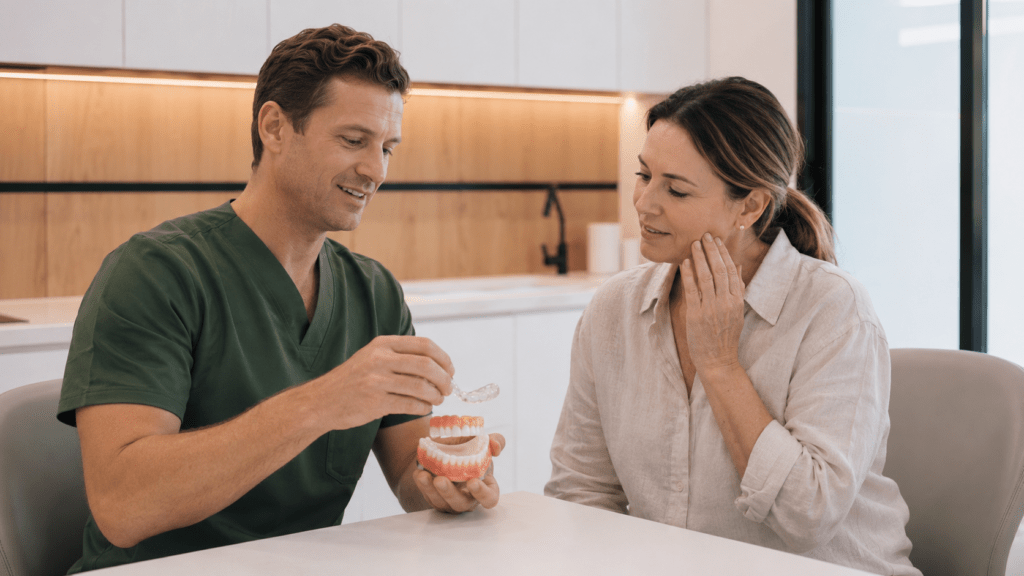
Morning jaw pain soon after waking often comes from clenching or grinding teeth during sleep, straining the jaw joints and muscles. This night‑time load can cause stiffness, tenderness near the ears, jaw pain, headache and worn teeth. Less often, morning jaw pain links with arthritis, bite problems or sleep‑related breathing issues, so persistent symptoms deserve a dental check.
Jaw pain affects how comfortably you eat, speak and sleep, and can slowly damage teeth, joints and facial muscles. For families around Pomona, Cooroy and the wider Noosa Hinterland, understanding common jaw pain causes makes it easier to decide when simple self‑care is enough and when a visit to a jaw pain dentist is safer.
This guide from Noosa Hinterland Dental explains key causes, symptoms and red flags, plus how dentists assess jaw problems and the gentle treatment options available, including custom night guards and sedation for anxious patients. Read on to learn practical ways to calm sore jaws and protect long‑term oral health.
Key Takeaways
-
Main Types Of Jaw Pain And TMJ Problems
Jaw pain can come from the jaw joints, chewing muscles, teeth, nerves or even the heart. Symptoms often overlap, which is why a careful assessment matters. Many problems improve with early, conservative care instead of surgery. -
Common Jaw Pain Causes In The Noosa Hinterland
Common drivers include teeth grinding, clenching, TMJ disorders, dental infections, impacted wisdom teeth, bite changes, arthritis and injuries from sport. Stress, busy work patterns and long commutes around the Sunshine Coast Hinterland often add to muscle tension. -
Red Flag Symptoms That Need Prompt Care
Sudden severe jaw pain with chest symptoms, large facial swelling, a locked jaw, high fever or pain after major trauma should not wait. These signs can indicate spreading infection, fracture or heart problems and need urgent medical or dental help. -
How Dentists Diagnose Jaw Pain Safely
A dentist listens to your story, gently checks jaw movement and muscles, examines teeth and bite, and uses X‑rays or 3D scans when needed. At Noosa Hinterland Dental this process is calm, step‑wise and child‑friendly, with referrals to GPs or specialists where helpful. -
Gentle Treatment And Self-Care Options
Many people gain relief with custom night guards, bite adjustment, restorative dentistry, TMJ exercises, posture changes and stress support. Noosa Hinterland Dental also offers sedation dentistry, so even nervous patients can receive comfortable jaw pain care.
“Most patients with jaw pain improve with simple, conservative care rather than surgery.” – National Institute of Dental and Craniofacial Research (NIDCR)
What Are The Most Common Causes Of Jaw Pain And TMJ Problems?
Jaw pain most often comes from temporomandibular joint (TMJ) strain, overworked muscles, teeth grinding, clenching, dental infections or bite problems. In many people more than one cause is present at the same time. Morning pain on waking usually points to night‑time grinding or clenching, while pain that worsens through the day often links with posture or chewing habits.
According to the National Institute of Dental and Craniofacial Research, around 5 to 12 percent of people live with TMJ disorders. Research shared by the Sleep Foundation suggests up to one third of adults grind or clench at night. For residents of Pomona, Cooroy, Cooran, Kin Kin and surrounds, local factors such as active sport, manual work and long hours on screens also play a part.
TMJ Disorders, Clenching And Teeth Grinding (Bruxism)
The temporomandibular joints sit in front of each ear and work with the chewing muscles to open, close and move the jaw. When these joints or muscles become inflamed or overloaded, people often notice jaw clicking and pain, stiffness, or a feeling that the jaw does not move smoothly. Pain is common when chewing, yawning or talking for long periods.
Typical TMJ symptoms include:
-
Dull aching in front of the ear
-
Jaw pain near the ear that feels like earache
-
Jaw locking up for a moment or not opening smoothly
-
Clicking or grinding noises on opening or closing
-
A feeling of the jaw being “out of place”
Some people hear clicking or grinding noises each time they open or close, with or without pain. Others wake with jaw pain, headache, tight temples and tenderness along the cheeks from night‑time clenching.
Teeth grinding and clenching (bruxism) overload the joints and muscles while you sleep or concentrate. According to Mayo Clinic, bruxism is closely linked with stress, anxiety and sleep disorders. Around the Sunshine Coast Hinterland, busy lifestyles, long drives and desk work can all increase background tension, which then shows up as:
-
Jaw pain and stiffness
-
Chipped or cracked teeth
-
Flattened tooth surfaces
-
Recurrent headaches
Over time, grinding can wear down enamel and contribute to TMJ disorders if not addressed.
Dental Infections, Wisdom Teeth And Bite Problems
Jaw pain causes are not limited to the joints and muscles. Dental infections, wisdom teeth and bite changes can all send pain into the jaw and face.
Common signs of a dental infection include:
-
Intense, throbbing pain in a tooth or area of the jaw
-
Pain on biting or pressure
-
Sensitivity to hot and cold
-
Swelling of the gum or face
-
Bad taste or smell in the mouth
Impacted or inflamed wisdom teeth often cause jaw pain near the ear, swelling at the back of the jaw and pain when opening wide. For teenagers and young adults in Pomona and Cooroy, wisdom teeth are a frequent reason for sudden jaw discomfort. According to the Australian Institute of Health and Welfare, many young adults experience decay or gum problems around partially erupted wisdom teeth, and a recent Prevalence of Tortuous Temporomandibular systematic review confirms that TMJ-related disorders are consistently underestimated in younger populations.
Other structural issues can also affect the jaw:
-
Missing teeth causing the jaw to close unevenly
-
Heavily worn teeth changing how the upper and lower teeth meet
-
Old dental work that is too high or low, forcing the jaw into an awkward position
Over time this extra strain can irritate the TMJ and muscles, even if the teeth themselves feel fine. During a thorough examination, Noosa Hinterland Dental checks for decay, cracks, abscesses, wisdom tooth issues and bite changes so the real cause of jaw pain is not missed.
What Do TMJ And Jaw Pain Symptoms Typically Feel Like?
Jaw pain symptoms vary from a mild tired feeling in the cheeks to sharp, electric shocks or a jaw that suddenly locks. The type, location and timing of pain give important clues about the cause. For example, jaw pain at night or on waking often relates to grinding, while sharp pain on biting usually points toward a tooth problem.
By watching for patterns, people around the Noosa Hinterland can better decide whether to book a dentist, call a GP or seek emergency help. Research from NIDCR highlights that careful symptom mapping helps target treatment and avoid unnecessary invasive procedures.
Common TMJ, Muscle And Dental Pain Patterns
Common patterns include:
-
TMJ and muscle pain
-
Dull aching in front of the ear or along the cheek
-
Tenderness to gentle pressure over jaw muscles
-
Tired feeling in the jaw when eating, speaking or playing instruments
-
-
Tooth‑related pain
-
Sharp, stabbing pain on biting
-
Sensitivity to hot, cold or sweet foods
-
Pain localised to one tooth or small area
-
Pain that eases when you stop chewing, then returns with the next bite
-
-
Grinding and clenching symptoms
-
Clicking, popping or grinding noises when opening wide, chewing or yawning
-
Jaw pain at night and on waking
-
Morning headaches and facial pain
-
Tightness along the temples or neck
-
Jaw pain near the ear that feels like earache, yet with a normal ear check, often links back to the joints or muscles. The shared nerve supply means jaw pain can radiate to the:
-
Temples
-
Neck
-
Shoulders
-
Upper back
This overlap is why both dentists and GPs are sometimes involved in diagnosis.
Symptom Comparison Table: Jaw Pain Causes And What They Feel Like
The following table summarises common jaw pain causes, typical symptoms and the best first step.
| Cause | Typical Symptoms | Suggested First Step |
|---|---|---|
| TMJ disorder or TMD | Dull ache in front of ear, clicking or popping, limited opening, jaw pain when chewing | Book TMJ assessment at Noosa Hinterland Dental |
| Teeth grinding or clenching | Jaw pain at night, morning headaches, worn or chipped teeth, tight temples | Book dental visit for night guard discussion and bite check |
| Dental abscess or infection | Severe throbbing pain, swollen gum or face, tenderness on biting, possible fever | Arrange same‑day dental appointment, urgent if swelling spreads |
| Impacted wisdom tooth | Jaw pain near ear, swelling behind back molars, pain on opening | See dentist, such as Noosa Hinterland Dental, for X‑ray and removal advice |
| Arthritis in the TMJ | Deep joint ache, stiffness, rough grinding feeling on movement | Book dentist and GP review, possible rheumatology input |
| Sinus or ear problem | Pressure in upper jaw and cheek, pain worse when bending forward, blocked nose or ear | See GP for sinus or ear assessment |
| Possible heart‑related pain | Sudden jaw pain with chest tightness, breathlessness, nausea or pain in arm or back | Call 000 or attend emergency department immediately |
When Is Jaw Pain An Emergency And When Should You See A Dentist?
Jaw pain is an emergency when it suggests heart trouble, spreading infection or serious injury. It needs dental or medical help the same day, and in some cases an ambulance. In contrast, long‑term aching, jaw clicking and pain, or recurrent sore jaw usually call for a timely but not urgent dental visit.
According to the Heart Foundation, some heart attacks present with jaw, neck or back pain instead of classic chest pain, especially in women. At the same time, AIHW reports that dental issues are a major cause of potentially preventable hospital admissions across Australia. Knowing which warning signs fit each group helps families in the Noosa Hinterland act quickly when it matters.
Red Flag Symptoms Requiring Urgent Care
Seek immediate medical help (call 000 or go to hospital) if you notice:
-
Sudden, severe jaw pain with:
-
Chest tightness or pressure
-
Shortness of breath
-
Sweating or nausea
-
Pain spreading to the arm, shoulder, neck or back
-
Do not wait for a dental review in this situation, even if you think the pain might be from the jaw.
Arrange same‑day medical or dental care if you have:
-
A jaw that suddenly locks open or closed, or will not open properly
-
Large facial swelling, especially if it is spreading
-
High fever with tooth or jaw pain
-
Feeling very unwell with difficulty swallowing or breathing
-
Jaw pain after a hard blow to the face (sport accident, fall or car crash)
-
A bite that suddenly feels wrong or teeth that no longer meet properly
Noosa Hinterland Dental offers same‑day emergency appointments where possible for serious jaw pain across Pomona, Cooroy, Black Mountain and nearby towns.
When To Book A Jaw Pain Dentist Appointment At Noosa Hinterland Dental
Many jaw pain problems are not emergencies but still deserve prompt assessment. Book a jaw pain dentist appointment if you notice:
-
Ongoing jaw pain when chewing, talking or yawning
-
Pain that keeps coming back or lingers for weeks
-
Frequent jaw pain, headache or facial pain
-
Jaw pain near the ear or jaw pain at night
-
Regular clicking, popping or grinding noises from the jaw
-
A sense that the bite has changed
-
Worn, chipped or broken teeth, or cracked fillings and crowns
Jaw issues in kids and teens, such as:
-
Difficulty chewing or avoiding chewy foods
-
Jaw noises or locking
-
Persistent headaches or facial pain
-
Teeth that do not seem to meet evenly
should be assessed in a child‑friendly clinic. At Noosa Hinterland Dental in Pomona, the team provides gentle, family‑focused care for children, adults and anxious patients from Cooran, Kin Kin, Federal and the wider Sunshine Coast Hinterland.
How Do Dentists Diagnose The Cause Of Jaw Pain?
Dentists diagnose jaw pain by listening carefully, examining jaw movement and muscles, checking the teeth and bite, and using imaging where helpful. This step‑wise approach separates TMJ disorders from dental infections, sinus problems and other medical causes. Getting the diagnosis right means treatment can stay as gentle and targeted as possible.
Research from NIDCR supports conservative, structured assessment before any invasive TMJ interventions. At Noosa Hinterland Dental, this philosophy guides care, with a strong focus on patient comfort and clear explanations for families across Pomona and Cooroy.
Comprehensive Jaw, Bite And Dental Assessment
An appointment usually begins with a relaxed conversation. The dentist may ask:
-
When did the jaw pain start?
-
Is it worse in the morning or evening?
-
What movements trigger pain or clicking?
-
Do you notice jaw locking or the jaw slipping to one side?
-
Have you had recent dental work or injuries?
-
How are your stress levels and sleep quality?
-
Any history of headaches, ear problems or arthritis?
Next comes a gentle examination of jaw movement and muscles. The dentist will:
-
Check how wide you can open and whether movement is smooth
-
See if the jaw swings to one side
-
Feel for tenderness in front of the ears, along the cheeks and at the temples
-
Listen for clicks or grinding sounds
-
Feel for tight muscle bands that can refer pain to the head and neck
The teeth and gums are examined for:
-
Decay or cracks
-
Loose or heavily worn teeth
-
Gum disease and recession
-
Missing teeth
-
Older restorations that might disturb the bite
For children, Noosa Hinterland Dental adapts this process with shorter visits, simple language, tell‑show‑do methods and strong parental involvement, so even anxious kids from Kin Kin or Federal feel safe.
Digital Imaging, TMJ-Focused Tests And Conservative Planning
If needed, the team may suggest digital imaging to see what lies beneath the surface:
-
Standard dental X‑rays to check tooth roots, supporting bone and signs of infection
-
A panoramic X‑ray to view joints, wisdom teeth and sinuses
-
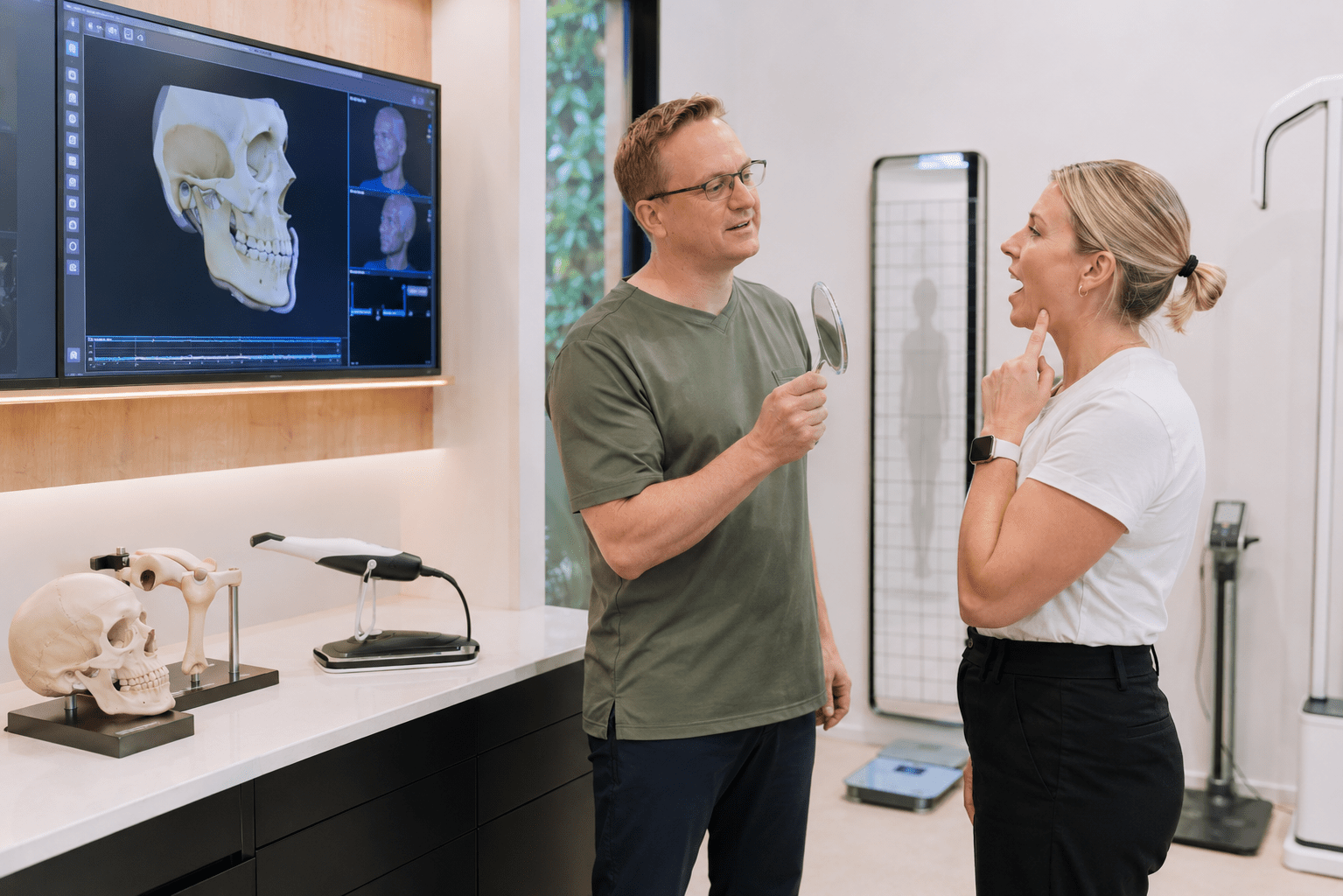
In‑house 3D CBCT scans to assess jaw joints, bone shape and tooth position in more detail
In more complex cases, such as suspected disc displacement or inflammatory arthritis, the dentist may refer you for an MRI or medical tests through your GP or specialist. All findings are explained in plain language, often with models or screen images, so you feel informed and involved in each decision.
Most TMJ problems respond well to conservative care rather than surgery, as supported by NIDCR. At Noosa Hinterland Dental, individual plans often include:
-
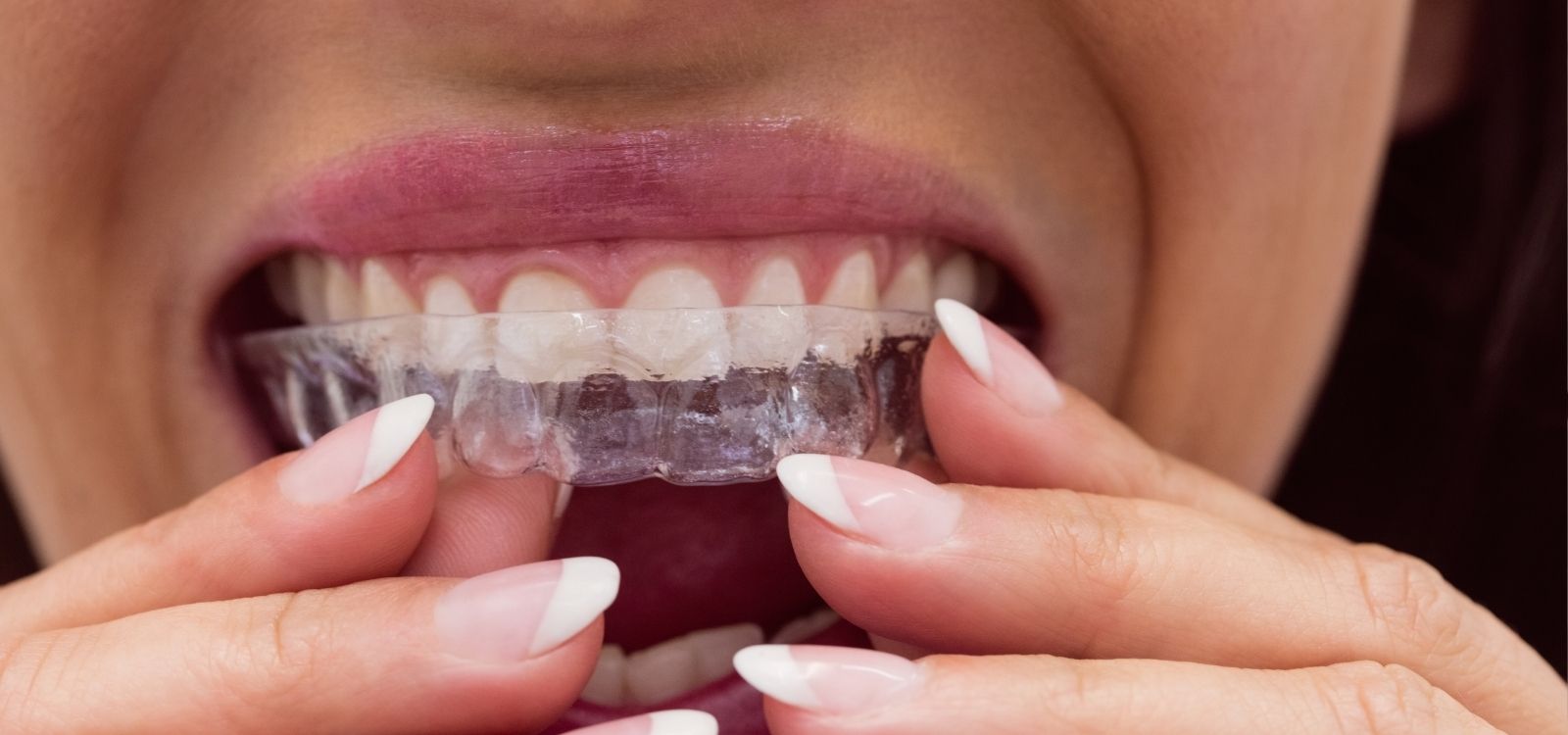
Custom night guards and occlusal splints
-
Bite adjustment or restorative dentistry
-
TMJ exercises and jaw relaxation strategies
-
Advice on posture and ergonomics
-
Coordination with physiotherapists, psychologists or sleep physicians across the Sunshine Coast if needed
What Jaw Pain Treatment And Relief Options Are Available?
Most jaw pain and TMJ symptoms improve with a mix of self‑care, custom mouthguards, gentle dental treatment and lifestyle changes. Treatment is usually gradual, starting with the least invasive options and adding further steps only if needed. This approach suits children, adults and anxious patients across the Noosa Hinterland.
According to the Sleep Foundation, treating bruxism early helps prevent tooth wear and TMJ problems later in life. Combined with data from AIHW showing high levels of tooth damage in Australian adults, it is clear that proactive TMJ care protects both comfort and long‑term oral health.
Gentle Dental Treatments, Night Guards And Sedation Options
Key dental treatments for jaw pain can include:
-
Custom night guards and occlusal splints
-
Made from precise digital scans at Noosa Hinterland Dental
-
Fit snugly and comfortably for overnight wear
-
Spread biting forces to reduce pressure on joints and muscles
-
Protect enamel from grinding damage
-
Often lessen morning jaw pain and headaches
-
-
Bite assessment and correction
-
Fine‑tuning high spots on fillings or crowns
-
Rebuilding worn teeth with tooth‑coloured restorations
-
Replacing missing teeth with implants, bridges or dentures
-
Using Invisalign clear aligners when misaligned teeth contribute to jaw strain
-
-
Restorative dentistry and full‑mouth rehabilitation
-
For adults with severe wear or bite collapse
-
Restores chewing function, comfort and appearance
-
Helps rebalance forces across the jaw joints and muscles
-
Because long visits can feel overwhelming, Noosa Hinterland Dental offers sedation dentistry, including:
-
Happy gas (nitrous oxide)
-
Oral sedatives
-
IV sedation under the care of experienced clinicians
These options allow nervous patients to receive jaw pain treatment in a calm, controlled state, with vital signs monitored throughout for safety; for refractory cases, Clinical and early biochemical responses to botulinum toxin therapy offer an additional evidence-based pathway for masticatory myofascial pain.
Self-Care Tips And TMJ Exercises For Jaw Pain Relief At Home
Simple self‑care often makes a big difference for mild TMJ and muscle pain, and a systematic evidence map of Advanced, pharmacological and complementary interventions for chronic orofacial pain confirms that conservative and complementary strategies remain first-line recommendations. Helpful strategies include:
-
Gentle diet during flare‑ups
-
Choose softer foods like pasta, steamed vegetables, yoghurt, soups and fish
-
Avoid very chewy or hard foods, nuts, tough meats and chewy lollies
-
Skip chewing gum and large, wide bites for a short period
-
-
Relaxed jaw posture
-
Aim for “lips together, teeth apart” with the tongue resting lightly on the roof of the mouth
-
Check in during work, driving or screen time and release any clenching you notice
-
-
Heat or cold packs
-
Apply warm or cool compresses over sore muscles for 10–15 minutes
-
Always wrap packs in a cloth and follow your dentist or GP’s guidance
-
-
Gentle TMJ exercises
-
Slow, controlled opening and closing in front of a mirror
-
Small side‑to‑side movements within a comfortable range
-
Postural stretches for the neck and shoulders
-
Tip from Noosa Hinterland Dental: “If an exercise increases your pain sharply or makes the jaw feel unstable, stop and seek professional advice before continuing.”
Posture changes around desks and devices, regular movement breaks and a calming bedtime routine also support jaw pain relief. If symptoms persist, worsen or interfere with eating, speaking or sleep, book assessment at Noosa Hinterland Dental rather than relying on home care alone.
Myth Vs Fact: Clearing Up Common Misunderstandings About Jaw Pain
Misunderstandings about jaw pain stop many people from seeking help or lead them to focus only on quick fixes. Some assume their pain is purely stress, while others worry that TMJ trouble always ends in surgery. Current research and clinical experience paint a different picture, with most people improving through gentle, combined care.
By separating myths from facts, families around Pomona, Cooroy, Cooran and the wider Sunshine Coast Hinterland can feel more confident about early assessment. Noosa Hinterland Dental bases treatment on up‑to‑date TMJ research, not one‑size‑fits‑all ideas, so advice reflects your specific situation.
Jaw Pain And TMJ Myths Vs Evidence-Based Facts
-
Myth Jaw clicking is always harmless and never needs attention.
Fact Clicking without pain can often be watched, especially if movement is smooth. Clicking that comes with pain, locking, swelling or bite changes should be checked by a jaw pain dentist, as early care can reduce strain on the joint and muscles. -
Myth Everyone grinds their teeth and it is nothing to worry about.
Fact Many people clench or grind during short stressful periods, then settle again. Persistent grinding, however, can fracture teeth, wear down enamel, cause facial pain and lead to TMJ disorders, so custom night guards and stress support are worth discussing. -
Myth TMJ pain always means surgery in the long run.
Fact Research from NIDCR shows most TMJ problems improve over time with conservative measures such as splints, exercises, lifestyle changes and careful bite work. Surgery is reserved for specific structural problems and is rarely the first step. -
Myth If X‑rays look normal, the jaw pain must be in my head.
Fact Muscle trigger points, ligament strain and early joint changes do not always show on basic X‑rays. A thorough clinical examination at a clinic like Noosa Hinterland Dental still matters, and pain is always taken seriously, not dismissed. -
Myth Kids will always grow out of jaw pain and it never needs checking.
Fact Many childhood symptoms relate to growth or short‑term habits and do improve. However, ongoing pain, chewing difficulty, jaw noises or clear bite changes in children across Pomona and Cooroy deserve a gentle, early assessment so future jaw and bite development stay on track.
In Summary
Jaw pain and TMJ symptoms are common across all ages and often stem from a mix of grinding, joint strain, dental problems, bite changes, posture and stress. The positive news is that most cases improve with timely, gentle care rather than surgery. Morning jaw pain, in particular, often settles once night‑time grinding and clenching are brought under control.
Knowing the difference between everyday discomfort and red flag symptoms helps families act promptly when needed. Sudden severe jaw pain with chest signs, facial swelling, high fever, a locked jaw or pain after major trauma calls for urgent attention. Ongoing aching, jaw clicking and pain, jaw pain near the ear or jaw pain at night should trigger a dental check before damage builds.
Noosa Hinterland Dental in Pomona provides thorough jaw and dental assessments, digital imaging, wisdom teeth treatment, restorative dentistry and custom night guards in a calm, family‑friendly setting. If you live in Cooroy, Cooran, Kin Kin, Federal, Black Mountain or the wider Noosa Hinterland and are experiencing persistent jaw pain or TMJ symptoms, book a comprehensive dental examination to start moving toward more comfortable eating, speaking and sleep.
Ready to Find Relief from Jaw Pain?
If you’re waking with jaw pain, headaches, clicking, clenching or difficulty chewing, an early assessment can identify the underlying cause before it leads to further tooth wear or ongoing TMJ problems. Most jaw conditions respond well to conservative, personalised treatment when addressed early.
Book an Appointment with Noosa Hinterland Dental for a comprehensive jaw pain and TMJ assessment, including a detailed examination of your jaw joints, muscles, bite and teeth, followed by a personalised treatment plan.
Want to understand your options before starting treatment? Learn More about custom night guards, TMJ management, restorative dentistry, wisdom teeth treatment, sedation dentistry and evidence-based solutions for jaw pain and teeth grinding.
Have questions about jaw clicking, teeth grinding, morning headaches, TMJ disorders, treatment costs or private health rebates? Contact Us Today and our friendly team will answer your questions and help you choose the most appropriate appointment.
Take the first step towards more comfortable eating, speaking and sleeping. Book Online Now and discover how Noosa Hinterland Dental provides gentle, evidence-based jaw pain and TMJ care for patients throughout Pomona, Cooroy, Cooran, Kin Kin, Federal, Black Mountain and the wider Noosa Hinterland.
Frequently Asked Questions
Question: What is the difference between normal jaw soreness and a TMJ disorder?
Normal jaw soreness usually follows heavy chewing, long talking or a short burst of stress and settles within a few days. A TMJ disorder often brings repeated pain, clicking, stiffness, jaw locking or bite changes that last weeks or longer. If symptoms keep returning, book a jaw pain dentist appointment for assessment.
Question: Can jaw pain from teeth grinding go away on its own?
Jaw pain from brief stress‑related grinding may fade when life settles, but long‑term grinding rarely disappears without help. Ongoing clenching can crack teeth and strain joints, even if pain eases for a time. Custom night guards and stress management at Noosa Hinterland Dental reduce damage and improve comfort.
Question: How long does TMJ pain usually last with treatment?
Mild TMJ pain often improves within a few weeks once splints, exercises and self‑care begin. More complex cases involving arthritis, severe grinding or bite problems can take several months to calm. Consistent use of night guards, good posture, bite correction and follow‑up reviews supports steady, lasting improvement.
Question: Are over-the-counter mouthguards effective for jaw pain?
Chemist boil‑and‑bite guards may offer short‑term cushioning but often fit poorly and feel bulky. They can shift during sleep and sometimes worsen jaw position. Custom occlusal splints from Noosa Hinterland Dental use digital scans for a precise fit, better protection and greater comfort, especially for regular night‑time use.
Question: Is jaw pain in children something to worry about?
Jaw pain in children is sometimes linked with teething, growth or short‑term habits and may pass. Ongoing pain, chewing difficulty, jaw noises, headaches or visible bite changes are more concerning. A gentle, child‑friendly assessment at Noosa Hinterland Dental can rule out serious problems and guide early care if needed.
Question: Can arthritis cause jaw pain, and how is it managed?
Yes, osteoarthritis or inflammatory arthritis can affect the TMJ as well as other joints. Symptoms often include stiffness, deep joint ache, limited opening and rough grinding feelings. Management usually combines joint‑friendly dental care, splints, gentle exercises and medical treatment through a GP or rheumatologist working with your dentist.
Question: What TMJ exercises are safe to do at home?
Safe TMJ exercises are gentle and avoid forcing painful movement. Common examples include slow, controlled opening and closing in front of a mirror and small side‑to‑side movements within a comfortable range. It is best to have a dentist or physiotherapist familiar with TMJ guide you on a personalised routine.
Question: Can improving my posture really help with jaw pain?
Better posture can reduce jaw pain in many people. Forward‑head positions at desks or on phones strain neck and shoulder muscles, which then affect the jaw. Keeping screens at eye level, relaxing shoulders and taking regular stretch breaks, alongside professional TMJ care, often lowers day‑to‑day jaw tension.