If you are asking do I need a crown after root canal treatment, the answer depends on which tooth was treated, how much natural tooth remains and how much chewing pressure it takes.
Root canal treatment removes infection from inside the tooth, but many root-treated teeth are already weakened by decay, cracks, large fillings or previous damage. A crown can help protect the remaining tooth structure and reduce the risk of fracture.
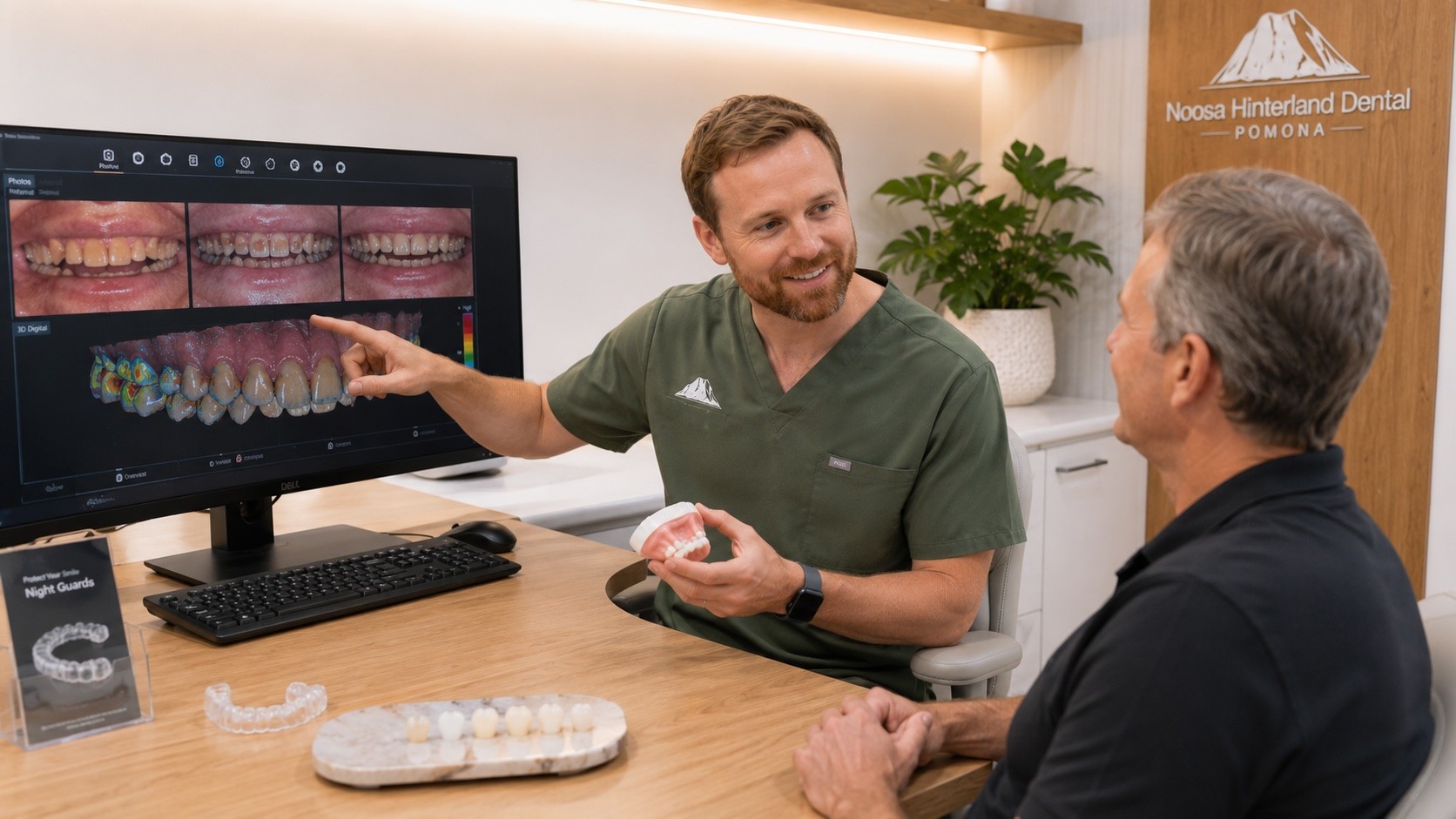
At Noosa Hinterland Dental in Pomona, we assess each root-treated tooth carefully before recommending a crown, strong filling, onlay or other restoration to help keep the tooth functional, comfortable and protected long term.
Jump to section
- Why Is A Crown Often Needed After Root Canal?
- What Happens To A Tooth After Root Canal Treatment?
- When Is A Crown Strongly Recommended After A Root Canal?
- Are There Cases Where A Crown May Not Be Necessary?
- What Are Your Options For A Crown After Root Canal In Australia?
- How Does Noosa Hinterland Dental Help You Decide If A Crown Is Necessary?
- Ready To Protect Your Root-Treated Tooth?
- Frequently Asked Questions
Why Is A Crown Often Needed After Root Canal?
If a weak tooth is left without a protective crown after root canal treatment, it is far more likely to crack or break. When that happens, the tooth may need more treatment, or sometimes removal and replacement.
Root canal treatment removes the nerve and blood supply, which saves the tooth but leaves it more brittle and less able to feel early warning twinges. That is why so many people ask, “Do I need a crown after root canal?” and feel unsure about the answer.
A crown is often the safest way to keep a treated tooth strong, especially back teeth that take heavy chewing. In this article, the team at Noosa Hinterland Dental in Pomona explains what happens to a tooth after root canal treatment, when a crown is recommended, when a strong filling may be enough, and what the options and costs look like in Australia.
If you have recently had a root canal or been told you might need one, keep reading for clear, local, practical guidance.
Key Takeaways
-
A crown matters most for heavily filled back teeth. These teeth carry strong chewing forces. Without cover, they are much more likely to crack or even fail.
-
Some front teeth cope well without a crown. They often have smaller access holes and lighter loads. A strong bonded filling or partial crown can sometimes be enough.
-
Saying no to a recommended crown raises the chance of fracture, reinfection and tooth loss. That can mean more complex treatment later, such as implants or bridges.
-
Crowns in Australia come in different materials with different fees. At Noosa Hinterland Dental we offer same-day ceramic crowns and explain health fund support in plain language.
-
The dentists at Noosa Hinterland Dental look at your whole situation, not just the X-ray. We discuss risks, options and your goals so you can decide with confidence.
“Preserving a healthy, natural tooth for as long as possible is usually the best long-term outcome.” – Noosa Hinterland Dental, Pomona
What Happens To A Tooth After Root Canal Treatment?
A tooth after root canal treatment is still your own tooth, but it behaves differently and is usually weaker than before. The inside is cleaned out and sealed, which removes infection but also changes how the tooth responds to chewing and pressure. This change is the key reason many patients wonder, “Do I need a crown after root canal or will a filling do?”
During root canal treatment in Australian practices, including Noosa Hinterland Dental, we remove the infected pulp, disinfect the canals and seal them carefully. According to the American Association of Endodontists, this treatment keeps teeth comfortable and working in around 90 per cent of cases, a finding supported by reviews on the effect of root canal filling techniques and materials. What happens next on the outside of the tooth plays a major role in how long it lasts.
How Root Canal Treatment Changes Tooth Strength
Root canal treatment removes the nerve and blood vessels from inside the tooth, then fills the canals with a rubber-like material. That stops pain and infection, but over time the tooth loses some internal moisture and may become more brittle. It is a bit like timber that dries out and is more likely to split under pressure.
Most teeth that need a root canal already have:
-
Deep decay
-
Big or multiple fillings
-
Existing cracks or broken cusps
Large old amalgam fillings, in particular, can act like wedges and leave thin walls that flex during chewing. When we make the access opening through the top or back of the tooth to do the root canal, more structure is removed, which further weakens these walls.
Once the nerve is gone, the tooth also loses some feeling for pressure and temperature. You may not notice early warning signs that you are biting too hard on a popcorn kernel or grinding at night. Research in the Journal of Endodontics reports that root-treated teeth without protective restorations fracture more often than untouched teeth, especially in the back of the mouth.
Which Teeth Are Most At Risk After A Root Canal?
Back teeth, such as molars and many premolars, carry most of the chewing load, especially when you eat harder foods like nuts or crusty bread. These teeth are also the ones most likely to have large cavities, broken cusps or big older fillings before the root canal even starts. That combination of heavy force and pre-existing damage makes them far more prone to breaking.
Several studies, including work summarised in the International Endodontic Journal, show that root-treated molars without crowns are much more likely to fracture or be lost compared with those restored with full coverage. In contrast, front teeth often need smaller access holes and still have a lot of strong enamel around the edges.
Front incisors and canines mainly cut and guide the bite rather than crush food. For these teeth, especially when they have only minor damage, a high-quality bonded filling or veneer may give good long-term service. This difference between front and back teeth is a big part of why the answer to “Do I need a crown after root canal?” is not the same for every tooth.
When Is A Crown Strongly Recommended After A Root Canal?
A crown is strongly recommended after root canal treatment when the tooth is already weakened, heavily filled or carrying large chewing loads. In these situations, leaving the tooth without a crown makes cracks, breakages and even extraction much more likely over time.
When patients in Pomona and across the Noosa Hinterland ask whether a crown is really necessary, we talk through how much tooth is left, where the tooth sits in the mouth, and how heavily it is used. Clinical research backs this careful approach. A classic study in the Journal of Prosthetic Dentistry found that root-treated teeth with crowns were about six times more likely to stay in the mouth than those without full coverage, consistent with recent clinical outcomes and complication data on crown restorations following endodontic treatment.
Why Dentists Often Recommend A Crown On Back Teeth
Back teeth work like the grinders in a mill, with very strong vertical and sideways forces every time you chew. After a root canal, a molar that already has a large filling or thin outer walls behaves like a hollowed-out shell, so those forces can cause pieces to shear off. That may happen suddenly when you bite on something hard, with no pain warning beforehand.
A crown wraps around the remaining tooth structure and helps hold it together, similar to a helmet around the head. It spreads chewing forces over a wider area, so one thin wall is less likely to flex and crack. For teeth that help support a bridge or keep your bite in line, this added strength is very important.
For these reasons, dentists across Australia commonly see a crown as standard care for root-treated molars and many premolars. At Noosa Hinterland Dental we discuss this clearly, so when you ask “Do I need a crown after root canal on this back tooth?” you understand the reasons behind our advice.
Other Situations Where A Crown Is Usually The Safest Choice
Some teeth show fine cracks, sharp pain when you bite, or have already lost a cusp before the root canal. Once the nerve is removed, these teeth are much more likely to split further if they are not held together. A crown can bind the weakened parts and reduce flexing each time you chew.
People who clench or grind their teeth place far higher loads on their teeth, often at night without realising it. The Sleep Health Foundation notes that up to 15 per cent of adults grind regularly, which raises the risk of fractures in root-treated teeth. For these patients we often recommend a strong crown material, such as zirconia or high-strength ceramic, and sometimes a night guard as well.
Crowns are also usually the best choice when a tooth is part of a larger cosmetic or restorative plan, such as:
-
Supporting a bridge
-
Aligning with clear aligner treatment
-
Forming part of a bigger smile improvement plan
Age, past history of broken teeth and general oral health all influence the balance. An older molar with several big fillings is very different to a young premolar with one small cavity.
Are There Cases Where A Crown May Not Be Necessary?
A crown after root canal treatment is not compulsory for every single tooth. Some teeth, especially front teeth with little damage, may cope very well with a strong bonded filling or a partial crown that covers only the weakened area.
When locals from Cooroy, Cooran, Kin Kin and nearby communities ask us “Do I need a crown after root canal or can we just fill it?” we look for features that place the tooth in a lower-risk group. These include:
-
Plenty of healthy enamel and dentine remaining
-
A light, balanced bite
-
No signs of grinding or jaw clenching
-
No history of previous cracked teeth
Even in these cases, we still talk about monitoring over time.
Root Canal Without A Crown: When Can It Be Safe?
Front teeth such as incisors and canines often have small access openings and thick enamel on the edges. If they had only a small cavity or a single trauma incident, and most of the natural tooth is still present, a carefully shaped composite filling can be very successful. The filling reinforces the hole made for the root canal while keeping most of your own tooth.
Some premolars and even molars can also be managed without a full crown when the cavity is small and the walls are still thick. In these cases we often use bonded composite or a ceramic onlay to cover vulnerable cusps while leaving strong enamel untouched. According to research in the European Journal of Oral Sciences, conservative restorations like this can perform well in lower-stress situations.
A crown-free approach is more likely to succeed if you have a light bite, no history of cracked teeth and no signs of bruxism. Regular reviews at Noosa Hinterland Dental in Pomona are very important so we can spot early signs of wear, micro-cracks or filling breakdown before bigger problems develop.
“Skipping a crown for a high-risk tooth can feel like a saving now, but it may increase the chance of more costly treatment later.” – Noosa Hinterland Dental
What Are The Risks Of Delaying Or Skipping A Crown?
If a tooth really needs a crown and you choose to delay or skip it, the main risk is fracture. That might be a small chip a dentist can repair, but it can also be a deep crack that runs under the gum or into the root, leaving extraction as the only safe option.
A study by Aquilino and Caplan in the Journal of Prosthetic Dentistry found that root-treated teeth without full coverage were around six times more likely to be lost, a finding echoed in recent clinical outcomes and complication research on endodontic post and crown restorations. Larger fillings can also shrink slightly or wear at the edges, allowing bacteria to seep in and reinfect the root canal.
Key risks of skipping or delaying a crown include:
-
Tooth fracture (small chips through to splits into the root)
-
Treatment failure and reinfection around leaking fillings
-
Pain or discomfort when biting or chewing
-
Loss of the tooth and need for extraction
-
More complex replacement with an implant, bridge or denture
Warning signs include pain when you bite, a piece of tooth breaking away, visible cracks, or the tooth feeling “high” in your bite. At Noosa Hinterland Dental we always explain your personal risk so you can weigh up the cost of a crown now against the higher chance of needing implants, bridges or dentures later if the tooth fails.
What Are Your Options For A Crown After Root Canal In Australia?
After root canal treatment in Australia, there are several ways to restore and protect the tooth, from full-coverage crowns through to onlays and strong fillings. The right choice depends on the tooth’s position, how damaged it is, how hard you bite and what you want your smile to look like.
At Noosa Hinterland Dental we often use modern ceramic and zirconia crowns for their strength and natural appearance. With our in-house CEREC system in Pomona, many patients from the Noosa Hinterland can have a custom ceramic crown designed, milled and fitted in one visit. Studies in the Journal of Dentistry report that around 90 per cent of ceramic crowns are still working well after ten years, and broader research on the effect of root canal filling and restoration techniques confirms this represents a sound long-term investment.
Types Of Dental Crowns And Alternatives After Root Canal
Dental crowns come in several common materials in Australian practices:
-
All-ceramic or porcelain crowns – tooth coloured and popular for front teeth and visible premolars.
-
Zirconia crowns – very strong and useful for people who grind or have very heavy bites, especially on back teeth.
-
Porcelain-fused-to-metal crowns – a metal base covered with tooth-coloured porcelain, often used on back molars where strength matters most.
-
Gold or other full-metal crowns – less common now for visible teeth but remain a good option for some back molars in patients who value durability.
-
Onlays and partial crowns – cover only the weakened cusps, helping to keep as much natural tooth as possible.
High-strength bonded fillings can work well as a conservative or interim option in selected lower-risk cases, particularly on front teeth. Your dentist will discuss how each option fits your tooth crown after root canal, including how you bite, how visible the tooth is and your budget. The table below gives a simple overview.
| Option | Strength Level | Appearance | Common Use |
|---|---|---|---|
| All-ceramic crown | High | Very natural | Front teeth and visible premolars |
| Zirconia crown | Very high | Natural with polish | Back teeth and grinders |
| Porcelain-fused-to-metal | High | Good | Back teeth needing strength and fair looks |
| Gold or metal crown | Very high | Metallic | Back molars where look is less important |
| Onlay or partial crown | Medium high | Natural | Teeth with moderate loss of structure |
Crown Procedure, Timing And Costs In The Noosa Hinterland
Most dentists recommend protecting a high-risk root-treated tooth with a crown or strong restoration within a few weeks of finishing the root canal, once the tooth feels comfortable. Waiting many months, especially for a heavily filled molar, increases the chance of a crack while the tooth is still unprotected.
The usual crown procedure starts with assessment and planning, then:
-
Shaping the tooth so the crown can fit over it
-
Taking either a digital scan or a mould
-
Making a temporary crown (in many clinics) while a lab fabricates the final crown
-
Fitting and adjusting the final crown at a second visit
At Noosa Hinterland Dental our CEREC technology can design, mill and fit a custom ceramic crown in one longer visit, so there is no need for a temporary crown or an extra appointment. Many patients from Pomona, Cooroy, Cooran, Kin Kin and Noosa find this one-visit approach more convenient.
The dental crown after root canal cost in Australia varies with the material used, the tooth position and whether extra build-up work or posts are needed. Data from the Australian Institute of Health and Welfare show that around half of Australians hold some form of private dental cover, and research suggests that is root canal treatment with an indirect coronal restoration often a cost-effective long-term choice compared to extraction and implant replacement. Our team provides clear quotes and item numbers up front and helps patients from Pomona, Cooroy, Cooran, Kin Kin and beyond check likely out-of-pocket costs with their health fund.
How Does Noosa Hinterland Dental Help You Decide If A Crown Is Necessary?
Deciding “Do I need a crown after root canal on this tooth?” calls for more than a quick look at a single X-ray. At Noosa Hinterland Dental we assess your tooth, your bite, your habits and your long-term goals before we recommend either a crown or an alternative.
Our focus is to keep your natural teeth comfortable and working for as long as possible, using the least invasive option that will reliably protect them. That might be a full crown, a partial crown or, in some situations, a high-strength filling with close monitoring. For anxious patients across the Noosa Hinterland, we also consider how to make each step feel as calm as possible.
Our Assessment Process And Patient-Centred Approach
At your appointment we examine the tooth carefully, looking at:
-
How many walls are left
-
How big any existing fillings are
-
Whether there are visible cracks or worn areas
We review X-rays to check the root canal quality, bone support and hidden cracks, and we look at how your upper and lower teeth meet when you bite. Signs of grinding or clenching are taken seriously, because they increase fracture risk.
We then talk about your:
-
Age and general health
-
Work, sports and lifestyle
-
Cosmetic priorities
-
Past dental experiences and any worries about treatment
Everything is explained in plain language, from the benefits and limits of a crown through to alternatives like onlays or fillings, and also the “do nothing for now” choice with its risks. For worried patients we offer gentle local anaesthetic, a calm environment, ceiling screens, headphones and, where appropriate, sedation options.
Because Noosa Hinterland Dental provides both root canal treatment and crowns under one roof in Pomona, you are cared for by a team that already knows the history of your tooth. That continuity supports accurate planning and smoother visits for families and individuals from Pomona, Cooroy, Noosa and surrounding Sunshine Coast hinterland communities.
Protecting Your Root-Treated Tooth For The Long Term
Whether your root-treated tooth has a crown or a filling, good daily care makes a big difference. We recommend:
-
Brushing twice a day with fluoride toothpaste
-
Cleaning between the teeth with floss or interdental brushes
-
Avoiding habits like cracking ice or opening packets with your teeth
-
Limiting frequent snacking on sugary or acidic foods and drinks
These simple steps help prevent new decay around the edges of crowns and fillings.
Regular check-ups and professional cleans help us spot early signs of wear, cracks or gum problems. The Australian Dental Association advises that most people benefit from visiting the dentist at least once a year, and many do well with six-monthly reviews. For people who grind, a custom night guard can protect both crowns and natural teeth and reduce jaw discomfort.
If we notice small issues early, such as a chip in a filling or a slight change in your bite, we can often correct them with simple, conservative care rather than emergency treatment. If you have had a root canal, or have been told you need a crown and feel unsure, we invite you to book an assessment at Noosa Hinterland Dental for clear, personalised advice.
Ready To Protect Your Root-Treated Tooth?
Many, but not all, root-treated teeth benefit from the extra strength and protection of a crown, especially heavily filled back teeth that work hard every day. Teeth with large cavities, cracks, old fillings or strong chewing forces are at far higher risk of breaking without that cover.
Other teeth, often front teeth with minimal damage, can manage well with a strong bonded filling or partial crown, as long as the bite is favourable and the tooth is checked regularly. The key message is that there is no single rule that fits everyone; your history, habits and goals all matter.
At Noosa Hinterland Dental we use digital technology, including same-day CEREC ceramic crowns, gentle techniques and a warm, community-focused approach to help patients from Pomona, Cooroy, Cooran, Kin Kin, Noosa and beyond feel comfortable with their choices. Our team talks through costs, timing and health fund support so you can protect your smile in a way that fits your life.
If you have recently had root canal treatment, or you are still asking yourself “Do I need a crown after root canal on this tooth?” now is a good time to get personalised advice. Contact Noosa Hinterland Dental today to arrange a friendly assessment and plan the best way to keep your treated tooth strong for years to come.
Frequently Asked Questions
Question: Do You Always Need A Crown After A Root Canal?
You do not always need a crown after a root canal, but many back teeth benefit from one. Molars and heavily filled premolars are much safer with full coverage, while some front teeth and minimally damaged teeth can manage with strong fillings or onlays. Your dentist will consider how much tooth is left, your bite and your habits before advising you.
Question: How Long After A Root Canal Should I Get A Crown?
Most dentists recommend placing a crown or strong restoration within a few weeks of finishing the root canal. This allows time for symptoms to settle while keeping the fracture window short. Waiting many months, especially for high-risk molars, increases the chance of cracks.
Question: What Happens If My Tooth Breaks After A Root Canal Without A Crown?
If a root-treated tooth breaks without a crown, the outcome ranges from a small, repairable chip to a major fracture that needs extraction. Losing the tooth may mean replacement with an implant, bridge or denture. Prompt assessment at Noosa Hinterland Dental is very important to discuss your options.
Question: Is A Root Canal Tooth More Likely To Fracture Even With A Crown?
A root canal tooth can still fracture with a crown, but the risk is much lower. The crown helps spread chewing forces and protects thin walls underneath. Regular check-ups and, for grinders, a night guard further reduce the chance of cracks or breakages.
Question: What Does A Dental Crown After Root Canal Cost In Australia?
The cost of a dental crown after root canal in Australia varies with material, tooth position and any extra build-up needed. Noosa Hinterland Dental provides clear quotes and item numbers and accepts major health funds. Contact our Pomona team to discuss likely out-of-pocket costs based on your health cover and treatment plan.
Question: Are There Alternatives To A Crown After Root Canal Treatment?
Alternatives to a crown after root canal include large bonded fillings, onlays or partial crowns, and staged plans where a crown is delayed. These options can suit lower-risk teeth but usually carry a higher chance of fracture than a full crown. Discuss pros and cons for your specific tooth with your dentist so you understand the likely long-term outcomes.
Question: Will My Crown Look Natural After A Root Canal?
Yes, modern ceramic and zirconia crowns are tooth coloured and can be matched closely to neighbouring teeth. At Noosa Hinterland Dental we use digital design and high-grade ceramic blocks to create crowns that blend with your smile and reflect your cosmetic goals discussed at your appointment.