Many people quietly wonder: do I need dental X‑rays every visit, or only sometimes? Worries about radiation, cost and being over treated sit behind that question. The short answer is no, most people do not need dental X-rays at every check-up, and the timing should depend on your personal risk, any symptoms, and how recent your last images are.
Dentists use risk based dental imaging guidance from groups such as the Australian Dental Association and ARPANSA to decide when pictures are helpful. These guidelines look at your decay risk, gum health, age and dental history instead of following one timetable for everyone. In this article we will talk through how often X-rays are usually needed, how your dentist makes that call, how safe the radiation is, and how a Pomona clinic approaches it for local families.
By the end you will know what tends to happen at a check-up and how to ask for a plan that feels comfortable. You can then walk into your next visit knowing when X-rays add real value and when they are likely not needed.
Key takeaways
-
Most people do not need dental X-rays at every check-up. Dentists usually space them out based on your risk, not a fixed schedule. Many routine visits for low risk adults include a thorough exam and clean with no X-rays at all.
-
Dental X-ray frequency is based on your history, decay risk and symptoms. Your dentist considers diet, brushing habits, gum health and how long it has been since your last images. A useful test is whether a new X-ray is likely to change the treatment plan.
-
Modern digital X-rays use very small, focused doses of radiation. The amounts are usually similar to a day or two of natural background radiation. Used properly, they are a safe part of dental radiation safety and help avoid bigger problems.
-
Some situations need closer monitoring or urgent imaging. Children with higher decay risk, pregnancy with a dental emergency, trauma, implants or braces may all require more frequent, carefully justified pictures. That still rarely means X-rays at every single visit.
-
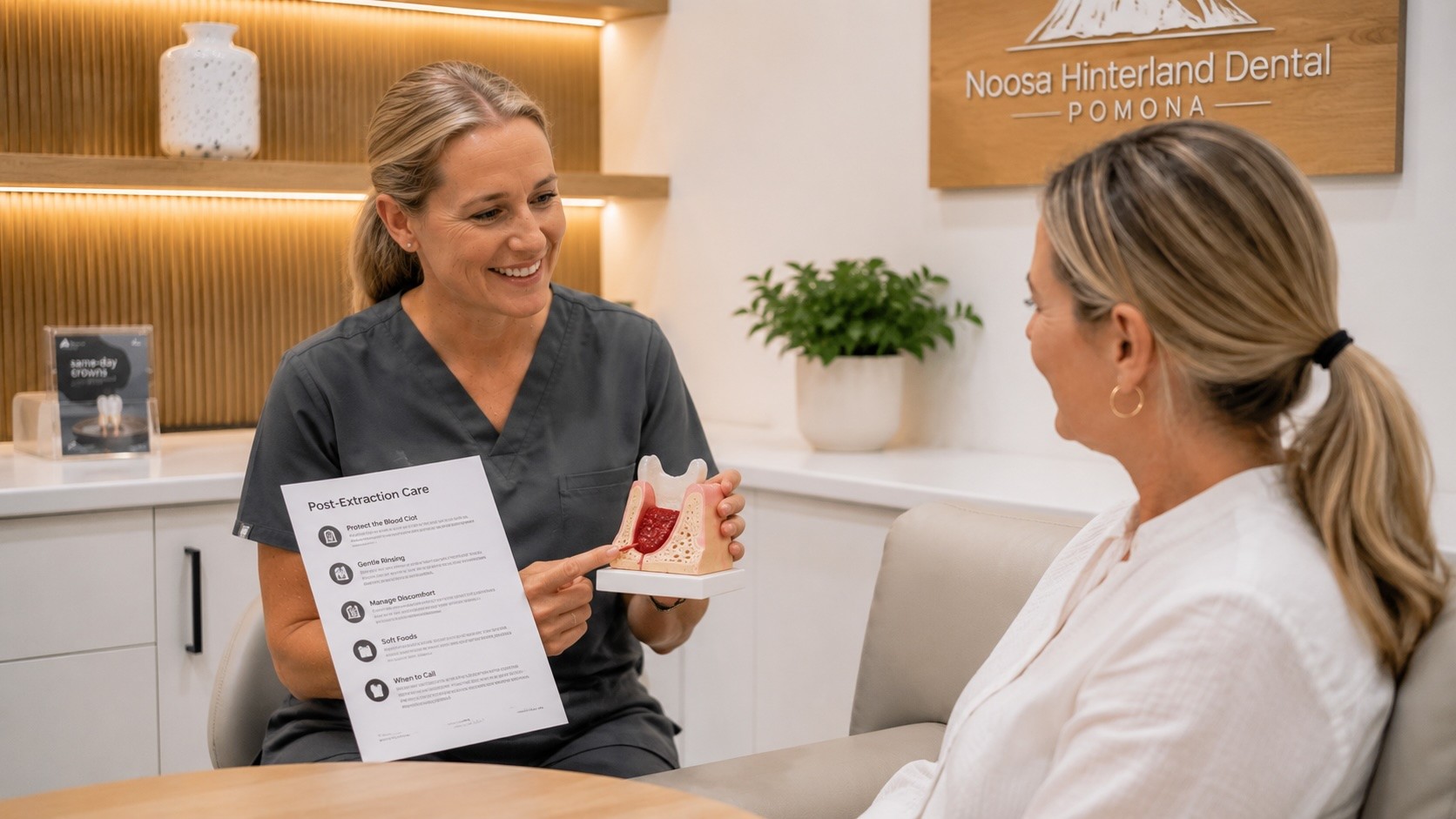
A local family practice such as Noosa Hinterland Dental uses low dose digital radiography and risk based dental imaging. The team explains why X-rays are or are not needed and works with you to keep exposure, cost and worry as low as practical.
Table of Contents
- Do I need dental X-rays at every visit?
- How do dentists decide if you need X-rays this check-up?
- Are dental X-rays safe and how much radiation do they use?
- What types of dental X-rays are there and when are they used?
- How does Noosa Hinterland Dental approach X-rays at check-ups?
- To sum up
- Frequently asked questions
Do I need dental X-rays at every visit?
Whether you need dental X-rays at every visit depends on your personal risk, symptoms and recent images. For most people who attend regular check-ups and have low to moderate decay risk, there is no need for X-rays at every appointment. Your dentist can often check your teeth and gums thoroughly with good lighting, magnification and gentle probing, and only adds X-rays when there is a question that cannot be answered by looking and feeling alone.
Professional advice from organisations such as the Australian Dental Association and ARPANSA, including detailed guidance on dental x-rays, is that dental X-rays should be taken only when they are likely to help diagnosis or treatment planning. That means your dentist weighs up the benefit of extra information against the very small radiation dose, cost and time. If your last pictures were recent and stable, your mouth looks healthy and you have no symptoms, your dentist will usually be comfortable reviewing things visually and delaying new images. When there are risk factors or changes, they may suggest X-rays sooner, but that decision should always be explained and agreed with you.
What guidelines say about dental X-ray frequency
Guidelines on dental X-ray frequency focus on clinical need rather than a fixed timetable for everyone. Groups such as the Australian Dental Association and ARPANSA describe X-rays as justified when they are likely to change diagnosis, treatment or how a condition is monitored. In simple terms, a picture should answer a useful question, such as whether decay has started between teeth or if an infection has cleared.
These guidelines also support risk based ranges instead of strict rules. As general examples, an adult with low decay risk and healthy gums may only need bitewing X-rays roughly every 2 to 3 years. Someone with moderate risk may be closer to every 1 to 2 years, while a high risk adult with frequent decay, dry mouth or complex restorations might need them every 6 to 18 months. Panoramic X-rays are usually spaced further apart. Importantly, guidelines note that many visits, especially for low risk adults with recent stable images, need no X-rays at all, and the ALARA principle keeps exposure as low as reasonably achievable.
Risk based dental imaging advice from bodies such as the Australian Dental Association and ARPANSA emphasises that “a radiograph should only be taken if it is likely to change patient management,” which is a helpful way to think about each suggested X-ray.
When might X-rays be needed more often?
Some people genuinely need dental X-rays more often because their risk of decay or gum disease is higher. A history of many fillings and crowns, dry mouth from medications, smoking, diabetes or irregular dental visits can all mean problems start and spread faster. In these groups, more frequent images help catch hidden decay or bone loss before pain or tooth loss develops.
There are also phases of active treatment where X-rays are part of doing the job safely, not extra add ons. Root canal treatment needs several small images to guide the instruments and check the roots are filled properly. Implants usually require detailed planning with periapical images or a CBCT scan, and orthodontic treatment often uses panoramic and cephalometric films. Even then, more often does not mean every single appointment, and once treatment or risk levels settle, X-ray spacing can usually increase again.
How do dentists decide if you need X-rays this check-up?
Dentists decide whether you need X-rays at a check-up by weighing your current risk, symptoms, past history and previous images. Instead of ticking a box on a standard form, they ask whether an image will change how they diagnose a problem or plan your care. If a picture is unlikely to add anything new, it usually is not needed that day.
In practice, your dentist starts by reviewing your medical and dental history, including any changes in medications, smoking, pregnancy or health conditions such as diabetes. They look at your diet, home care and how often you attend, all of which influence decay risk. A full mouth examination follows, checking teeth, gums, existing restorations and any sore areas. They then review when your last X-rays were taken and what they showed. The key question is simple, will a new X-ray likely change what we do today or how we plan the next few years. A family dentist in Pomona who works this way can explain their reasoning in plain language and invite your input.
Key factors that influence dental X-ray decisions
Several main factors shape whether X-rays are helpful at a particular visit. Your decay risk sits near the top of the list and is influenced by how often you brush and floss, your fluoride use, how much sugar and acid is in your diet, and whether you have dry mouth. A mouth with many old fillings, large cavities or crowded teeth where cleaning is tricky will also be treated as higher risk. Children and teenagers often need closer watching, because enamel is thinner and changes happen faster.
Gum and bone health matter too. If there are signs of periodontitis, such as deep pockets or loose teeth, your dentist may use X-rays to measure bone levels and watch them over time. Being a new patient often means a baseline set of images to understand your starting point, especially if past records are not available. The time since your last pictures, and whether they showed stable health or worrying changes, also plays a part. All of these pieces come together in a clinical judgment about whether X-rays are helpful right now.
Situations where X-rays usually are and are not needed
Certain common situations make it much more likely that X-rays will be recommended on the day. Others, especially routine reviews for low risk adults, often do not need new images. Thinking in examples can make it easier to guess which group your visit might fall into before you sit in the chair.
| Likely to need X-rays this visit | Often no X-rays needed this visit |
|---|---|
| First visit to a new practice with no recent images available | Regular 6 to 12 month check-up for a low risk adult with recent normal bitewings |
| Emergency appointment with pain, swelling, broken tooth or trauma | Simple retainer check, mouthguard review or polish for staining with no other concerns |
| Planning implants, extractions, root canal or braces | Quick review after a recent procedure where healing is clearly visible and comfortable |
Skipping an X-ray when it is genuinely needed can let silent problems grow, sometimes until pain or infection appears suddenly. On the other hand, saying yes to a well explained image can save you from guessing, repeated visits or more involved treatment later. If you are unsure why an X-ray is being suggested, useful questions include what are you looking for, how will this change the plan, and can we safely wait until a later visit.
Are dental X-rays safe and how much radiation do they use?
Modern dental X-rays are considered safe when used properly, because they use very small, focused doses of radiation. Most simple digital images expose you to a similar amount of radiation as you would receive from natural background sources over a day or so. Panoramic X-rays are a little higher, and CBCT scans higher again, but they still sit well below many common medical scans. For most people, dental imaging makes up only a tiny fraction of lifetime radiation exposure.
Dental radiation safety balances this small dose against the benefit of finding and treating disease early. Untreated infections, advanced decay or severe gum disease can lead to pain, tooth loss and even spread of bacteria into the rest of the body. In nearly all routine situations, the benefit of a justified X-ray outweighs the very small theoretical risk it adds to your total exposure. Practices using digital systems, rectangular collimation and careful technique also keep doses much lower than older film based machines.
Understanding dental radiation safety (including ALARA)
Dental X-rays use ionising radiation, which means the energy can remove electrons from atoms and, at very high levels, affect cells. In dentistry the doses are kept extremely small, and the beam is directed only at the area of interest. A single digital bitewing or periapical image is often comparable to a day or two of natural background radiation. A panoramic X-ray may be closer to the exposure from a short domestic flight, and a dental CBCT scan, while higher, still sits well below that of a full medical CT.
The ALARA principle, which underpins occupational and patient radiation safety standards for dental workers, guides how dentists use this technology. ALARA stands for As Low As Reasonably Achievable and means images are taken only when the likely benefit justifies the small risk. To follow this, practices use the lowest exposure settings that still give a clear picture, avoid unnecessary repeats, and choose the simplest type of X-ray that answers the clinical question. Narrow, well focused beams, digital sensors and shields for vulnerable areas, especially in children and pregnancy, all reduce exposure further. When viewed across a lifetime, dental imaging is usually a very small slice of your total radiation dose.
Special groups: children, pregnancy and medical conditions
Children are more sensitive to radiation because their cells are still growing and they have many years ahead of them. For this reason dentists are especially careful with paediatric dental X-rays, using small sensors, child adjusted settings and protective shields when helpful. At the same time, decay between baby and adult teeth can move quickly and is not always visible in the mouth, so carefully chosen X-rays can prevent pain, early extractions and complex treatment later.
Pregnancy raises understandable questions about any form of radiation. Routine check-up X-rays are usually postponed, particularly during the first trimester, if there are no pressing concerns. When a pregnant person has severe pain, swelling or trauma, a limited X-ray may still be recommended so the dentist can treat the problem safely and avoid infection spreading. The beam is focused on the mouth, well away from the abdomen, and shields can be used, so the dose to the baby is extremely low. Medical conditions such as diabetes, autoimmune disease, eating disorders, or past head and neck radiotherapy, along with medicines that cause dry mouth, can increase decay and infection risk. In these cases more frequent but still justified imaging helps spot trouble early, so it is important to tell your dentist about any health changes.
What types of dental X-rays are there and when are they used?
There are several main types of dental X-ray, each designed to show different parts of your mouth. Dentists choose the one that best answers a specific question rather than using every type at each check-up. Small bitewings are common in routine care, while periapical, panoramic and CBCT scans come into play for particular problems or treatment plans. Understanding what each view shows can make it easier to follow your dentist’s recommendations.
Common dental X-ray types and what they show
Bitewing X-rays are small images that show the crowns of the upper and lower back teeth together. They are very good at picking up decay between teeth, under existing fillings and at the edges of crowns, and they give a snapshot of bone levels for gum health. For adults and older children who attend regularly, risk based dental imaging often uses bitewings at set intervals to monitor for new decay and track stability.
Periapical X-rays show the whole length of one or a few teeth, from crown to tip of the root and the surrounding bone. Dentists use them to investigate toothache, sensitivity, trauma, suspected abscesses and to guide root canal treatment or extractions. Panoramic X-rays, often called OPGs in Australia, give a wide view of both jaws, all teeth, jaw joints and parts of the sinuses. They are helpful for checking wisdom teeth, planning orthodontic treatment and assessing jaw problems or missing teeth. Cone beam CT scans, guided by the dento-maxillofacial cone beam policy from the Australian Dental Association, create a 3D view of the jaws and are used for detailed implant planning, complex root canals and some jaw joint or pathology cases. Occlusal and cephalometric images are less common in general practice but are useful for children and orthodontic assessments.
Why you won’t need every type of X-ray at each visit
You will not need every type of dental X-ray at a single visit because your dentist chooses the smallest, simplest image that answers the current question. At a routine check-up for a low risk adult, that might mean no X-rays at all, or just bitewings if it has been a couple of years. If one tooth is sore, a single periapical picture may be all that is required. Wisdom tooth assessments often start with a panoramic X-ray, and only move to a CBCT scan if roots sit close to important nerves or sinuses.
Previous images are also reused whenever possible. Your dentist compares older and newer pictures to see whether decay has started, bone levels have changed or an area of concern has settled. If past X-rays are recent, good quality and still answer the question, there is no reason to repeat them. Bringing digital copies from a previous clinic can help avoid duplicate exposure, although sometimes new images are still needed if the old ones are out of date or do not cover the area that now troubles you.
How does Noosa Hinterland Dental approach X-rays at check-ups?
At Noosa Hinterland Dental in Pomona, X-rays are not taken at every visit as a matter of routine. The team follows a risk based approach, recommending images only when they are likely to improve diagnosis, guide treatment or reassure you that everything is on track. Low dose digital radiography and, when needed, CBCT scans are used in line with Australian guidelines and the ALARA principle. This means local families can receive thorough care while keeping radiation, cost and worry to sensible levels.
Risk-based, low-dose imaging for families in the Noosa Hinterland
The practice uses Low Dose Digital Radiography, which needs much less radiation than older film X-rays while still giving sharp, detailed pictures. This technology, combined with well focused beams and modern machines, supports ARPANSA style safety advice by keeping exposures as small as practical. For complex cases such as implants or jaw concerns, 3D CBCT scans are available, but they are reserved for times when extra detail will clearly help planning or safety.
Recall timing and X-ray schedules are set individually rather than by a one size fits all calendar. Factors such as your medical history, gum health, past decay, number of restorations, smoking status and how quickly plaque and tartar build are all considered. Some check-ups, especially for low risk patients with recent stable images, involve no X-rays at all. Others, such as a first comprehensive visit, an emergency with pain or swelling, or major treatment planning, may need several well chosen images, which are always discussed with you first. Children receive gentle, child friendly X-rays only when needed, with shields and shorter exposures, to help spot problems early while treatment is still simple.
Comfort, communication and sedation options for anxious patients
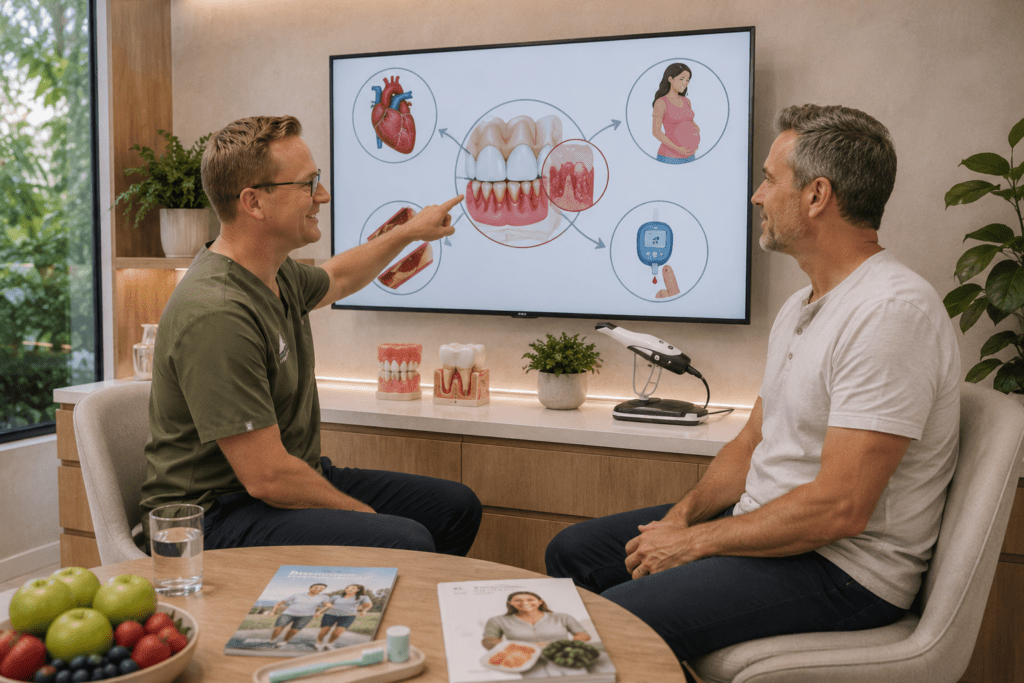
For people with dental anxiety, even the idea of an X-ray can feel uncomfortable. The team takes time to explain why an image is or is not recommended, what it will show and how long it will take. You can agree in advance on the number and type of X-rays, and you are welcome to see the pictures on screen so you understand what your dentist is seeing. Comfort options such as Happy Gas, oral sedation, IV sedation, noise cancelling headphones, ceiling mounted TVs and warm blankets can all help you relax during wider treatment.
The clinic also provides emergency care when sudden toothache, swelling or trauma strikes, and in these situations X-rays often play a key part in diagnosing the problem quickly. Staff are used to supporting anxious patients in pain, balancing the need for information with a gentle pace. If you would like this kind of approach, you can call (07) 5485 5340, visit the team at 8 Memorial Avenue, Pomona QLD 4568, or use the booking form on the practice website to arrange a check-up or emergency visit.
To sum up
Most people do not need dental X-rays at every check-up, and many routine visits for low risk adults involve no imaging at all. Decisions about dental X-ray frequency are based on your individual risk, symptoms, past dental work and how recent your last images are. When X-rays are suggested, they should have a clear purpose, such as looking for hidden decay, checking bone levels or planning treatment.
Modern digital X-rays use very low, focused doses of radiation, and when used wisely they play a key role in preventing bigger problems. Sharing your medical history, pregnancy status, medications and any worries about radiation helps your dentist fine tune when and how imaging is used. If you live in the Noosa Hinterland and want gentle, evidence led care, you can contact the Pomona practice to discuss a check-up schedule and X-ray plan that suits you and your family.
Frequently asked questions
Many people in Pomona, Cooroy, Cooran and nearby towns have similar questions about how often they need X-rays, how safe they are and what happens if they say no. These short answers give general guidance, but your own dentist will always adjust advice to your situation.
How often should adults usually have dental X-rays?
Adults do not have a single correct number of X-rays for life, because needs vary over time. As broad guidance from professional bodies such as the Australian Dental Association, low risk adults may only need bitewing X-rays every 2 to 3 years, while higher risk adults might benefit from them every 6 to 18 months. Your dentist will decide after an examination and by looking at your history.
Can I refuse dental X-rays at my check-up?
You can decline non urgent dental X-rays after your dentist has explained why they are recommended. Refusing essential images can limit safe diagnosis, and your dentist may suggest closer monitoring or explain that some treatments are not possible without them. An open chat about your concerns usually leads to a plan that feels safe for you.
Are dental X-rays safe for children in the long term?
When used sparingly and with child specific settings, the long term risk from dental X-rays is considered extremely low. Early detection of decay, missing teeth or development problems can prevent pain, infections and complex treatment later in life. Dentists follow strict paediatric safety protocols and only recommend images that are likely to help your child directly.
Do I need new X-rays if I changed dentists recently?
You may or may not need new X-rays after changed dentists. If your recent images are good quality and still relevant, your new practice can often use them, so it is helpful to request digital copies from your previous clinic. When pictures are old, incomplete or in a format that will not open, new X-rays may still be needed.
Should I be worried about dental X-rays if I’ve already had lots of medical scans?
It is reasonable to mention past CTs and other medical scans, because total lifetime radiation does add up. Dental doses are usually small compared with many medical images, but your dentist will still think about your history and justify each new X-ray carefully. Sharing details of your medical imaging helps plan the safest approach to your dental care.
Are dental X-rays covered by health insurance in Australia?
Many extras policies contribute to the cost of dental X-rays, but the amount and limits vary widely between funds and levels of cover. It is sensible to check your own policy or contact your insurer so you know what rebate to expect. The practice team can provide item numbers and receipts to help you claim, but cannot guarantee how much your fund will pay.
How can I book a check-up and discuss my X-ray needs?
If you would like an individual plan for check-ups and dental X-rays based on your own risk and history, book an appointment with Noosa Hinterland Dental. Call (07) 5485 5340, or contact us and book online via https://noosahinterlanddental.com.au/. The team at 8 Memorial Avenue, Pomona QLD 4568, can talk through your questions about radiation, safety in pregnancy, children’s X-rays and how often pictures are likely to be helpful for you.